
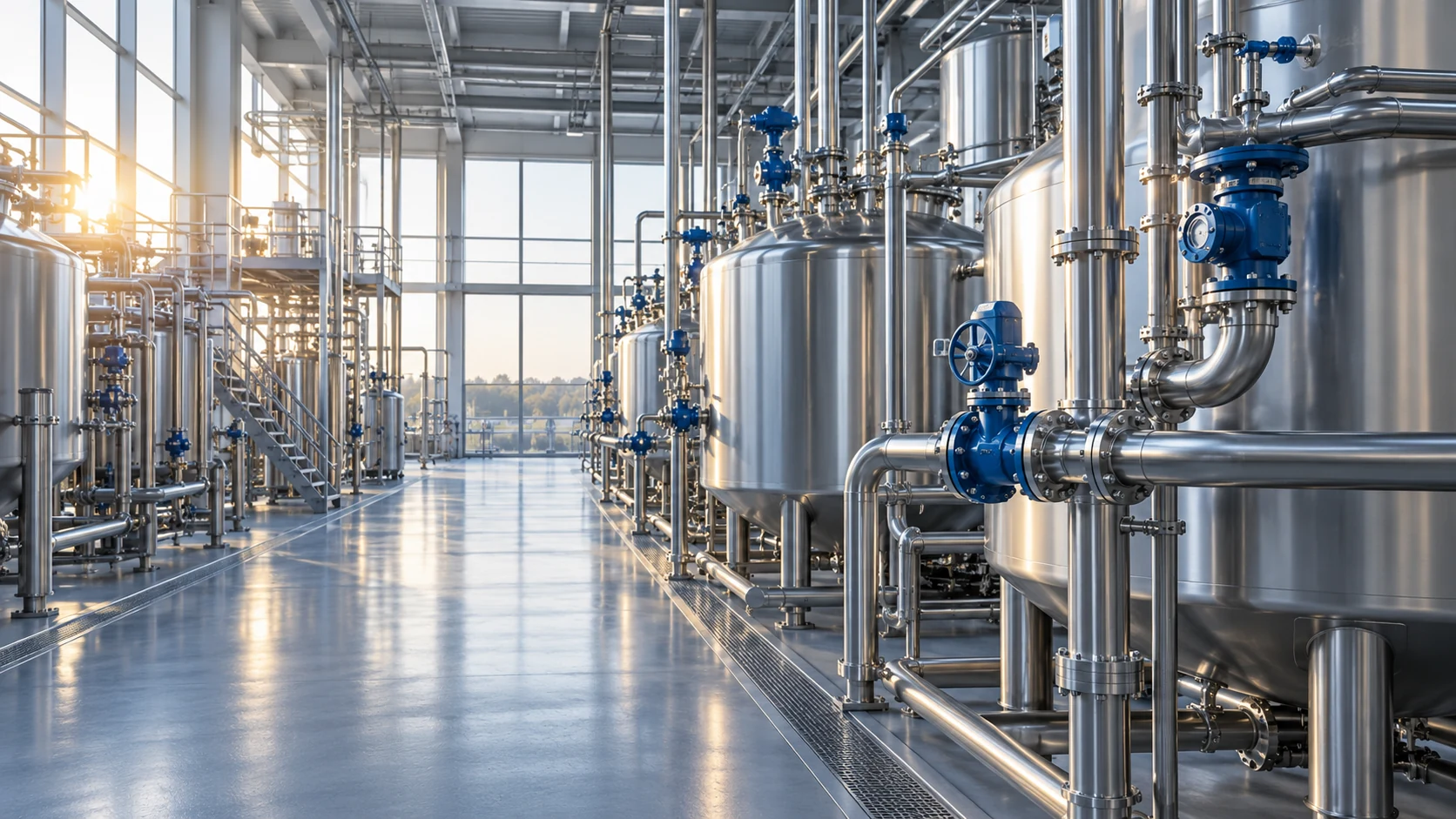
Gıda ve ilaç prosesleri
Gıda ve İlaç Proses Vanaları
VALMORA, ürün temas hatları, temizleme devreleri ve tesis yardımcı hatları dahil olmak üzere gıda ve ilaç proseslerine yönelik vana taleplerini destekler. Öncelikle vananın hatta nerede yer aldığını ve ıslak yüzeylerinin ürünle temas edip etmediğini belirleyin: uygun bir endüstriyel yardımcı hat vanası, otomatik olarak hijyenik veya aseptik servise uygun değildir.
Pratik bir değerlendirme için: akışkanı, temizleme döngüsünü, vana fonksiyonunu, bağlantıyı ve gerekli ürün belgelerini belirtin. Uygun vana ailelerini görüşebiliriz; temizlenebilirlik, sterilizasyon ve uygunluk, teklif edilen tam konfigürasyon için ayrıca ortaya konmalıdır.
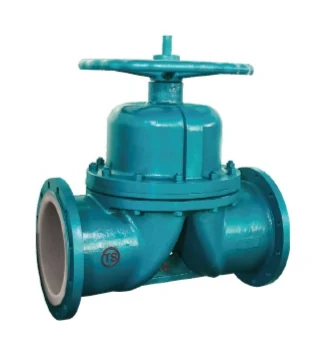
El çarkı ile çalıştırılan diyafram vananın endüstriyel katalog örneği. Astarlı/diyafram konstrüksiyonu, gıda temasına veya aseptik servise uygunluğu ortaya koymaz.
Vanaların kurulduğu yerler
Ürün temas görevlerini yardımcı hatlardan ayırın
Aynı tesis hem temizlenebilir proses vanalarına hem de konvansiyonel endüstriyel vanalara ihtiyaç duyabilir. Hangi spesifikasyonların ve ürün kanıtlarının önemli olduğunu sektör etiketi değil, temas sınırı, kontaminasyon sonucu ve temizleme yöntemi belirler.
Ürün temaslı transfer ve dozajlama
Hat içinde kalan ürün, alerjenler veya partiler arası kontaminasyon, boşaltılabilirlik ve ıslak sızdırmazlık elemanlarını değerlendirin. Ürün temasına yönelik bir çizim, genel bir vana ailesi etiketinden daha önemlidir.
CIP, SIP ve parti geçişleri
Kimyasal derişim, temas süresi, termal çevrimler ve drenaj, normal üretim sırasında çalışan bir valfinin bile uygunluğunu sınırlayabilir. SIP uygunluğu için açık termal ve sızdırmazlık kanıtı gerekir.
Temas dışı tesis yardımcıları
Soğutma suyu, servis havası ve diğer ayrılmış yardımcılar, boru sınıfı ve proses ayrımı izin verdiğinde endüstriyel valf tasarımları kullanabilir. Bu onayı ürünle temas eden servise aktarmayın.
Uygulama seçimi
Valf gövdesini seçmeden önce görevi tanımlayın
Ürünle temas eden hatlar için önce ıslak geometriyi ve temizleme stratejisini talep edin. Ayrılmış yardımcılar için kapama veya kontrol görevi, basınç/sıcaklık ve bağlantı uyumuyla başlayın. Aynı malzeme sınıfı her iki soruyu da yanıtlamaz; aşağıdaki girişler birbirinden farklı teklifleri karşılaştırılabilir kılar.
| Görev / girdi | Alıcının sağladığı bilgiler | Seçimde değişen nedir |
|---|---|---|
| Temas sınırı | Ürün, bileşenler, çapraz temas hassasiyeti; doğrudan veya dolaylı temas | Ürünle temas eden hatlarda doğrulanmış temizlenebilir ıslak geometri gerekir; ayrılmış yardımcı hatlar endüstriyel bir güzergâh kullanabilir. |
| Üretim ve temizlik akışkanları | Bileşim, katılar, temizlik maddesi, konsantrasyon ve maruz kalma süresi; CIP debisi veya hızı ve akış rejimi (varsa) | Gövde, kaplama, diyafram ve yatak uyumluluğu üretim ve temizliği kapsamalıdır; CIP akış koşulları ayrıca temizlik kapsamı ve vana basınç kaybı incelemesine katkı sağlar. |
| Sıcaklık ve basınç çevrimleri | Normal, tasarım ve arıza yükü; CIP/SIP tepe sıcaklığı, basıncı, süresi ve çevrim sıklığı; parti değişim sıklığı | Termal çevrim ve sızdırmazlık sınırları, normal üretim yükü uygun olsa bile bir adayı eleyebilir; çevrim ve değişim sıklığı sızdırmazlık bakımı ve tutulan hacim incelemesine katkı sağlar. |
| Montaj ve temizlenebilirlik | Akış yönü, konum, tutulan hacim sınırları, drenaj kabiliyeti ve sökme erişimi | Vananın kendiliğinden drenajlı olduğunu varsaymak yerine ıslak çizimleri ve monte edilmiş erişimi kontrol edin. |
| Vana işlevi ve kayıtlar | Aç/kapa veya modülasyon görevi, hat çapı ve uçlar, yüzey kalitesi/izlenebilirlik gereksinimleri | Route to the right family and specify the configuration evidence needed for approval. |
Product routes
Find a valve family for the specific duty
Start from the intended function, then follow the linked category to review body construction and options. For aggressive cleaning chemicals or corrosive non-product-contact streams, also review lined and anti-corrosion valves; a lining does not by itself qualify equipment for food or drug contact.
Diyaframlı Valfler
For isolation or corrosive service, review diaphragm/body construction and wetted materials. The catalog photo is an industrial diaphragm example, not an aseptic model declaration.
Kontrol Valfleri
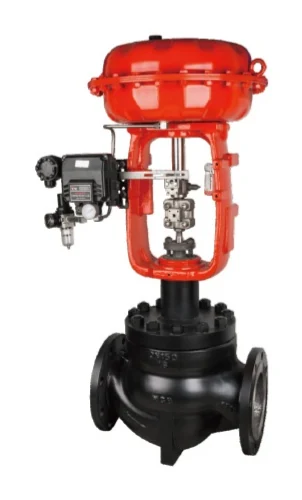
For modulating flow, pressure or temperature, start with control duty and operating data. A pneumatic diaphragm actuator is not the same as a hygienic diaphragm valve.
Küresel Valfler
Review on/off isolation for compatible utility or transfer duties. Seats, cavities and cleanability must be evaluated separately for any product-contact use.
Filtreler
Use when protecting equipment from particulates, then check element access, cleaning and the contamination boundary. Industrial strainers are not automatically sanitary strainers.
Regulatory and design basis
Specify the applicable hygiene and documentation basis
Applicable rules depend on the market, whether the surface contacts food or drug product, and the purchaser’s specification. FDA regulations set obligations for regulated operations; a valve is not “FDA certified” just because a standard is mentioned. Use the named documents to define what the specific offered valve must demonstrate; 3-A standards are equipment-specific, not blanket approvals.
| Framework | Where it can matter | Buyer verification for the offered valve |
|---|---|---|
| U.S. food: 21 CFR 117.40 | Food processing equipment and food-contact surfaces | Request evidence of cleanable construction, corrosion-resistant appropriate food-contact surfaces and cleaning compatibility. |
| U.S. drug: 21 CFR 211.65 and 211.67 | Drug-product contact construction, equipment cleaning and maintenance | Assess nonreactive/nonabsorptive contact surfaces and the site’s documented cleaning procedures; do not claim plant GMP validation. |
| EU food contact: EC 1935/2004, EC 2023/2006 | Relevant food-contact material/article supply for the EU market | Specify the actual contact materials and jurisdictional declarations required; EU framework obligations do not equal a valve-wide EU certificate. |
| EHEDG Doc. 14 / applicable 3-A standard | Hygienic and aseptic food-process valve design when specified | Check the exact valve design and any applicable equipment-specific approval or 3-A Symbol authorization; do not infer certification. |
| ASME BPE / project bioprocessing specification | High-purity bioprocess or pharmaceutical design when specified | Agree edition, wetted geometry, finish and documentation; ASME BPE certification requires its own holder/product proof. |
Önemli ayrım: a product-contact or aseptic claim needs the offered model, contact materials, surface requirements and corresponding records. A plant utility valve may instead be specified against its piping and pressure-design basis, such as ASME B31.3 where applicable; neither classification can be inferred from a catalog image.
Katalog kanıtı
What the catalog images establish—and what they do not
The green handwheel-operated diaphragm valve shown above is cataloged among anti-corrosion valve products. The red unit alongside this section is a pneumatic globe control valve with a diaphragm actuator. These pictures identify industrial valve types; neither image demonstrates a hygienic body, clean-in-place design or pharmaceutical acceptance.
Katalog kimliği
Body type and actuation can be identified from the pictured equipment, but a photo alone cannot establish wetted surface finish, internal geometry or material traceability.
Contact-surface proof
For product-contact duty, request the proposed wetted-geometry drawing, body/diaphragm/seal material information, surface-finish requirements and cleaning limits for that exact configuration.
Application responsibility
The project team defines its process hazards, required standards and validation criteria. Supplier documentation supports equipment selection; facility cleaning qualification and operating validation remain project-specific.
Technical submittal
Request evidence against the exact quoted configuration
Before an order, agree which documents will actually be supplied and any deviations. A valve family page or general catalog cannot replace the tag-specific drawing, material records and inspection/test basis required by the project.
| Öğe | Acceptance question | Status to agree before order |
|---|---|---|
| Wetted/assembly drawing | Does the offered design show internal flow path, drainability, seal locations, connection and installation orientation? | Product drawing and revision; owner design approval if required. |
| Material, seal and finish records | Are specified metals, linings, seals, finish and any required extractables/leachables evidence supported for the proposed product and cleaning media? | Actual certificate/test availability, part scope and document revision. |
| CIP/SIP and service limits | Are the whole duty cycle, cleaning chemistry, thermal exposure and pressure differential within the confirmed configuration limits? | Model-specific limits and unverified conditions stated as exceptions. |
| Inspection and deviations | Which inspections, tests, witness points and traceability records apply to each valve/tag? | Approved inspection plan, open deviations and supply-stage deliverables. |
Selection questions
Questions before requesting a hygienic valve
These answers help separate application needs from a product-specific design commitment.
Is every diaphragm valve suitable for pharmaceutical contact?
No. An industrial diaphragm construction can isolate the actuator from the fluid, but product-contact suitability also depends on wetted geometry, seals, finish, drainability, process limits and the required documents.
Does compatibility with product fluid also cover CIP or SIP?
No. Cleaning agents, concentration, contact time, temperature and pressure may differ substantially from production. Request limits for the entire cycle and flag any unverified sterilization duty.
Can food-contact documentation replace pharmaceutical qualification?
No. The drug-product contact, cleaning procedures and bioprocessing specification, where applicable, require their own acceptance basis. A supplier’s material record is useful input, not proof of plant-level GMP or cleaning validation.
Related information
Continue with product or supplier information
Use the product owners for technical configurations and the company pages for published manufacturing or quality information. Those pages are information sources, not evidence that a particular valve has been certified or tested.
All industries
Browse other process environments and their different valve duties.
Üretim
Read published company production and supply information.
Kalite Kontrol
Review stated quality processes; ask separately for product-specific records.
Technical Resources
Find technical explanations and valve comparisons.
Project inquiry
Request a Food & Pharmaceutical Valve Review
Send the valve schedule or available P&ID and identify whether each tag is product-contact, CIP/SIP or segregated utility service. Include the current process and cleaning conditions, project standards and requested records; unknowns can be marked open rather than filled with assumed ratings.
- Plant/unit, equipment tag and valve function
- Product-contact, CIP/SIP or segregated utility boundary
- Product/cleaning media, concentration and solids; CIP flow rate or velocity and flow regime (if applicable)
- Operating/design pressure and temperature; CIP/SIP peak pressure/temperature, duration and cycle frequency
- Line size, connection, flow direction and installation orientation
- Shutoff or modulating duty, actuator requirements and batch-changeover frequency
- Applicable standards, finish, records and inspection scope
- Drawing revisions and open engineering questions