
Üç parçalı gövde konstrüksiyonu · küresel vanalar
Üç Parçalı Küresel Vanalar
Üç parçalı küresel vana, gövde bağlantı elemanlarıyla birleştirilen bir orta gövde ve ayrı uç kapakları kullanır. İç sızdırmazlık parçalarına erişim önemli olduğunda bu konstrüksiyonu seçin—ancak hat üzeri bakımın mümkün olduğunu varsaymadan önce ilgili tasarımın nasıl açıldığını, boru ucu düzenini ve mevcut açıklığı doğrulayın.
Doğru ayrımla başlayın: üç parçalı, gövde montajını tanımlar. Yüzer veya sabit/trunnion, küre desteğini tanımlar; dövme, bir üretim yöntemini tanımlar; elektrikli veya pnömatik, aktüasyonu tanımlar. Bu ayrıntıların hiçbiri ortak bir basınç veya sıcaklık sınıfı oluşturmaz.
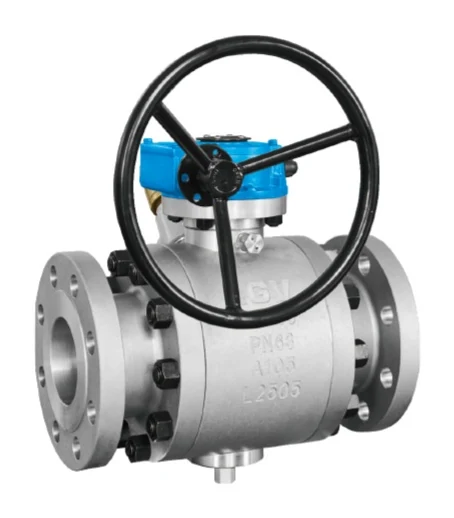
Katalog örneği: üç parçalı dövme çelik yüksek basınçlı küresel vana. Görseldeki el çarkı ve katalog başlığı bir sınıf veya sipariş edilebilir konfigürasyon oluşturmaz.
Konstrüksiyon ve servis erişimi
Üç Parçalı Gövdenin Değiştirdiği Nedir
Temel ayrım, ayrı uç kapamalarına sahip cıvatalı gövde montajıdır. Vana tasarımına ve monte edilen boru uçlarına bağlı olarak bu, planlı bakım sırasında bilye ve yuvalara erişimi kolaylaştırabilir. Bu, orta bölümün hattı bozmadan sökülebileceğinin garantisi değildir.
Gövde bağlantıları ve bakım
Gövde bağlantı çizimini, sökme sırasını ve gerekli açıklığı kontrol edin. Boru uçlarının monte kalması gerekiyorsa, seçilen tasarımın önerilen kurulumda orta bölümün sökülmesine izin verdiğine dair yazılı onay isteyin.
Bilye desteği ayrı bir seçimdir
Üç parçalı konstrüksiyon, yüzer bilye veya destekli/sabit bilye ile birlikte kullanılabilir. Basınç itkisi, yuva yükü ve operatör torku bu iç tasarıma bağlıdır—gövde parça sayısına değil. Desteğe özgü seçim için bkz. yüzer bilyeli vanalar ve trunnion (muylu) yataklı bilyeli vanalar.
Uçlar, dövme ve aktüasyon
Dövme, belirtilen metal bileşenlerin imalat sürecini ifade eder; dişli, flanşlı veya kaynak uçlar boru bağlantı arayüzünü tanımlar; elektrikli veya pnömatik operatör başka bir konfigürasyon kararıdır. Bir katalog görseli, listelenmemiş herhangi bir kombinasyonu doğrulamak için yeterli değildir.
Seçim kararları
Üç Parçalı Bilyeli Vana Ne Zaman Doğru Seçimdir
Üç parçalı gövdede cıvatalı gövde bağlantıları bulunur ve içe erişimin kolaylığı koşullu bir avantajdır—burada gösterilen yüksek basınç ve sabit bilyeli konfigürasyonlar için evrensel bir satın alma gerekçesi değildir. Gerçek bağlantı tasarımını, basınç–sıcaklık sınırlarını, bilye desteğini, uç bağlantılarını ve üreticinin bakım talimatlarını birlikte değerlendirin. Cıvatalı bağlantılar ayrıca sızdırmazlık ve montaj gereklilikleri getirir; boru uçları bağlı kalırken orta gövdenin sökülebileceğini varsaymayın.
| Karar | Sağlanması gerekenler | Seçimi nasıl değiştirir |
|---|---|---|
| Bakım erişimi | Hat izole edilebilir mi? Hangi boru uçları yerinde kalmalı? Orta gövdeyi kaldırmak için yeterli açıklık var mı? | Tam kesit çizimini ve servis talimatlarını isteyin. Her üç parçalı tasarımın dışa açıldığını veya hat üzerinde sökülmeye izin verdiğini varsaymayın. |
| Küre desteği ve diferansiyel basınç | Maksimum kapama diferansiyel basıncı, iç çap ve istenen manuel/otomatik çalıştırma | Yüzer veya destekli/sabit tasarımı gövde parça sayısına göre değil, oturma yükü, küre itme kuvveti ve tork kanıtlarına göre belirtin. |
| Basınç ve sıcaklık | Tasarım ve işletme durumları; akışkan, faz, çevrim ve anormal koşullar | Teklif edilen valfin tam olarak malzemeye özgü basınç–sıcaklık sınırlarını ve oturma ile gövde bağlantısı sızdırmazlık sınırlarını talep edin. |
| Boru uçları ve iç çap | Uç tipi, flanş/yüzey veya kaynak hazırlığı, boru et kalınlığı serisi, tam/indirgenmiş geçiş ve boyutsal zarf | A flanged catalog image does not prove threaded or weld-end availability; confirm GA and interface dimensions before a cost comparison. |
| Seat and shutoff duty | Required leakage criterion, solids, thermal cycling, trapped-fluid/cavity conditions | A “hard-sealed” catalog label is not a leakage guarantee. Require the exact seat design and test/acceptance basis. |
| Actuation and maintenance records | Max. differential pressure, cycles, fail position, power/air, indication and inspection requirements | Confirm breakaway/running torque, actuator sizing and which assembly, inspection and test records cover the supplied configuration. |
Where the construction helps
Select for the Maintenance Task, Not the Industry Label
The following are selection situations, not claims of completed VALMORA installations. The actual medium, seat and pressure-boundary design still determine whether a given valve can be offered.
Skid isolation with scheduled servicing
If the skid has limited downtime and the pipe ends must remain aligned, compare designs with a removable center assembly. First confirm access, permitted disassembly and the manufacturer’s maintenance method.
Severe seat or body-joint duty
For temperature cycling, abrasive media or stringent shutoff, prioritize documented seat materials, body-joint gasket details and test acceptance over a generic “high-pressure” or “hard-sealed” label.
Uzaktan açma/kapama işletimi
Electric and pneumatic three-piece fixed-ball examples appear in the catalog. For automated isolation, size the operator to the selected valve torque at the worst operating differential pressure and specify supply, control, feedback and required fail behavior.
Actual catalog examples · physical page 089
Four Catalog-Labeled Three-Piece Configurations
The source catalog shows the handwheel-operated high-pressure example above, plus electric, hard-sealed and pneumatic fixed-ball examples below. The labels identify illustrated configurations, not a common VALMORA model code, verified pressure–temperature envelope, factory test or certificate. The fixed-ball examples are also relevant to the supported-ball selection; the three-piece construction remains the focus here.
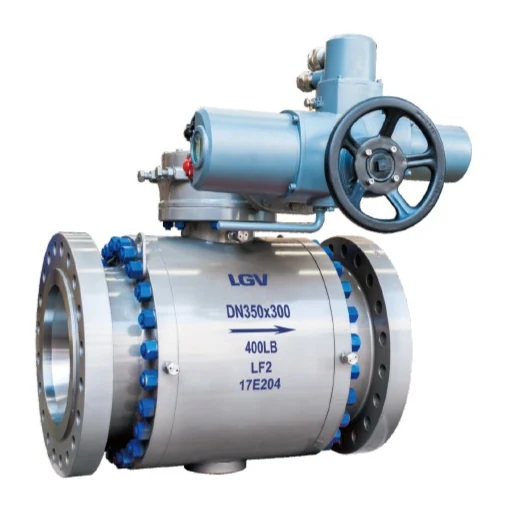
Electric three-piece forged steel fixed-ball valve. Source catalog label; verify power, torque, controls and the exact valve/actuator assembly before choosing it.
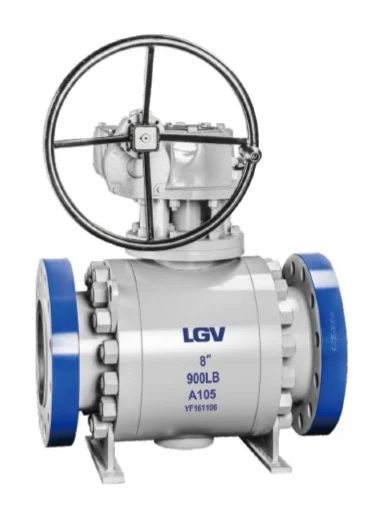
Hard-sealed, fixed ball. Source catalog label; confirm seat construction, shutoff criterion and applicable duty before specifying metal-seat performance.
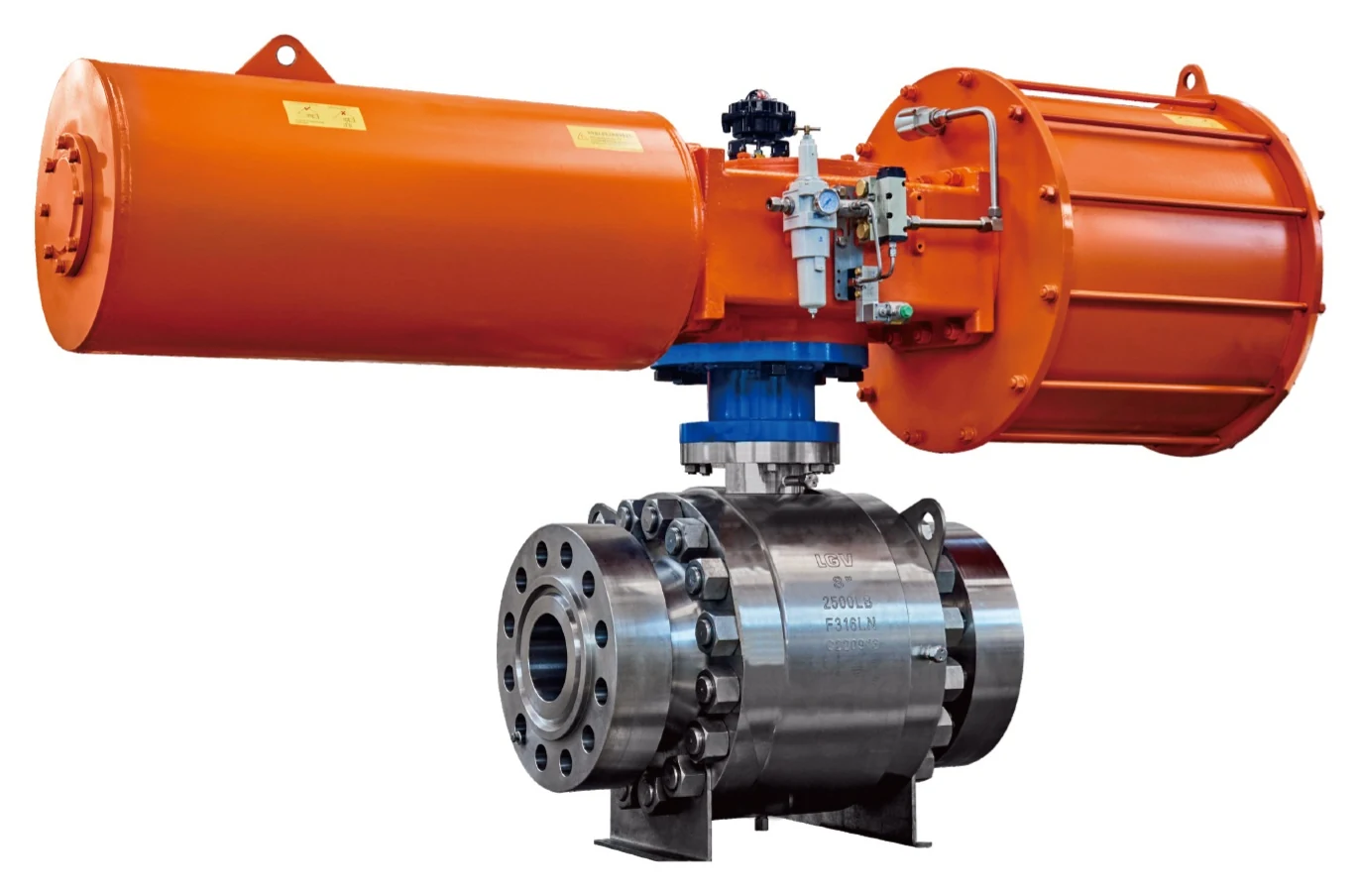
Pneumatic three-piece forged steel fixed-ball valve. Source catalog label; establish air supply, required torque, fail action and the complete actuator/valve interface.
Related valve selections
Compare the Right Ball-Valve Design
If the question is how the ball is supported, compare floating ve trunnion-mounted designs. If the question is a welded pressure boundary for a buried or pipeline installation, review fully welded ball valves. These are different choices; they do not replace the three-piece body decision.
Ball Valves — series overview
Browse body, support, port and operating styles before choosing a series.
Tüm vana ürün aileleri
Return to the wider product range if a ball valve is not yet the right isolation device.
Sektörel uygulamalar
Match valve construction to the process and installation conditions.
Teknik kaynaklar
Read general selection guidance separately from product-specific ratings and drawings.
Compare quotations on the same basis
What a Useful Three-Piece Valve Offer Should Identify
A comparable quotation names a specific product and shows how the proposed construction meets your service case. Check these three items before choosing on price or delivery date.
Exact construction and interfaces
Identify the illustrated or offered variant, body-joint design, ball support, end connection, port and dimensions. Separate operator and seat options from supplied equipment.
Duty-linked limits
Match pressure–temperature ratings, medium compatibility, shutoff criteria and maximum differential-pressure torque to the same proposed material and trim combination.
Documents for that offered assembly
Ask for a dimensional/sectional drawing, material and seat schedule, applicable inspection and test basis, maintenance guidance and the actual order-specific document list. Do not infer certification from a catalog family.
Alıcı soruları
Three-Piece Ball Valve Questions
These distinctions affect construction selection. Orderable limits and permitted maintenance procedures must come from the selected product documentation.
What does “three-piece” mean on a ball valve?
It refers to a center body and two end closures assembled with body fasteners. It does not specify floating versus fixed-ball support, port size, pressure class, seat design or operator.
Can every three-piece ball valve be serviced without disconnecting the piping?
No. Some arrangements permit access to the center body while the end connections remain in the line, but the actual removal method depends on the body joints, pipe ends, installed clearance and the manufacturer’s service instructions. The line must be safely isolated and depressurized before maintenance. Before opening or dismantling the valve, possible pressure or hazardous medium trapped in the valve cavity must also be addressed under the specific model manufacturer’s procedure; line depressurization alone does not establish that the cavity is safe.
Does “high-pressure,” “high-temperature” or “hard-sealed” in a catalog define the usable range?
No. These are catalog descriptors. Require the exact offered valve’s pressure–temperature limits, body and seat materials, shutoff test basis and dimensional drawing for the stated service.
What information makes a three-piece ball valve RFQ actionable?
Provide medium, pressure and temperature cases, nominal size, port and end connections, isolation duty, maximum differential pressure, maintenance access needs, operating method and project documentation requirements. Ask the supplier to identify the exact construction and any unconfirmed options.
Teknik talep
Request a Three-Piece Ball Valve Configuration Review
Send the service conditions and the body-access requirement. We can discuss which documented configuration to evaluate; product-specific ratings, drawings, materials, testing and order scope still need to be matched to the proposed valve.
- Service medium, phase and relevant contaminants or solids
- Design and operating pressure/temperature, including maximum shutoff differential pressure
- Nominal size, full/reduced port and required end connection or flange specification
- Required body access, on-site clearance and pipe-end removal restrictions
- Floating or fixed-ball preference, if already established
- Seat/shutoff criterion, cycling and any trapped-cavity service concern
- Manual, pneumatic or electric operation; fail action, control and utilities
- Required drawing, inspection, test and material documentation