
Dreiteilige Gehäusebauform · Kugelhähne
Dreiteilige Kugelhähne
Ein dreiteiliger Kugelhahn besteht aus einem Mittelgehäuse und separaten Endstücken, die durch Gehäuseschrauben verbunden sind. Wählen Sie diese Bauform, wenn der Zugang zu den inneren Dichtungsteilen wichtig ist – prüfen Sie jedoch, wie die jeweilige Ausführung geöffnet wird, die Rohranschlussanordnung und den verfügbaren Freiraum, bevor Sie eine Inline-Wartung voraussetzen.
Beginnen Sie mit der richtigen Unterscheidung: Dreiteilig beschreibt die Gehäusebaugruppe. Schwimmend oder fest/zapfengelagert beschreibt die Kugellagerung; geschmiedet beschreibt den Fertigungsweg; elektrisch oder pneumatisch beschreibt die Betätigung. Keines dieser Merkmale legt eine gemeinsame Druck- oder Temperaturbemessung fest.
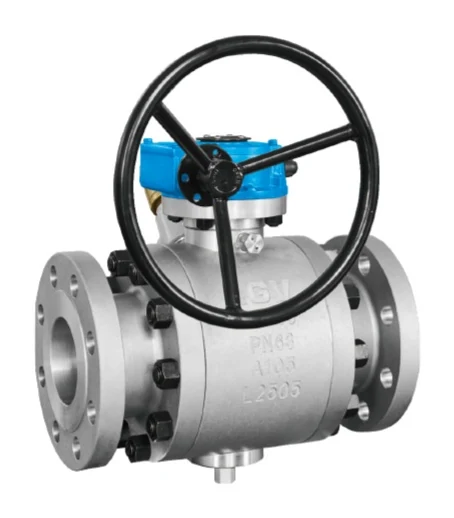
Katalogbeispiel: dreiteiliger Hochdruck-Kugelhahn aus Schmiedestahl. Das abgebildete Handrad und der Katalogtitel belegen keine Druckstufe und keine bestellbare Konfiguration.
Bauform und Servicezugang
Was ein dreiteiliges Gehäuse verändert
Das wesentliche Unterscheidungsmerkmal ist eine Gehäuseausführung mit verschraubten Gehäuseverbindungen und separaten Endabschlüssen. Je nach Ventilausführung und installierten Rohrleitungsenden kann dies den Zugang zu Kugel und Sitzen für geplante Wartungsarbeiten erleichtern. Es ist keine Garantie dafür, dass der Mittelteil entfernt werden kann, ohne die Rohrleitung zu beeinträchtigen.
Gehäuseverbindungen und Wartung
Prüfen Sie die Zeichnung der Gehäuseverbindung, die Demontagereihenfolge und den erforderlichen Freiraum. Wenn die Rohrleitungsenden installiert bleiben müssen, fordern Sie eine schriftliche Bestätigung an, dass die gewählte Ausführung die Demontage des Mittelteils unter den vorgesehenen Einbaubedingungen zulässt.
Kugellagerung ist eine separate Wahl
Die dreiteilige Bauweise kann mit einer schwimmenden Kugel oder einer gelagerten/festen Kugel kombiniert werden. Druckkräfte, Sitzbelastung und Stellantriebsdrehmoment hängen von dieser internen Ausführung ab – nicht von der Anzahl der Gehäuseteile. Zur lagerungsspezifischen Auswahl siehe Kugelhähne mit schwimmender Kugel und Kugelhähne mit zapfengelagerter Kugel.
Enden, Schmiedeteile und Betätigung
Geschmiedet bezieht sich auf das Herstellungsverfahren der angegebenen Metallkomponenten; Gewinde-, Flansch- oder Schweißenden beschreiben die Rohrleitungsschnittstelle; ein elektrischer oder pneumatischer Stellantrieb ist eine weitere Konfigurationsentscheidung. Ein Katalogbild reicht nicht aus, um eine nicht aufgeführte Kombination zu bestätigen.
Auswahlentscheidungen
Wann ein dreiteiliger Kugelhahn die richtige Wahl ist
Ein dreiteiliges Gehäuse hat verschraubte Gehäuseverbindungen, und ein erleichterter interner Zugang ist ein bedingter Vorteil – kein allgemeiner Kaufgrund für die hier gezeigten Hochdruck- und Festkugelausführungen. Bewerten Sie die tatsächliche Verbindungsausführung, die Druck-Temperatur-Grenzen, die Kugellagerung, die Endanschlüsse und die Wartungsanweisungen des Herstellers gemeinsam. Verschraubte Verbindungen bringen auch Dichtungs- und Montageanforderungen mit sich; gehen Sie nicht davon aus, dass das Mittelgehäuse entfernt werden kann, während die Rohrleitungsenden verbunden bleiben.
| Entscheidung | Was anzugeben ist | Wie es die Auswahl beeinflusst |
|---|---|---|
| Zugang für die Wartung | Kann die Leitung abgesperrt werden? Welche Rohrleitungsenden müssen an Ort und Stelle bleiben? Ist ausreichend Platz zum Ausbau des Mittelteils vorhanden? | Fordern Sie die genaue Schnittzeichnung und die Wartungsanleitung an. Gehen Sie nicht davon aus, dass jede Dreiteilige Bauform ausschwenkbar ist oder einen Ausbau in der Leitung erlaubt. |
| Kugellagerung und Differenzdruck | Maximaler Absperrdifferenzdruck, Bohrung und gewünschter manueller/automatisierter Betrieb | Legen Sie die schwimmende oder gelagerte/feste Bauform anhand der Sitzbelastung, des Kugelschubs und der Drehmomentnachweise fest, nicht anhand der Anzahl der Gehäuseteile. |
| Druck und Temperatur | Auslegungs- und Betriebsfälle; Medium, Phase, Schaltspiele und anormale Bedingungen | Fordern Sie materialspezifische Druck-Temperatur-Grenzen sowie Grenzwerte für Sitz- und Gehäuseteil-Dichtungen für das genau angebotene Ventil an. |
| Rohrleitungsenden und Bohrung | Anschlussart, Flansch/Dichtfläche oder Schweißnahtvorbereitung, Rohrleitungsstufe, voller/reduzierter Durchgang und Bauraum | A flanged catalog image does not prove threaded or weld-end availability; confirm GA and interface dimensions before a cost comparison. |
| Seat and shutoff duty | Required leakage criterion, solids, thermal cycling, trapped-fluid/cavity conditions | A “hard-sealed” catalog label is not a leakage guarantee. Require the exact seat design and test/acceptance basis. |
| Actuation and maintenance records | Max. differential pressure, cycles, fail position, power/air, indication and inspection requirements | Confirm breakaway/running torque, actuator sizing and which assembly, inspection and test records cover the supplied configuration. |
Where the construction helps
Select for the Maintenance Task, Not the Industry Label
The following are selection situations, not claims of completed VALMORA installations. The actual medium, seat and pressure-boundary design still determine whether a given valve can be offered.
Skid isolation with scheduled servicing
If the skid has limited downtime and the pipe ends must remain aligned, compare designs with a removable center assembly. First confirm access, permitted disassembly and the manufacturer’s maintenance method.
Severe seat or body-joint duty
For temperature cycling, abrasive media or stringent shutoff, prioritize documented seat materials, body-joint gasket details and test acceptance over a generic “high-pressure” or “hard-sealed” label.
Fernbetätigtes Auf/Zu
Electric and pneumatic three-piece fixed-ball examples appear in the catalog. For automated isolation, size the operator to the selected valve torque at the worst operating differential pressure and specify supply, control, feedback and required fail behavior.
Actual catalog examples · physical page 089
Four Catalog-Labeled Three-Piece Configurations
The source catalog shows the handwheel-operated high-pressure example above, plus electric, hard-sealed and pneumatic fixed-ball examples below. The labels identify illustrated configurations, not a common VALMORA model code, verified pressure–temperature envelope, factory test or certificate. The fixed-ball examples are also relevant to the supported-ball selection; the three-piece construction remains the focus here.
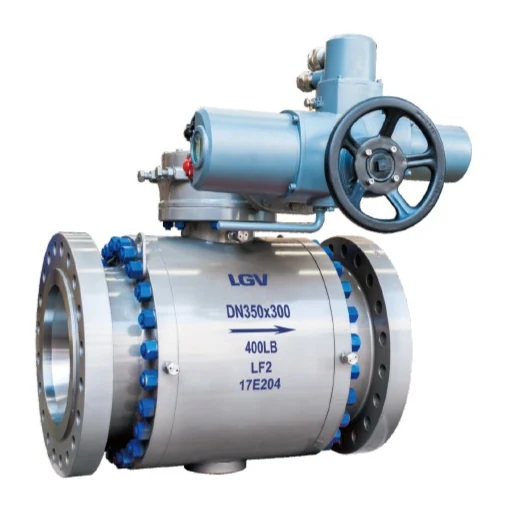
Electric three-piece forged steel fixed-ball valve. Source catalog label; verify power, torque, controls and the exact valve/actuator assembly before choosing it.
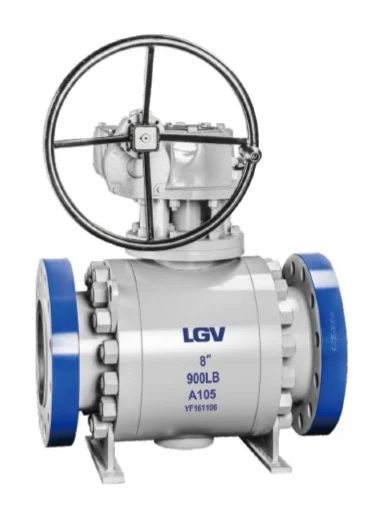
Hard-sealed, fixed ball. Source catalog label; confirm seat construction, shutoff criterion and applicable duty before specifying metal-seat performance.
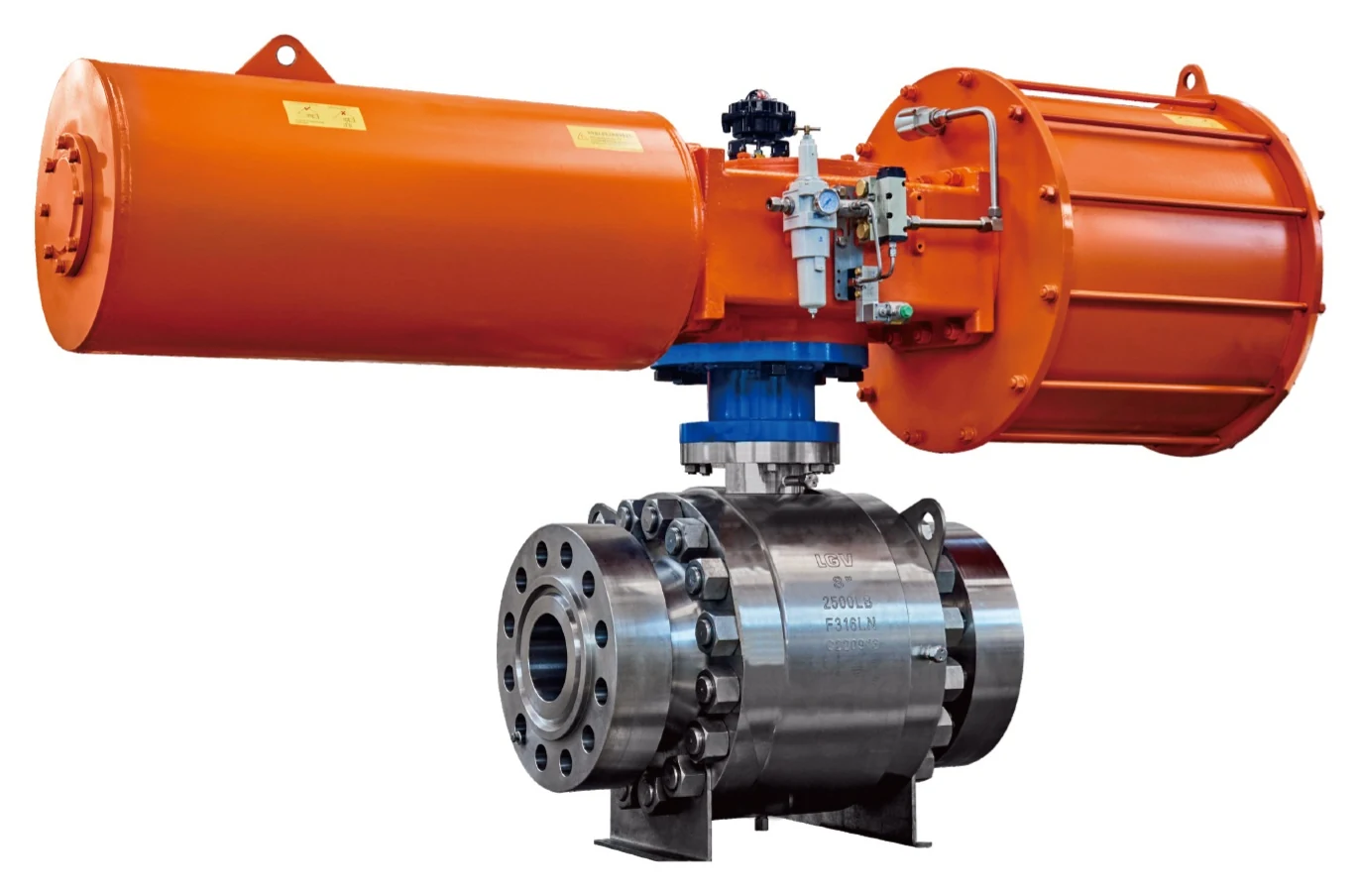
Pneumatic three-piece forged steel fixed-ball valve. Source catalog label; establish air supply, required torque, fail action and the complete actuator/valve interface.
Related valve selections
Compare the Right Ball-Valve Design
If the question is how the ball is supported, compare floating und trunnion-mounted designs. If the question is a welded pressure boundary for a buried or pipeline installation, review fully welded ball valves. These are different choices; they do not replace the three-piece body decision.
Ball Valves — series overview
Browse body, support, port and operating styles before choosing a series.
All valve product families
Return to the wider product range if a ball valve is not yet the right isolation device.
Branchenanwendungen
Match valve construction to the process and installation conditions.
Technical resources
Read general selection guidance separately from product-specific ratings and drawings.
Compare quotations on the same basis
What a Useful Three-Piece Valve Offer Should Identify
A comparable quotation names a specific product and shows how the proposed construction meets your service case. Check these three items before choosing on price or delivery date.
Exact construction and interfaces
Identify the illustrated or offered variant, body-joint design, ball support, end connection, port and dimensions. Separate operator and seat options from supplied equipment.
Duty-linked limits
Match pressure–temperature ratings, medium compatibility, shutoff criteria and maximum differential-pressure torque to the same proposed material and trim combination.
Documents for that offered assembly
Ask for a dimensional/sectional drawing, material and seat schedule, applicable inspection and test basis, maintenance guidance and the actual order-specific document list. Do not infer certification from a catalog family.
Fragen von Einkäufern
Three-Piece Ball Valve Questions
These distinctions affect construction selection. Orderable limits and permitted maintenance procedures must come from the selected product documentation.
What does “three-piece” mean on a ball valve?
It refers to a center body and two end closures assembled with body fasteners. It does not specify floating versus fixed-ball support, port size, pressure class, seat design or operator.
Can every three-piece ball valve be serviced without disconnecting the piping?
No. Some arrangements permit access to the center body while the end connections remain in the line, but the actual removal method depends on the body joints, pipe ends, installed clearance and the manufacturer’s service instructions. The line must be safely isolated and depressurized before maintenance. Before opening or dismantling the valve, possible pressure or hazardous medium trapped in the valve cavity must also be addressed under the specific model manufacturer’s procedure; line depressurization alone does not establish that the cavity is safe.
Does “high-pressure,” “high-temperature” or “hard-sealed” in a catalog define the usable range?
No. These are catalog descriptors. Require the exact offered valve’s pressure–temperature limits, body and seat materials, shutoff test basis and dimensional drawing for the stated service.
What information makes a three-piece ball valve RFQ actionable?
Provide medium, pressure and temperature cases, nominal size, port and end connections, isolation duty, maximum differential pressure, maintenance access needs, operating method and project documentation requirements. Ask the supplier to identify the exact construction and any unconfirmed options.
Technische Anfrage
Request a Three-Piece Ball Valve Configuration Review
Send the service conditions and the body-access requirement. We can discuss which documented configuration to evaluate; product-specific ratings, drawings, materials, testing and order scope still need to be matched to the proposed valve.
- Service medium, phase and relevant contaminants or solids
- Design and operating pressure/temperature, including maximum shutoff differential pressure
- Nominal size, full/reduced port and required end connection or flange specification
- Required body access, on-site clearance and pipe-end removal restrictions
- Floating or fixed-ball preference, if already established
- Seat/shutoff criterion, cycling and any trapped-cavity service concern
- Manual, pneumatic or electric operation; fail action, control and utilities
- Required drawing, inspection, test and material documentation