
Costruzione a corpo in tre pezzi · valvole a sfera
Valvole a sfera a tre pezzi
Una valvola a sfera a tre pezzi utilizza un corpo centrale e chiusure di estremità separate, unite da elementi di fissaggio del corpo. Scegliere questa costruzione quando l'accesso alle parti di tenuta interne è importante, ma verificare come si apre il design specifico, la disposizione delle estremità di tubazione e lo spazio disponibile prima di presumere che sia possibile la manutenzione in linea.
Partire dalla distinzione corretta: tre pezzi descrive il gruppo del corpo. Flottante o fisso/su perni descrive il supporto della sfera; forgiato descrive un percorso di produzione; elettrico o pneumatico descrive l'attuazione. Nessuno di questi dettagli stabilisce una classe di pressione o temperatura comune.
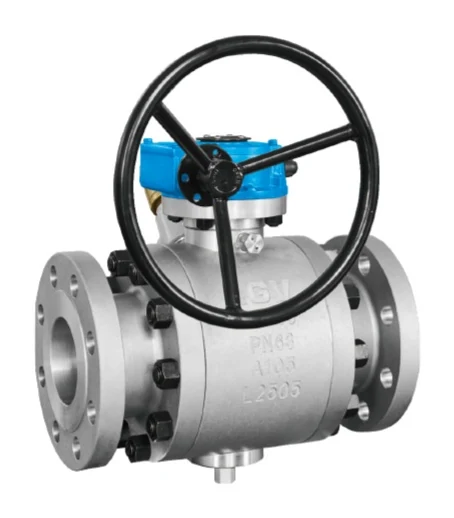
Esempio di catalogo: valvola a sfera ad alta pressione in acciaio forgiato a tre pezzi. Il volantino raffigurato e il titolo di catalogo non stabiliscono una classe di pressione né una configurazione ordinabile.
Costruzione e accesso per la manutenzione
Cosa cambia un corpo a tre pezzi
La distinzione principale è un corpo assemblato con giunzioni bullonate e chiusure di estremità separate. A seconda del design della valvola e delle estremità di tubazione installate, ciò può rendere la sfera e le sedi più accessibili per la manutenzione programmata. Non è una garanzia che la sezione centrale possa essere rimossa senza intervenire sulla linea.
Giunzioni del corpo e manutenzione
Verificare il disegno delle giunzioni del corpo, la sequenza di smontaggio e lo spazio libero necessario. Se le estremità di tubazione devono rimanere installate, richiedere conferma scritta che il design selezionato consenta la rimozione della sezione centrale nelle condizioni di installazione previste.
Supporto della sfera: una scelta separata
La costruzione a tre pezzi può essere abbinata a una sfera flottante o a una sfera supportata/fissa. La spinta di pressione, il carico sulle sedi e la coppia dell'operatore dipendono da questo design interno, non dal numero di pezzi del corpo. Per la selezione specifica del supporto, vedere valvole a sfera flottante e valvole a sfera su perni.
Estremità, forgiatura e attuazione
Forgiato si riferisce al processo di fabbricazione dei componenti metallici specificati; le estremità filettate, flangiate o a saldare descrivono l'interfaccia di tubazione; un operatore elettrico o pneumatico è un'altra scelta di configurazione. Un'immagine di catalogo non è sufficiente per confermare qualsiasi combinazione non elencata.
Scelte di selezione
Quando una valvola a sfera a tre pezzi è la scelta giusta
Un corpo a tre pezzi presenta giunzioni bullonate e un accesso interno più agevole è un vantaggio condizionato, non un motivo d'acquisto universale per le configurazioni ad alta pressione e a sfera fissa qui illustrate. Valutare insieme il design effettivo delle giunzioni, i limiti di pressione–temperatura, il supporto della sfera, le connessioni di estremità e le istruzioni di manutenzione del costruttore. Le giunzioni bullonate introducono anche requisiti di tenuta e di assemblaggio; non presumere che il corpo centrale possa essere rimosso mentre le estremità di tubazione rimangono collegate.
| Decisione | Cosa fornire | Come cambia la scelta |
|---|---|---|
| Accesso per la manutenzione | La linea può essere isolata? Quali estremità di tubazione devono restare in posizione? C'è spazio sufficiente per sollevare il corpo centrale? | Richiedere il disegno in sezione esatto e le istruzioni di manutenzione. Non presumere che ogni esecuzione in tre pezzi sia a estrazione oscillante o consenta la rimozione in linea. |
| Supporto della sfera e pressione differenziale | Pressione differenziale massima di intercettazione, passaggio e azionamento manuale/automatizzato desiderato | Specificare il design flottante o supportato/fisso in base al carico sulla sede, alla spinta della sfera e ai dati di coppia, non al numero di pezzi del corpo. |
| Pressione e temperatura | Casi di progetto e di esercizio; fluido, fase, cicli e condizioni anomale | Richiedere i limiti pressione–temperatura specifici del materiale oltre ai limiti di tenuta della sede e dei giunti del corpo per la valvola esatta offerta. |
| Estremità di tubazione e passaggio | Tipo di estremità, flangia/affacciamento o preparazione per saldatura, spessore della tubazione, passaggio totale/ridotto e ingombro dimensionale | A flanged catalog image does not prove threaded or weld-end availability; confirm GA and interface dimensions before a cost comparison. |
| Seat and shutoff duty | Required leakage criterion, solids, thermal cycling, trapped-fluid/cavity conditions | A “hard-sealed” catalog label is not a leakage guarantee. Require the exact seat design and test/acceptance basis. |
| Actuation and maintenance records | Max. differential pressure, cycles, fail position, power/air, indication and inspection requirements | Confirm breakaway/running torque, actuator sizing and which assembly, inspection and test records cover the supplied configuration. |
Where the construction helps
Select for the Maintenance Task, Not the Industry Label
The following are selection situations, not claims of completed VALMORA installations. The actual medium, seat and pressure-boundary design still determine whether a given valve can be offered.
Skid isolation with scheduled servicing
If the skid has limited downtime and the pipe ends must remain aligned, compare designs with a removable center assembly. First confirm access, permitted disassembly and the manufacturer’s maintenance method.
Severe seat or body-joint duty
For temperature cycling, abrasive media or stringent shutoff, prioritize documented seat materials, body-joint gasket details and test acceptance over a generic “high-pressure” or “hard-sealed” label.
Funzionamento on/off a distanza
Electric and pneumatic three-piece fixed-ball examples appear in the catalog. For automated isolation, size the operator to the selected valve torque at the worst operating differential pressure and specify supply, control, feedback and required fail behavior.
Actual catalog examples · physical page 089
Four Catalog-Labeled Three-Piece Configurations
The source catalog shows the handwheel-operated high-pressure example above, plus electric, hard-sealed and pneumatic fixed-ball examples below. The labels identify illustrated configurations, not a common VALMORA model code, verified pressure–temperature envelope, factory test or certificate. The fixed-ball examples are also relevant to the supported-ball selection; the three-piece construction remains the focus here.
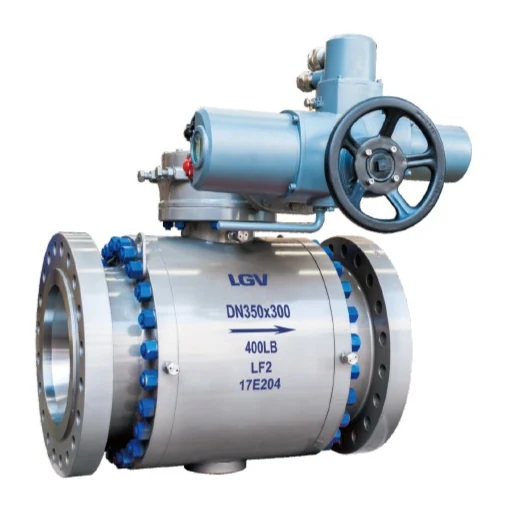
Electric three-piece forged steel fixed-ball valve. Source catalog label; verify power, torque, controls and the exact valve/actuator assembly before choosing it.
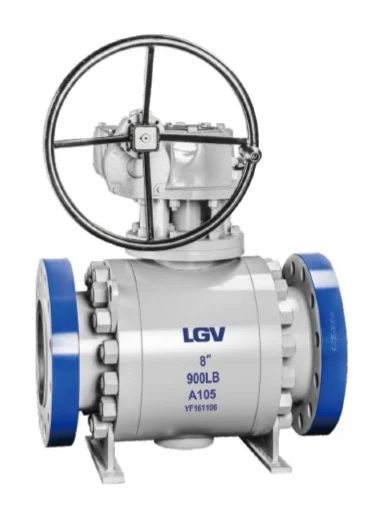
Hard-sealed, fixed ball. Source catalog label; confirm seat construction, shutoff criterion and applicable duty before specifying metal-seat performance.
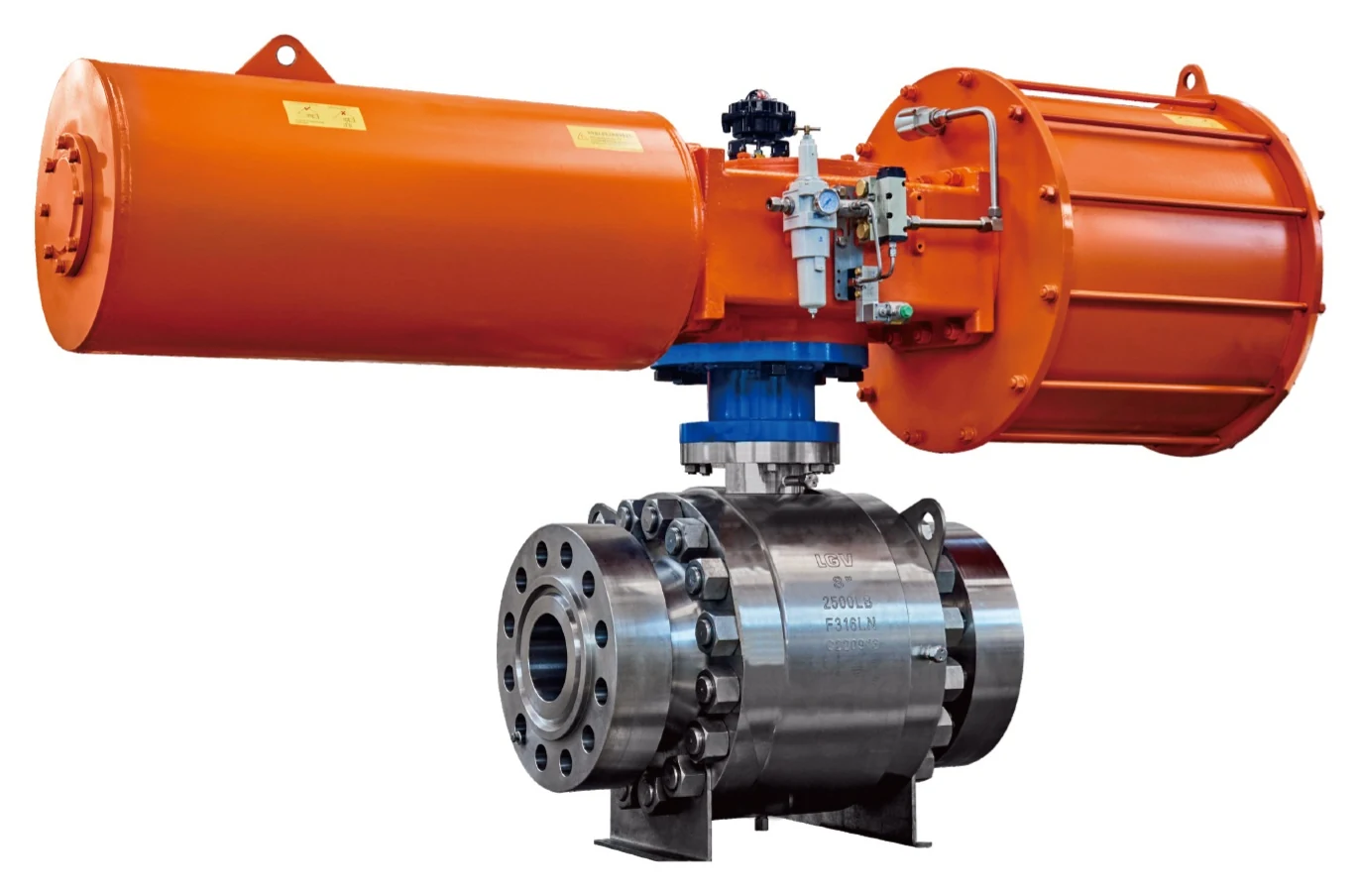
Pneumatic three-piece forged steel fixed-ball valve. Source catalog label; establish air supply, required torque, fail action and the complete actuator/valve interface.
Related valve selections
Compare the Right Ball-Valve Design
If the question is how the ball is supported, compare floating e trunnion-mounted designs. If the question is a welded pressure boundary for a buried or pipeline installation, review fully welded ball valves. These are different choices; they do not replace the three-piece body decision.
Ball Valves — series overview
Browse body, support, port and operating styles before choosing a series.
All valve product families
Return to the wider product range if a ball valve is not yet the right isolation device.
Applicazioni industriali
Match valve construction to the process and installation conditions.
Technical resources
Read general selection guidance separately from product-specific ratings and drawings.
Compare quotations on the same basis
What a Useful Three-Piece Valve Offer Should Identify
A comparable quotation names a specific product and shows how the proposed construction meets your service case. Check these three items before choosing on price or delivery date.
Exact construction and interfaces
Identify the illustrated or offered variant, body-joint design, ball support, end connection, port and dimensions. Separate operator and seat options from supplied equipment.
Duty-linked limits
Match pressure–temperature ratings, medium compatibility, shutoff criteria and maximum differential-pressure torque to the same proposed material and trim combination.
Documents for that offered assembly
Ask for a dimensional/sectional drawing, material and seat schedule, applicable inspection and test basis, maintenance guidance and the actual order-specific document list. Do not infer certification from a catalog family.
Domande degli acquirenti
Three-Piece Ball Valve Questions
These distinctions affect construction selection. Orderable limits and permitted maintenance procedures must come from the selected product documentation.
What does “three-piece” mean on a ball valve?
It refers to a center body and two end closures assembled with body fasteners. It does not specify floating versus fixed-ball support, port size, pressure class, seat design or operator.
Can every three-piece ball valve be serviced without disconnecting the piping?
No. Some arrangements permit access to the center body while the end connections remain in the line, but the actual removal method depends on the body joints, pipe ends, installed clearance and the manufacturer’s service instructions. The line must be safely isolated and depressurized before maintenance. Before opening or dismantling the valve, possible pressure or hazardous medium trapped in the valve cavity must also be addressed under the specific model manufacturer’s procedure; line depressurization alone does not establish that the cavity is safe.
Does “high-pressure,” “high-temperature” or “hard-sealed” in a catalog define the usable range?
No. These are catalog descriptors. Require the exact offered valve’s pressure–temperature limits, body and seat materials, shutoff test basis and dimensional drawing for the stated service.
What information makes a three-piece ball valve RFQ actionable?
Provide medium, pressure and temperature cases, nominal size, port and end connections, isolation duty, maximum differential pressure, maintenance access needs, operating method and project documentation requirements. Ask the supplier to identify the exact construction and any unconfirmed options.
Richiesta tecnica
Request a Three-Piece Ball Valve Configuration Review
Send the service conditions and the body-access requirement. We can discuss which documented configuration to evaluate; product-specific ratings, drawings, materials, testing and order scope still need to be matched to the proposed valve.
- Service medium, phase and relevant contaminants or solids
- Design and operating pressure/temperature, including maximum shutoff differential pressure
- Nominal size, full/reduced port and required end connection or flange specification
- Required body access, on-site clearance and pipe-end removal restrictions
- Floating or fixed-ball preference, if already established
- Seat/shutoff criterion, cycling and any trapped-cavity service concern
- Manual, pneumatic or electric operation; fail action, control and utilities
- Required drawing, inspection, test and material documentation