
Valvola di ritegno · valutazione allo scarico della pompa
Valvola di ritegno a farfalla a chiusura lenta
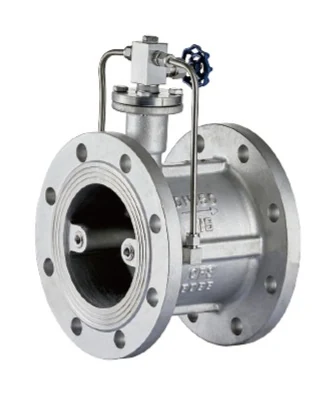
Il catalogo di origine elenca la Valvola di ritegno a farfalla a chiusura lenta come prodotto di ritegno. Allo scarico di una pompa, una valvola di ritegno limita il riflusso continuo quando la pompa si arresta, ma il suo movimento di chiusura può anche influire sui colpi di pressione della tubazione.
La chiusura lenta non è automaticamente la scelta più sicura. La risposta corretta dipende dalla rapidità con cui il flusso si inverte, dalla rotazione inversa che la pompa può tollerare e da come la valvola offerta si chiude effettivamente. Richiedere il disegno della valvola specifico per la dimensione e le informazioni sulla chiusura prima di approvare la configurazione.
- Funzione: ritegno / limitazione del riflusso
- Priorità di selezione: risposta all'arresto della pompa e comportamento di chiusura verificato
Funzione del prodotto
Una valvola di ritegno, non una valvola a farfalla manuale di intercettazione
Il termine a farfalla descrive la famiglia di valvole o la forma del disco nella denominazione di catalogo; valvola di ritegno definisce la sua funzione: limitare il riflusso. Una valvola a farfalla manuale di intercettazione è un prodotto diverso, anche se i corpi possono sembrare simili. Il catalogo prodotti le presenta con denominazioni separate.
A cosa è destinata
Fornisce una funzione di non ritorno in un sistema in cui la portata può decelerare e invertirsi, come nella mandata di una pompa. La risposta operativa effettiva dipende dalla configurazione.
Dove il catalogo lo colloca
Il catalogo riporta questa denominazione sotto Serie di valvole di regolazione idrauliche a pagina 103 del PDF fisico (pagine stampate 195–196). La sola intestazione di tale sezione non stabilisce la presenza di un attuatore idraulico o di un ammortizzatore su questa esatta configurazione.
Cosa non stabilisce la denominazione
Non conferma un corpo a schema Y, un volantino, un attuatore esterno, un tempo di chiusura fisso, una classe di materiale, una classe di pressione o prestazioni antigolfaggio testate. Tali dettagli richiedono una scheda tecnica e un disegno specifici dell'offerta.
Dettagli pubblicati nel catalogo
Identificazione a catalogo e dati specifici dell'ordine
Il catalogo supporta un'identità di prodotto, non una specifica tecnica completa. Le seguenti distinzioni evitano che una denominazione di categoria o un'illustrazione venga scambiata per una configurazione approvata.
| Articolo | Supportato dal catalogo | Necessario per un'offerta |
|---|---|---|
| Identità di catalogo | Valvola di ritegno a farfalla a chiusura lenta | Modello offerto o riferimento del disegno |
| Tipo funzionale | Valvola di ritegno (non ritorno) | Movimento effettivo dell'otturatore e meccanismo di chiusura |
| Serie di catalogo | Serie di valvole di regolazione idrauliche | Scheda tecnica specifica per configurazione |
| Dimensioni e connessioni | Non indicato per questa voce di catalogo | DN/NPS, foratura flangia, distanza tra le facce, tubazione di accoppiamento e orientamento di installazione |
| Limiti di esercizio | Nessun intervallo di pressione, temperatura o materiale confermato | Pressione di progetto/esercizio, differenziale inverso, transitori, caso di vuoto, fluido, materiali e disposizione di tenuta |
| Dati di chiusura e idraulici | Nessuna curva di risposta, tempo di chiusura fisso o curva delle perdite di carico forniti | Closing characteristics at the stated duty, minimum stable flow and pressure-loss information |
Use an approved general arrangement drawing and offer-specific technical schedule—not this catalog illustration—for flange fit-up, installation, material acceptance and surge evaluation.
Pump-discharge selection
How to decide whether slow closing fits the duty
Start with the pump-trip case, not a requested closing time. If reverse flow develops rapidly, a slower-closing check valve may expose the pump to more backflow before seating. If the project instead requires controlled deceleration over a longer pipeline response, a suitable closing arrangement may help—but it must be evaluated with the line and pump, not from the product name.
For severe pump trips, parallel-pump operation, long rising mains, or reported water hammer, request a hydraulic transient review and the valve’s actual dynamic response. Compare a faster-acting check-valve option or a coordinated pump-control strategy where the duty calls for one; quick-closing check valves are a separate selection route, not an interchangeable synonym.
Pump stop and reverse-flow tolerance
Supply pump type, speed/inertia or coast-down information, shutdown and power-failure scenarios, number of pumps, static head and whether the pump can tolerate reverse flow or reverse rotation. If reverse rotation is prohibited, do not approve delayed closure without a system review.
Actual closure response
Ask the supplier to identify the disc, shaft and any closing-control equipment on the offered valve. Request operating sequence, closing behavior versus decelerating flow, and any documented setting or test data. The source label alone does not prove a hydraulic damper, external actuator or adjustable closing time.
Minimum flow and head loss
Provide minimum, normal and peak forward flows and the allowable pressure loss. Check whether the selected disc remains stable and sufficiently open at low flow; partially open or fluttering check-valve discs can increase wear. Request the size-specific loss curve or coefficient, not an unverified low-resistance claim.
Pressure, backpressure and transients
State normal and design pressure, maximum reverse differential pressure, minimum/maximum temperature and any credible surge, downsurge or vacuum condition. A steady-state pressure class alone does not establish suitability for pressure waves or column separation.
Connection and access
Provide DN/NPS, proposed flange standard/drilling, face-to-face allowance, flow direction, horizontal or vertical layout, valve and pipe support, and access for the closure mechanism and inspection. Verify actual mounting orientations on the approved drawing.
System fit
Which operating conditions change the answer?
The same catalog label cannot establish one closure behavior for every pumping station. These cases change which evidence should be requested before ordering.
Rapid reversal or multiple pumps
If a stopped pump may see rapid reverse flow from a live common header, select for closing dynamics and pump backspin limits. A quick-closing check-valve design may be worth evaluating instead of assuming slower is better.
Long pipelines and elevation changes
For long rising mains or lines with high points, check pressure-wave reflection, possible subatmospheric pressure, air admission and column separation. A check valve alone may not provide adequate surge protection; the engineer should assess the pumping sequence and other surge-control devices.
Low flow, solids and maintenance access
Low stable flow may leave the disc incompletely open. Suspended solids may affect sealing or closing components. Confirm medium compatibility, minimum stable flow, fouling risk, orientation and maintenance access for the exact offering.
Other non-return designs
Alternatives to assess against the pump duty
These links lead to different catalog identities, not verified substitutes. Choose by transient behavior, sealing, operating envelope and connection data—not by product family names alone.
Valvola di ritegno a sfera
Another non-return configuration. Compare passage, installation constraints and available operating data when the priority is a different check-valve form rather than controlled closure.
Valvola di ritegno per alta pressione in acciaio fucinato
Relevant when a project calls for a forged construction and a documented pressure-temperature envelope. Its actual ratings and end connections must come from its own offered datasheet.
Valvola di ritegno per centrale elettrica ad alta temperatura e alta pressione
A separate high-temperature/high-pressure catalog identity. Do not transfer its service limits, trim materials or test criteria to this slow-closing valve.
Engineering questions
Slow-closing check valve: questions before approval
Use these points to resolve the choice of closing behavior, not to assume that the catalog title is a complete datasheet.
Does slow closing always prevent water hammer?
No. Delayed closure may allow reverse velocity to increase before seating, while a rapid stop can generate a pressure surge. The pump, pipeline profile and offered valve dynamics must be evaluated together; do not infer an anti-hammer guarantee from the name.
How is this different from a manual butterfly valve?
A check valve addresses reverse flow and typically responds to the hydraulic conditions. A manual butterfly isolation valve is operated to open, close or isolate the line. The source catalog lists the two products separately; its manual gear arrangement must not be assigned to this check valve.
Can it be installed in a vertical line?
Not on the catalog label alone. The valve disc, closing device, flow direction and gravity effects determine permitted orientations. Obtain a model-specific installation drawing and confirmation before deciding on vertical service.
What evidence is needed with the quotation?
Request the offered drawing, size and mating-flange details, materials and traceability, closure arrangement and dynamic data, flow-loss information, specified inspection/testing and witness scope, plus commercial delivery documents. Supply the pump-trip and reverse-pressure conditions so the quotation can be checked for the actual duty.
Technical quotation
Request a pump-duty configuration and quotation
Identify the Valvola di ritegno a farfalla a chiusura lenta and describe the pump and pipeline duty. Include your pump-trip scenario and allowable reverse-flow / surge limits if known. The response should identify the offered construction, its documented closing behavior, and any data still required for engineering approval.
Ask for the model-specific datasheet and general arrangement drawing, material/test documentation scope, traceability and any third-party inspection or witness requirements. Specify quantities, requested delivery date, destination and quotation documents or terms. These are request items, not commitments about stock, certification or lead time.
- Medium, minimum/normal/maximum flow; pump type, trip/coast-down and reverse-flow limits
- DN/NPS, connection standard, orientation, design pressure/temperature, backpressure, surge and vacuum cases
- Body/disc/seat materials, seal requirements, coating and approved GA/closure drawings
- Closing mechanism and response evidence, loss curve, material certificates/traceability and testing/witness scope
- Quantity, requested lead time, delivery destination, quote terms and required commercial/technical files