
Обратный клапан · оценка на нагнетании насоса
Обратный клапан с медленным закрытием дискового типа
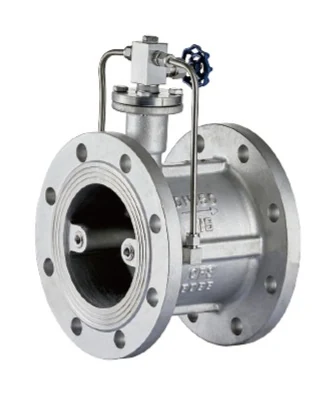
В исходном каталоге указано Обратный клапан с медленным закрытием дискового типа как изделие обратного действия. На нагнетании насоса обратный клапан ограничивает устойчивый обратный поток при остановке насоса, но его закрытие также может влиять на гидравлические удары в трубопроводе.
Медленное закрытие не всегда является более безопасным выбором. Правильное решение зависит от того, насколько быстро меняется направление потока, какое обратное вращение выдерживает насос и как фактически закрывается предлагаемый клапан. Перед утверждением конфигурации запросите чертёж клапана для конкретного типоразмера и информацию о его закрытии.
- Функция: обратное действие / ограничение обратного потока
- Приоритет выбора: реакция на отключение насоса и подтверждённое поведение при закрытии
Назначение изделия
Обратный клапан, а не ручной дисковый отсечной затвор
Слово дисковый поворотный затвор обозначает семейство клапанов или форму диска в наименовании по каталогу; обратный клапан определяет его назначение: ограничение обратного потока. Ручной дисковый отсечной затвор — это другой продукт, даже если корпуса выглядят похоже. В каталоге продукции они представлены под разными обозначениями.
Для чего он предназначен
Обеспечивает функцию невозврата в системе, где поток может замедляться и менять направление, например на нагнетании насоса. Фактическая рабочая реакция зависит от конфигурации.
Где это указано в каталоге
В источнике это наименование указано под Серия клапанов с гидравлическим управлением на физической странице PDF 103 (печатные страницы разворота 195–196). Один этот заголовок раздела не подтверждает наличие гидравлического привода или демпфера в данной конкретной конфигурации.
Что наименование не подтверждает
Оно не подтверждает корпус Y-образной формы, маховик, внешний привод, фиксированное время закрытия, марку материала, класс давления или проверенную защиту от гидроудара. Эти сведения требуют спецификации и чертежа для конкретного предложения.
Опубликованные данные каталога
Идентификация по каталогу и данные конкретного заказа
Каталог подтверждает идентичность изделия, но не является полной технической спецификацией. Приведённые ниже разграничения не позволяют принять название категории или иллюстрацию за согласованную конфигурацию.
| Позиция | Подтверждено каталогом | Требуется для предложения |
|---|---|---|
| Идентификация в каталоге | Обратный клапан с медленным закрытием дискового типа | Предлагаемая модель или ссылка на чертёж |
| Функциональный тип | Обратный клапан (невозвратный) | Фактическое движение диска и механизм закрытия |
| Серия каталога | Серия клапанов с гидравлическим управлением | Технический паспорт для конкретной конфигурации |
| Размеры и присоединения | Не указано для данной позиции каталога | DN/NPS, разболтовка фланцев, строительная длина, ответный трубопровод и монтажное положение |
| Рабочие пределы | Подтверждённый диапазон давления, температуры и материалов отсутствует | Расчётное/рабочее давление, перепад обратного потока, переходные процессы, вакуумный режим, среда, материалы и схема уплотнения |
| Данные затвора и гидравлические характеристики | Кривая срабатывания, фиксированное время закрытия и кривая потерь напора не предоставлены | Closing characteristics at the stated duty, minimum stable flow and pressure-loss information |
Use an approved general arrangement drawing and offer-specific technical schedule—not this catalog illustration—for flange fit-up, installation, material acceptance and surge evaluation.
Pump-discharge selection
How to decide whether slow closing fits the duty
Start with the pump-trip case, not a requested closing time. If reverse flow develops rapidly, a slower-closing check valve may expose the pump to more backflow before seating. If the project instead requires controlled deceleration over a longer pipeline response, a suitable closing arrangement may help—but it must be evaluated with the line and pump, not from the product name.
For severe pump trips, parallel-pump operation, long rising mains, or reported water hammer, request a hydraulic transient review and the valve’s actual dynamic response. Compare a faster-acting check-valve option or a coordinated pump-control strategy where the duty calls for one; quick-closing check valves are a separate selection route, not an interchangeable synonym.
Pump stop and reverse-flow tolerance
Supply pump type, speed/inertia or coast-down information, shutdown and power-failure scenarios, number of pumps, static head and whether the pump can tolerate reverse flow or reverse rotation. If reverse rotation is prohibited, do not approve delayed closure without a system review.
Actual closure response
Ask the supplier to identify the disc, shaft and any closing-control equipment on the offered valve. Request operating sequence, closing behavior versus decelerating flow, and any documented setting or test data. The source label alone does not prove a hydraulic damper, external actuator or adjustable closing time.
Minimum flow and head loss
Provide minimum, normal and peak forward flows and the allowable pressure loss. Check whether the selected disc remains stable and sufficiently open at low flow; partially open or fluttering check-valve discs can increase wear. Request the size-specific loss curve or coefficient, not an unverified low-resistance claim.
Pressure, backpressure and transients
State normal and design pressure, maximum reverse differential pressure, minimum/maximum temperature and any credible surge, downsurge or vacuum condition. A steady-state pressure class alone does not establish suitability for pressure waves or column separation.
Connection and access
Provide DN/NPS, proposed flange standard/drilling, face-to-face allowance, flow direction, horizontal or vertical layout, valve and pipe support, and access for the closure mechanism and inspection. Verify actual mounting orientations on the approved drawing.
System fit
Which operating conditions change the answer?
The same catalog label cannot establish one closure behavior for every pumping station. These cases change which evidence should be requested before ordering.
Rapid reversal or multiple pumps
If a stopped pump may see rapid reverse flow from a live common header, select for closing dynamics and pump backspin limits. A quick-closing check-valve design may be worth evaluating instead of assuming slower is better.
Long pipelines and elevation changes
For long rising mains or lines with high points, check pressure-wave reflection, possible subatmospheric pressure, air admission and column separation. A check valve alone may not provide adequate surge protection; the engineer should assess the pumping sequence and other surge-control devices.
Low flow, solids and maintenance access
Low stable flow may leave the disc incompletely open. Suspended solids may affect sealing or closing components. Confirm medium compatibility, minimum stable flow, fouling risk, orientation and maintenance access for the exact offering.
Other non-return designs
Alternatives to assess against the pump duty
These links lead to different catalog identities, not verified substitutes. Choose by transient behavior, sealing, operating envelope and connection data—not by product family names alone.
Обратный клапан шаровой
Another non-return configuration. Compare passage, installation constraints and available operating data when the priority is a different check-valve form rather than controlled closure.
Обратный клапан высокого давления из кованой стали
Relevant when a project calls for a forged construction and a documented pressure-temperature envelope. Its actual ratings and end connections must come from its own offered datasheet.
Обратный клапан для электростанций на высокие температуру и давление
A separate high-temperature/high-pressure catalog identity. Do not transfer its service limits, trim materials or test criteria to this slow-closing valve.
Engineering questions
Slow-closing check valve: questions before approval
Use these points to resolve the choice of closing behavior, not to assume that the catalog title is a complete datasheet.
Does slow closing always prevent water hammer?
No. Delayed closure may allow reverse velocity to increase before seating, while a rapid stop can generate a pressure surge. The pump, pipeline profile and offered valve dynamics must be evaluated together; do not infer an anti-hammer guarantee from the name.
How is this different from a manual butterfly valve?
A check valve addresses reverse flow and typically responds to the hydraulic conditions. A manual butterfly isolation valve is operated to open, close or isolate the line. The source catalog lists the two products separately; its manual gear arrangement must not be assigned to this check valve.
Can it be installed in a vertical line?
Not on the catalog label alone. The valve disc, closing device, flow direction and gravity effects determine permitted orientations. Obtain a model-specific installation drawing and confirmation before deciding on vertical service.
What evidence is needed with the quotation?
Request the offered drawing, size and mating-flange details, materials and traceability, closure arrangement and dynamic data, flow-loss information, specified inspection/testing and witness scope, plus commercial delivery documents. Supply the pump-trip and reverse-pressure conditions so the quotation can be checked for the actual duty.
Technical quotation
Request a pump-duty configuration and quotation
Identify the Обратный клапан с медленным закрытием дискового типа and describe the pump and pipeline duty. Include your pump-trip scenario and allowable reverse-flow / surge limits if known. The response should identify the offered construction, its documented closing behavior, and any data still required for engineering approval.
Ask for the model-specific datasheet and general arrangement drawing, material/test documentation scope, traceability and any third-party inspection or witness requirements. Specify quantities, requested delivery date, destination and quotation documents or terms. These are request items, not commitments about stock, certification or lead time.
- Medium, minimum/normal/maximum flow; pump type, trip/coast-down and reverse-flow limits
- DN/NPS, connection standard, orientation, design pressure/temperature, backpressure, surge and vacuum cases
- Body/disc/seat materials, seal requirements, coating and approved GA/closure drawings
- Closing mechanism and response evidence, loss curve, material certificates/traceability and testing/witness scope
- Quantity, requested lead time, delivery destination, quote terms and required commercial/technical files