
Katalogkonformer Absperrschieber mit Druckmanteldichtung
ASME Edelstahl-Hochdruck-Absperrschieber mit selbstabdichtender Ausführung
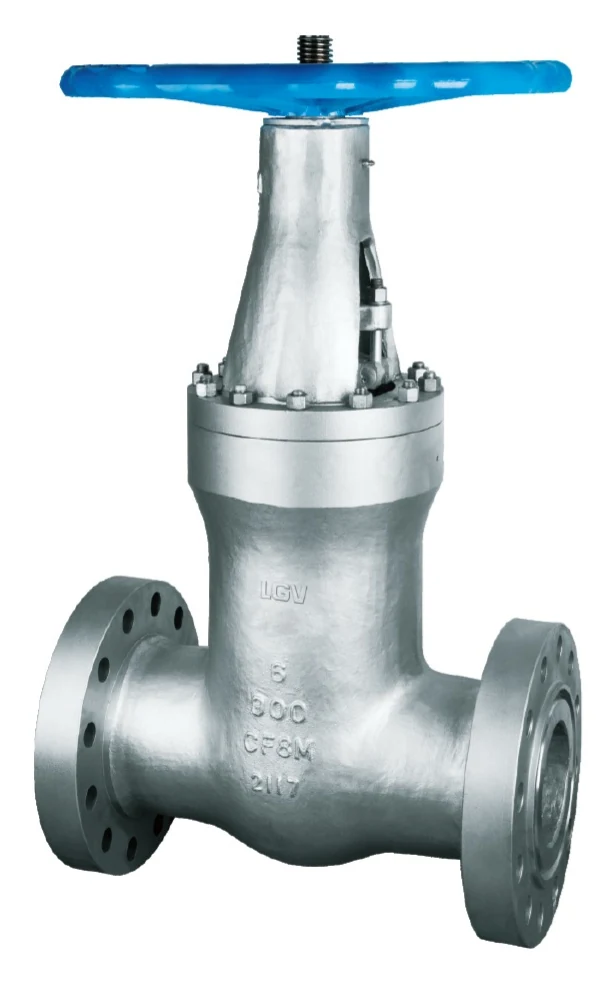
Der Katalog führt einen ASME Edelstahl-Hochdruck-Absperrschieber mit selbstabdichtender Ausführung, mit Druckmanteldichtung (pressure-seal bonnet), für die projektbezogene Prüfung der Absperrfunktion auf. Die druckunterstützte Gehäuse-Gehäuseoberteil-Verbindung ist keine Druckstufe und keine Garantie für die Dichtheit von Sitz oder Spindel. Vor der Spezifikation dieses Ventils sind die vorgesehenen Werkstoffe und die Druck-Temperatur-Bemessung mit dem vollständigen Betriebsfall abzugleichen; anschließend sind die Details der Gehäuseoberteil-Dichtung, die Betriebsdruckdifferenz und die geforderten Prüfdokumente zu prüfen.
- Gehäuseoberteil: selbstdichtend durch Druck (Katalogbezeichnung)
- Werkstoff: Edelstahl (genaue Gehäuse- und Innenwerkstoffgüten nicht bestätigt)
- Druck: Hochdruck-Kennzeichnung, keine zugewiesene ASME Class
- Normen: ASME im Katalog genannt; Konformität und Ausgaben zu prüfen
Ausführung des Gehäuseoberteils
Was eine Druckmanteldichtung am Gehäuseoberteil ändert – und was nicht
Eine Druckmanteldichtung am Gehäuseoberteil ist eine Gehäuse-Gehäuseoberteil-Verbindung. Der Innendruck unterstützt die Dichtkontaktierung an dieser Verbindung; das tatsächliche Verhalten hängt von der Dichtung, den Kontaktflächen und der Montage ab. Sie ist getrennt von den Keilsitzen und der Spindelstopfbuchse zu bewerten, insbesondere wenn Anfahren, Abfahren oder thermische Wechsel die Druckverhältnisse an der Verbindung verändern.
Druckunterstützte Gehäuse-Oberteil-Verbindung
Bei einer Druckdichtung kann steigender Innendruck die Druckbelastung an der Oberteildichtung erhöhen. Die Eignung bei niedrigem Druck, über thermische Transienten und nach Wartungsarbeiten hängt weiterhin von der tatsächlichen Verbindungsausführung und dem Montageverfahren ab.
Drei unabhängige Leckagepfade
Leckage an der Oberteildichtung, Leckage an der Spindelpackung und Leckage über den Sitz haben unterschiedliche Dichtflächen. Die Wahl eines Druckdichtungs-Oberteils belegt weder die Emissionsleistung der Spindel noch eine Sitzleckageklasse.
Was der Katalog angibt
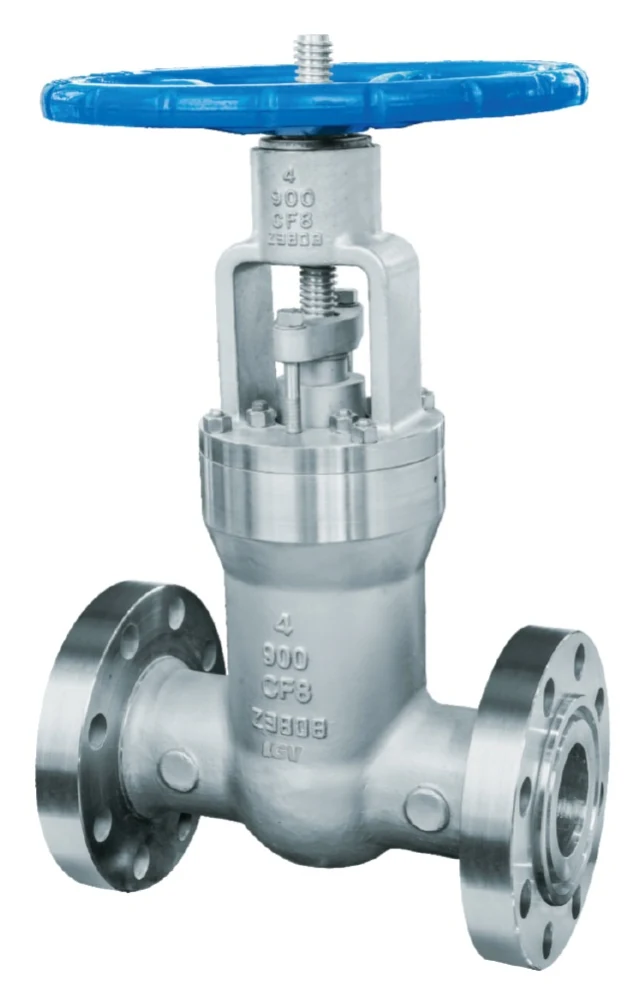
Lianggong englischer Ventilkatalog, physische PDF-Seite 76, gedruckte Seite 141: zwei benachbarte Ansichten unter diesem exakten Produkttitel. Die Bilder belegen die Katalogzuordnung und das Erscheinungsbild, nicht Werkstoffe nach Güte, Ventilabmessungen oder eine qualifizierte Druckstufe.
Katalogdaten
Katalogidentität versus bestellbare Spezifikationen
Der Originalkatalog legt einen Produktnamen und Konstruktionsmerkmale fest, liefert für diesen Eintrag jedoch keine bestellfertige Übersicht über Größen, Druckstufen, Temperaturen, Dichtungswerkstoffe oder Prüfabnahmekriterien. Die folgenden Unterscheidungen verhindern, dass Katalogformulierungen mit einem validierten Datenblatt verwechselt werden.
| Feld | Katalogwortlaut | Was festgelegt ist |
|---|---|---|
| Armaturenfamilie | Absperrschieber | Produkttyp benannt; Ausführung nicht spezifiziert |
| Gehäuse-Oberteil-Konstruktion | Druckdichtungsselbstabdichtend | Konstruktion benannt; Verbindungszeichnung und Dichtungsdetail nicht geliefert |
| Werkstoffbezeichnung | Edelstahl | Nur beschreibend; Werkstoffgüten für Gehäuse, Gehäuseoberteil und Innenteile nicht bestätigt |
| Druckstufe | Hochdruck | Nur beschreibend; keine numerische Class- oder Druck-Temperatur-Bewertung |
| Standardbezeichnung | ASME | Erscheint im Titel; kein Nachweis für einen bestimmten Standard, eine Ausgabe oder Konformität |
| Katalogabschnitt | Absperrschieber-Baureihe | Gedruckte Katalogzuordnung, keine Modellspezifikation |
| Quellenangabe | PDF-Seite 76; gedruckte Seite 141 | Beide zugeordneten Ansichten erscheinen unter diesem Katalogtitel |
In diesem Katalogeintrag nicht angegeben: ein zertifiziertes Werkstoffverzeichnis, zulässiger Druck bei Temperatur, tatsächliche Abmessungen der Endanschlüsse, Spezifikation der Gehäuseoberteil-Dichtung oder Prüfprotokoll. Fordern Sie vor dem Kauf ein angebotenes Datenblatt und eine freigegebene Übersichtszeichnung an.
Nachweise und offene Anforderungen
Was ist bestätigt, und was erfordert eine Angebotszeichnung?
Der Katalog stützt die genannte Absperrschieber-Baureihe, die Konstruktionsbezeichnung Druckdichtung, die Edelstahl-Bezeichnung und zwei zugeordnete Fotos. Das Angebot muss die tatsächlichen Werkstoffe, Auslegungsbedingungen und Betriebsausrüstung benennen. Aus dem Katalogtitel werden keine Druckstufe, Temperaturgrenze oder Normkonformität abgeleitet.
Catalog-confirmed identifiers
- Gate valve: product family named in the catalog
- Pressure self-sealing: bonnet construction descriptor only
- Stainless steel: material descriptor, without a specified grade
- High pressure: wording in title, not a published rating
- ASME: title reference, not a conformity or certification statement
Supplier data to approve before ordering
- Pressure–temperature rating for exact materials and maximum design temperature
- Pressure-seal gasket, retaining parts, seating surfaces and assembly requirements
- Body, bonnet, gate, seats, stem, packing and any hardfacing material grades
- Nominal size, end type, face-to-face dimensions and mating piping details
- Service fluid, corrosion/erosion exposure and minimum operating temperature
- Opening differential, actuator load and any pressure-locking mitigation
- Body/bonnet pressure tests, seat-leakage basis and applicable standards/editions
- Approved drawing, material traceability, inspection records and service access
Configuration selection
How to qualify this pressure-seal gate valve for an RFQ
Start with the full isolation duty rather than the words “high pressure.” A pressure-seal bonnet may be considered where body–bonnet joint integrity matters, but the complete offered valve must be rated for the pressure, temperature, medium and operating conditions. If the offered material-specific pressure–temperature rating falls below a required design condition, do not approve that configuration, even if its catalog name contains “ASME.”
Pressure and temperature: the first exclusion test
Request the pressure–temperature rating for the proposed body and bonnet materials, with the applicable code and edition. Check design pressure at the highest required design temperature, minimum temperature and credible transient conditions. A nominal Class label is not a constant permissible pressure at every temperature.
Bonnet gasket and joint assembly
Ask for the pressure-seal gasket/ring material, mating-surface requirements, retainer arrangement and documented assembly procedure. Pressure assistance at the joint does not remove the need for initial sealing contact or qualification through low-pressure operation and thermal cycling. No gasket composition is confirmed for this item.
Stainless steel, seats and packing
Specify body and bonnet grades separately from gate, seating surfaces, stem, packing and pressure-seal gasket. Fluid chemistry, chlorides, temperature and corrosion or galling risk can change the acceptable combination. “Stainless steel” alone does not identify a compatible grade or seal material; request a parts/material list and the material certificates required by the purchase specification.
Isolation function and opening loads
Use a gate valve primarily for open/closed isolation; routine throttling needs another valve selection. Confirm maximum differential pressure on opening, required stem thrust/torque and operating frequency. Where large differential pressure, heating of trapped fluid or thermal binding is credible, request the proposed equalization or bypass strategy—none is proven by these catalog photos.
Acceptance and traceable documents
Before award, agree on the specific design, material, examination and pressure/seat test standards and editions, together with acceptance criteria. Request the approved drawing, pressure-boundary and seat-leakage test records, material certificates, marking/traceability and any required witness points. These are RFQ requirements, not claims that records already exist for WP263.
Service and installation conditions
Conditions that can change the offered valve
The body–bonnet seal is only one part of pressure containment. A suitable offer must also address process chemistry, thermal transients, load on the closure element and the space available to operate or service the valve.
Fluid chemistry and sealing compatibility
Provide medium composition, concentration, solids, cleaning chemicals and expected upset conditions. Confirm compatibility separately for pressure-boundary metal, gate/seat surfaces, stem packing and bonnet gasket. Do not assume an unspecified stainless steel resists the complete service.
Heat-up, shutoff and trapped pressure
During startup or shutdown, trapped fluid and temperature changes may affect the gate opening load and the bonnet joint. If the line can experience large operating differential or thermal cycling, have the supplier document the pressure-locking/thermal-binding review and the proposed operating sequence before fixing the operator.
Connections and maintenance clearance
Use the offered dimensioned drawing to verify ends, mating connections, face-to-face, installation orientation, stem travel and room to dismantle the bonnet/gasket. Catalog photos are not dimensional evidence, and the final supplied end connection is not established by the image alone.
Verified catalog photos
Two catalog views matched to this product
Both views are printed under the exact “ASME Stainless Steel Self-Sealing High Pressure Gate Valve” caption on catalog page 141. They document the appearance of catalog examples, not the specified pressure rating, seal materials, dimensions or final ordered design.
Alternative valve routes
Compare the bonnet type before changing size or actuation
For a closer pressure-seal comparison, see the ASME-Hochdruck-Absperrschieber mit Selbstabdichtung und ASME-Absperrschieber mit Selbstabdichtung für hohe Temperatur und hohen Druck. Those catalog names do not establish interchangeability. The existing routes below cover other large-diameter or electric arrangements; evaluate each against its own offered drawing and rating.
Großer elektrischer Absperrschieber
Consider only when the project calls for a separately specified large-diameter and powered arrangement. Confirm size, operator load and pressure–temperature capability rather than assuming equivalence.
ASME Großventil mit elektrischem Stellantrieb
An ASME-labeled electric large-diameter route, not a proven substitute for this pressure-seal construction. Compare actuation, ends, joint design and approved ratings.
ASME-Absperrschieber für große Nennweiten
Another catalog route for large-diameter isolation. Check exact body–bonnet construction and material-specific rating before using it as an alternative.
Technical buyer questions
Pressure-seal gate valve: buyer questions
Use these answers to separate a catalog construction label from the performance that must be demonstrated by the offered configuration.
Does a pressure-seal bonnet eliminate all valve leakage?
No. The pressure-assisted seal concerns the body–bonnet joint. Stem packing and the gate/seat shutoff are different leakage paths. The selected gasket and joint also need to seal under the required pressure and temperature cycling conditions.
Does “ASME” in the name prove ASME B16.34 compliance or a pressure Class?
No. “ASME” is part of the catalog designation, not a certification or assigned pressure Class. Request the specified code and edition, design and test records, and the pressure–temperature rating of the exact offered materials.
Can the stainless steel label identify the bonnet gasket or trim materials?
No. It does not define body or bonnet grade, wedge and seat materials, stem packing or pressure-seal gasket composition. These must be listed separately on the approved material schedule and checked against the fluid and temperature.
What data should accompany a quotation request?
Give the isolation duty, fluid, design and operating pressure/temperature, nominal size, end connections, maximum opening differential, actuation preference, quantity and required drawings, material certificates and pressure/leakage tests. Request a configuration-specific offer.
Technisches Angebot anfragen
Request the material, bonnet-seal and rating review
Referenz WP263 / CCE-R2-0042 in the inquiry. Include what is known and specify the records needed for approval; the team can discuss the proposed configuration without treating the catalog photos or name as a certified datasheet.
- Isolation service, medium, operating/design pressure and temperature
- NPS/DN, desired pressure Class, end connections and piping requirements
- Required pressure-seal gasket, body/bonnet/trim/packing materials or review criteria
- Opening differential, operator preference and expected thermal cycling
- Quantity and requested drawing, certificates, examination and test documents