
Robinet-vanne à chapeau à pression équilibrée selon catalogue
Robinet-vanne haute pression auto-étanche en acier inoxydable ASME
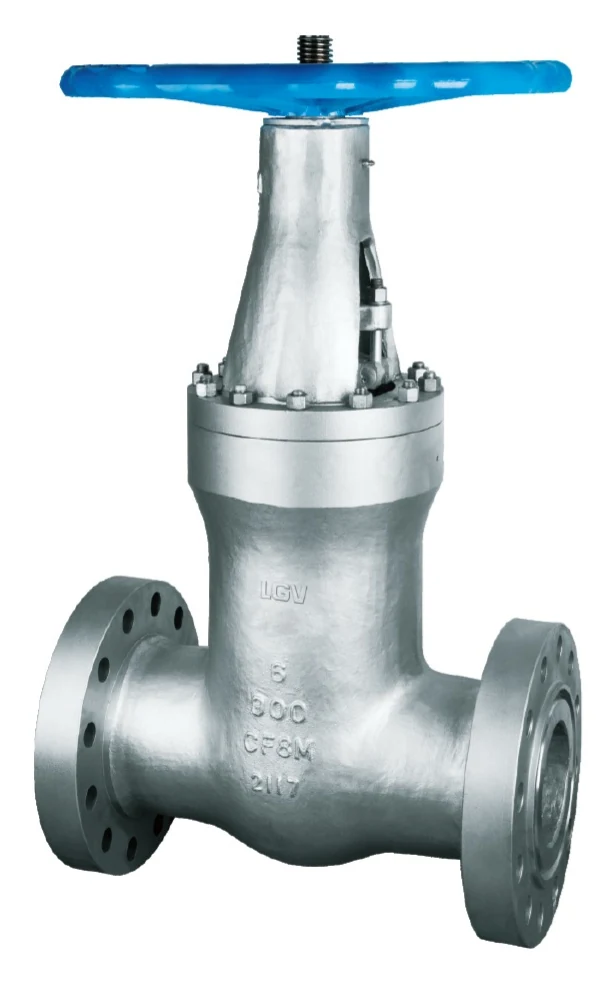
Le catalogue indique un Robinet-vanne haute pression auto-étanche en acier inoxydable ASME, avec une construction à chapeau à pression équilibrée, pour un examen de l'isolement propre au projet. Le joint corps–chapeau assisté par la pression ne constitue ni une classe de pression ni une garantie d'étanchéité du siège ou de la tige. Avant de prescrire ce robinet, vérifiez que les matériaux proposés et la classe pression–température correspondent à l'ensemble des conditions de service, puis examinez les détails du joint de chapeau, le différentiel de fonctionnement et les documents d'essai requis.
- Chapeau : auto-étanchéité par pression (désignation catalogue)
- Matériau : acier inoxydable (nuances exactes du corps et de la garniture non confirmées)
- Pression : mention haute pression, pas une classe ASME attribuée
- Normes : ASME citée au catalogue ; conformité et éditions à vérifier
Construction du chapeau
Ce qu'un chapeau à pression équilibrée change — et ce qu'il ne change pas
Un chapeau à pression équilibrée est une conception de joint corps-chapeau. La pression interne favorise le contact d'étanchéité au niveau de ce joint ; son comportement réel dépend du joint d'étanchéité, des surfaces de contact et du montage. Il convient de l'évaluer séparément des sièges du robinet-vanne et de la garniture de tige, en particulier lorsque le démarrage, l'arrêt ou les cycles thermiques modifient la pression au travers du joint.
Joint corps–chapeau assisté par la pression
Dans une conception à joint d'étanchéité sous pression, l'augmentation de la pression interne peut ajouter une charge de compression au niveau du joint du chapeau. L'aptitude à basse pression, lors des transitoires thermiques et après maintenance dépend toujours de la conception réelle du joint et de la procédure de montage.
Trois chemins de fuite indépendants
La fuite au joint du chapeau, la fuite à la garniture de tige et la fuite à travers le siège présentent des interfaces d'étanchéité différentes. Le choix d'un chapeau à joint d'étanchéité sous pression ne détermine ni les performances d'émission au niveau de la tige ni une classification de fuite au siège.
Ce que le catalogue identifie
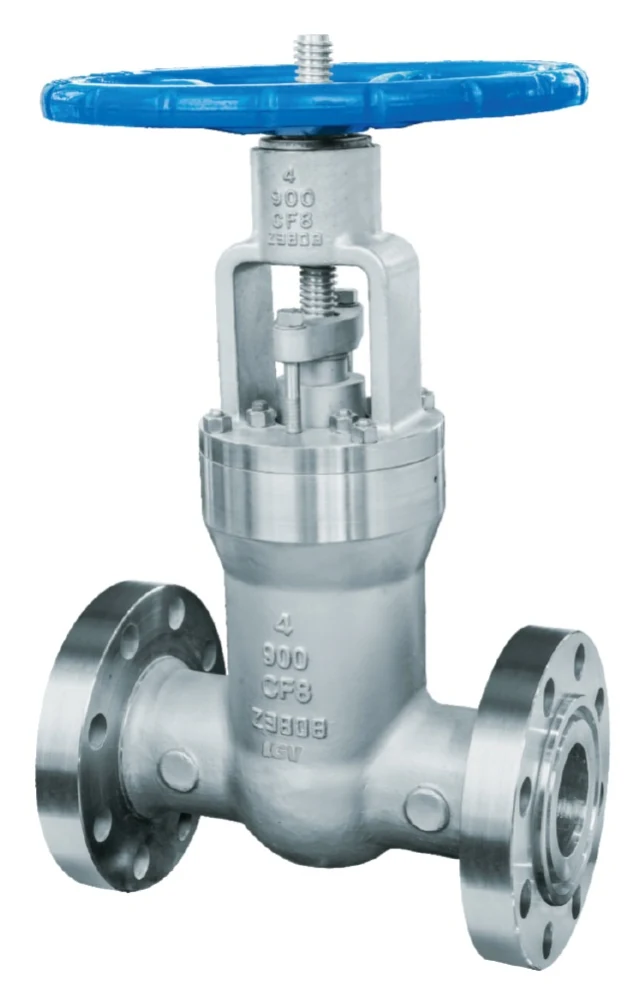
Catalogue de robinetterie anglais Lianggong, page PDF physique 76, page imprimée 141 : deux vues adjacentes sous ce titre de produit exact. Les images établissent le regroupement et l'apparence du catalogue, non les matériaux par nuance, les dimensions de la vanne ni une classe de pression qualifiée.
Données du catalogue
Identité du catalogue et spécifications commandables
Le catalogue d'origine établit un nom de produit et des descripteurs de construction, mais ne fournit aucun programme commandable de tailles, classes de pression, températures, matériaux d'étanchéité ou critères d'acceptation des essais pour cette entrée. Les distinctions ci-dessous évitent de confondre la formulation du catalogue avec une fiche technique validée.
| Champ | Formulation du catalogue | Ce qui est établi |
|---|---|---|
| Famille de robinets | Robinet-vanne | Type de produit nommé ; configuration non spécifiée |
| Construction corps–chapeau | Auto-étanchéité par pression | Construction nommée ; plan de joint et détail d'étanchéité non fournis |
| Désignation du matériau | Acier inoxydable | Descripteur uniquement ; nuances du corps, du chapeau et de la garniture non confirmées |
| Désignation de pression | Haute pression | Descriptif uniquement ; aucune Classe numérique ni caractéristique pression–température |
| Désignation de la norme | ASME | Apparaît dans le titre ; aucune norme, édition ou preuve de conformité spécifique |
| Section du catalogue | Série de robinets-vannes | Regroupement du catalogue imprimé, non une spécification de modèle |
| Emplacement source | Page 76 du PDF ; page imprimée 141 | Les deux vues correspondantes figurent sous ce titre de catalogue |
Non fourni dans cette fiche de catalogue : un programme matière certifié, la pression admissible à la température, les dimensions réelles des raccordements d'extrémité, la spécification du joint de chapeau ou un procès-verbal d'essai. Demander une fiche technique proposée et un plan d'ensemble approuvé avant achat.
Éléments justificatifs et exigences en suspens
Qu'est-ce qui est confirmé, et qu'est-ce qui nécessite un plan d'offre ?
Le catalogue étaye la famille de robinets-vannes nommée, le descriptif de construction à pression interne, la désignation en acier inoxydable et deux photos concordantes. Le devis doit identifier les matériaux réels, les conditions de conception et le matériel de manœuvre. Aucune Classe de pression, limite de température ni conformité à une norme n'est déduite du titre du catalogue.
Identifiants confirmés par le catalogue
- Gate valve: product family named in the catalog
- Pressure self-sealing: bonnet construction descriptor only
- Stainless steel: material descriptor, without a specified grade
- High pressure: wording in title, not a published rating
- ASME: title reference, not a conformity or certification statement
Supplier data to approve before ordering
- Pressure–temperature rating for exact materials and maximum design temperature
- Pressure-seal gasket, retaining parts, seating surfaces and assembly requirements
- Body, bonnet, gate, seats, stem, packing and any hardfacing material grades
- Nominal size, end type, face-to-face dimensions and mating piping details
- Service fluid, corrosion/erosion exposure and minimum operating temperature
- Opening differential, actuator load and any pressure-locking mitigation
- Body/bonnet pressure tests, seat-leakage basis and applicable standards/editions
- Approved drawing, material traceability, inspection records and service access
Configuration selection
How to qualify this pressure-seal gate valve for an RFQ
Start with the full isolation duty rather than the words “high pressure.” A pressure-seal bonnet may be considered where body–bonnet joint integrity matters, but the complete offered valve must be rated for the pressure, temperature, medium and operating conditions. If the offered material-specific pressure–temperature rating falls below a required design condition, do not approve that configuration, even if its catalog name contains “ASME.”
Pressure and temperature: the first exclusion test
Request the pressure–temperature rating for the proposed body and bonnet materials, with the applicable code and edition. Check design pressure at the highest required design temperature, minimum temperature and credible transient conditions. A nominal Class label is not a constant permissible pressure at every temperature.
Bonnet gasket and joint assembly
Ask for the pressure-seal gasket/ring material, mating-surface requirements, retainer arrangement and documented assembly procedure. Pressure assistance at the joint does not remove the need for initial sealing contact or qualification through low-pressure operation and thermal cycling. No gasket composition is confirmed for this item.
Stainless steel, seats and packing
Specify body and bonnet grades separately from gate, seating surfaces, stem, packing and pressure-seal gasket. Fluid chemistry, chlorides, temperature and corrosion or galling risk can change the acceptable combination. “Stainless steel” alone does not identify a compatible grade or seal material; request a parts/material list and the material certificates required by the purchase specification.
Isolation function and opening loads
Use a gate valve primarily for open/closed isolation; routine throttling needs another valve selection. Confirm maximum differential pressure on opening, required stem thrust/torque and operating frequency. Where large differential pressure, heating of trapped fluid or thermal binding is credible, request the proposed equalization or bypass strategy—none is proven by these catalog photos.
Acceptance and traceable documents
Before award, agree on the specific design, material, examination and pressure/seat test standards and editions, together with acceptance criteria. Request the approved drawing, pressure-boundary and seat-leakage test records, material certificates, marking/traceability and any required witness points. These are RFQ requirements, not claims that records already exist for WP263.
Service and installation conditions
Conditions that can change the offered valve
The body–bonnet seal is only one part of pressure containment. A suitable offer must also address process chemistry, thermal transients, load on the closure element and the space available to operate or service the valve.
Fluid chemistry and sealing compatibility
Provide medium composition, concentration, solids, cleaning chemicals and expected upset conditions. Confirm compatibility separately for pressure-boundary metal, gate/seat surfaces, stem packing and bonnet gasket. Do not assume an unspecified stainless steel resists the complete service.
Heat-up, shutoff and trapped pressure
During startup or shutdown, trapped fluid and temperature changes may affect the gate opening load and the bonnet joint. If the line can experience large operating differential or thermal cycling, have the supplier document the pressure-locking/thermal-binding review and the proposed operating sequence before fixing the operator.
Connections and maintenance clearance
Use the offered dimensioned drawing to verify ends, mating connections, face-to-face, installation orientation, stem travel and room to dismantle the bonnet/gasket. Catalog photos are not dimensional evidence, and the final supplied end connection is not established by the image alone.
Verified catalog photos
Two catalog views matched to this product
Both views are printed under the exact “ASME Stainless Steel Self-Sealing High Pressure Gate Valve” caption on catalog page 141. They document the appearance of catalog examples, not the specified pressure rating, seal materials, dimensions or final ordered design.
Alternative valve routes
Compare the bonnet type before changing size or actuation
For a closer pressure-seal comparison, see the Robinet-vanne haute pression à auto-étanchéité ASME et Robinet-vanne ASME à auto-étanchéité haute température et haute pression. Those catalog names do not establish interchangeability. The existing routes below cover other large-diameter or electric arrangements; evaluate each against its own offered drawing and rating.
Robinet-vanne électrique grand diamètre
Consider only when the project calls for a separately specified large-diameter and powered arrangement. Confirm size, operator load and pressure–temperature capability rather than assuming equivalence.
Robinet-vanne électrique ASME grand diamètre
An ASME-labeled electric large-diameter route, not a proven substitute for this pressure-seal construction. Compare actuation, ends, joint design and approved ratings.
Robinet-vanne ASME grand diamètre
Another catalog route for large-diameter isolation. Check exact body–bonnet construction and material-specific rating before using it as an alternative.
Technical buyer questions
Pressure-seal gate valve: buyer questions
Use these answers to separate a catalog construction label from the performance that must be demonstrated by the offered configuration.
Does a pressure-seal bonnet eliminate all valve leakage?
No. The pressure-assisted seal concerns the body–bonnet joint. Stem packing and the gate/seat shutoff are different leakage paths. The selected gasket and joint also need to seal under the required pressure and temperature cycling conditions.
Does “ASME” in the name prove ASME B16.34 compliance or a pressure Class?
No. “ASME” is part of the catalog designation, not a certification or assigned pressure Class. Request the specified code and edition, design and test records, and the pressure–temperature rating of the exact offered materials.
Can the stainless steel label identify the bonnet gasket or trim materials?
No. It does not define body or bonnet grade, wedge and seat materials, stem packing or pressure-seal gasket composition. These must be listed separately on the approved material schedule and checked against the fluid and temperature.
What data should accompany a quotation request?
Give the isolation duty, fluid, design and operating pressure/temperature, nominal size, end connections, maximum opening differential, actuation preference, quantity and required drawings, material certificates and pressure/leakage tests. Request a configuration-specific offer.
Demander un devis technique
Request the material, bonnet-seal and rating review
Référence WP263 / CCE-R2-0042 in the inquiry. Include what is known and specify the records needed for approval; the team can discuss the proposed configuration without treating the catalog photos or name as a certified datasheet.
- Isolation service, medium, operating/design pressure and temperature
- NPS/DN, desired pressure Class, end connections and piping requirements
- Required pressure-seal gasket, body/bonnet/trim/packing materials or review criteria
- Opening differential, operator preference and expected thermal cycling
- Quantity and requested drawing, certificates, examination and test documents