
Sürgülü bıçaklı vana | Kulaklı bağlantı
Lug Tipi Knife Gate Vana
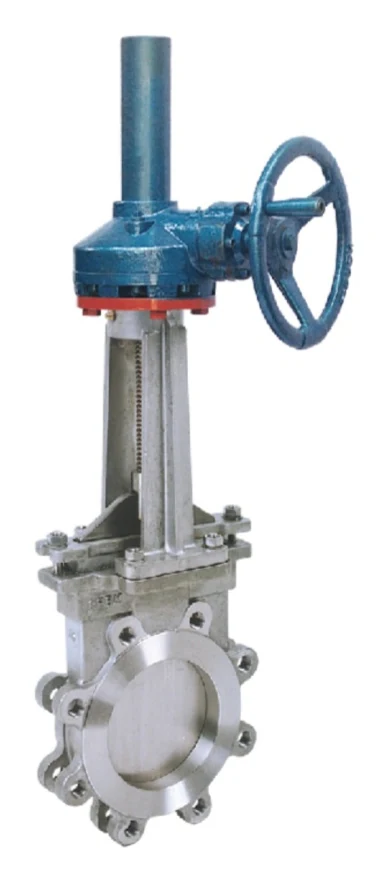
A kulaklı sürgülü bıçaklı vana boru tesisatı tasarımı yalnızca waver tipi sıkıştırmalı bağlantıya güvenmek yerine kulaklı gövde bağlantısı gerektirdiğinde değerlendirilir. Tedarikçi kataloğu bu ürünü adıyla tanımlar; ancak bu özel liste için ölçü aralığı, flanş delik düzeni, diferansiyel basınç sınıfı veya oturma (seat) tasarımı yayımlamaz.
Karşılık gelen flanşlar ve izolasyon göreviyle başlayın: cıvata kavrama boyunu ve montaj çizimini teyit edin; ardından bir konfigürasyon seçilmeden önce akış yönünü, kapama diferansiyel basıncını, akışkanı ve sızdırmazlık gereksinimlerini kontrol edin.
- Katalog kimliği: Kulaklı Sürgülü Bıçaklı Vana
- Bağlantı: kulaklı tip; nihai cıvata düzeni çizim gerektirir
- Oturma, malzeme ve görev sınıfları: konfigürasyona özgü
Bağlantı kararı
Kulaklı bağlantı neyi değiştirir?
Kulaklı gövdenin avantajı, boru hattı flanşlarıyla arayüz biçimindedir. Kulaklı düzen her iki tarafın ayrı ayrı bağlanmasına olanak tanıyabilir; ancak gerçek gövde delik düzeni, diş kavraması ve izin verilen montaj, sunulan tasarıma özgüdür.
İki flanş arasında
Valfin uçtan uca ölçüsünü, flanş yüzünü, cıvata daire çapını, delik sayısını ve diş profilini her iki karşı flanşla karşılaştırın. Tek başına nominal DN/NPS veya PN/Class etiketi uyumlu bir montajı doğrulamaz.
Hat sonunda
“Lug” ifadesinden kör hat (dead-end) kapasitesi olduğunu varsaymayın.” Alt akış flanşı veya boru, üst akış tarafı basınç altındayken sökülebilecekse, bu görev için açık onay ile birlikte anma diferansiyel basıncını, basınç yönünü ve gerekli destek donanımını talep edin.
Cıvatalar ve sızdırmazlık yüzeyleri
Onaylı delik derinliği, cıvata boyu ve conta/yuva düzenini kullanın. Kör dişli deliklerde dibe oturan cıvatalar valfe zarar verebilir veya sürgü hareketini engelleyebilir; başka bir üreticinin tork veya cıvata tablosu bu valfin çiziminin yerini tutmaz.
Kaynak katalog ve sipariş verileri
Bu liste için neler belgelenmiştir?
Orijinal tedarikçi kataloğu, fiziksel PDF sayfa 108 (basılı sayfa 206), yedinci görseli şu şekilde etiketler: Lug Tipi Knife Gate Vana Knife Gate Valve serisi içinde. Görsel, el çarkı donanımlı bir örneği gösterir; standart aktüatörü, basınç sınıfını, gövde malzemesini veya sipariş kodunu doğrulamaz.
| Öğe | Bilinen değer | Doğrulanacak husus |
|---|---|---|
| Ürün tanımı | Lug Tipi Knife Gate Vana | Katalog etiketi, s. 108 |
| Bağlantı tipi | Lug tipi bıçaklı sürgülü vana | Katalog etiketi; delme çizimi dahil değildir |
| Şemalı çalıştırma | Katalog görselinde gösterilen el çarkı | Yalnızca görsel amaçlıdır; sipariş edilebilir aktüatör spesifikasyonu değildir |
| Boyut, PN/Class ve kapama ΔP | Bu ürün kaydı için belirtilmemiştir | Anma boyutu / basınç / fark basıncı verilerini talep edin |
| Gövde, sürgü/trim, oturma yüzeyi ve salmastra | Bu ürün kaydı için belirtilmemiştir | Specify corrosion, abrasion and leakage requirements |
| Face-to-face, flange drilling, bolting | Bu ürün kaydı için belirtilmemiştir | Obtain approved dimensional and flange-bolting drawings |
| Flow direction, dead-end duty and tests | Bu ürün kaydı için belirtilmemiştir | Require written confirmation against the actual operating case |
Use this catalog entry to identify the requested construction. Purchase dimensions and operating limits must come from the exact offered datasheet and drawing, not from the illustration or a related knife gate model.
Service suitability
Select the seat and wetted materials for the medium
A knife gate is commonly considered for isolation duties, including lines carrying suspended solids, but the catalog label alone does not show whether this particular valve is suitable for slurry, abrasive particles or a specified leakage class. Define the shutoff requirement first, then match the proposed gate, seat and packing to the actual process.
Solids or abrasive service
- Provide the medium, solids concentration, particle size and any settling or plugging tendency.
- Specify the maximum differential pressure at closing and at shutoff, plus allowable seat leakage.
- Have the offered gate, seat, packing and service direction reviewed for wear and solids accumulation.
Corrosive or demanding service
- Give chemical composition, concentration, pH if relevant, cleaning agents and operating temperatures.
- Define body, gate/trim, seat and packing materials or request a compatibility proposal for review.
- Report corrosion allowance/coating requirements, erosion concerns and external exposure separately.
Configuration for quotation
The information needed to quote this lug arrangement
A useful specification combines line conditions, flange interface and shutoff duty. The following inputs prevent a quote for the right valve name but the wrong bolting pattern, seat or actuator.
Pressure and closing duty
Provide DN/NPS, requested PN/Class, design/normal pressure, maximum shutoff differential pressure, temperature range, flow direction, vacuum or surge conditions, and the permissible seat leakage. A flange class is not a complete valve pressure-temperature rating.
Companion flanges and bolting
Identify each flange standard, facing, drilling, gasket or integral-seat arrangement, available face-to-face distance, and whether the installation is between flanges or at a dead end. Ask for the bolt-hole/thread/engagement drawing and approved bolt lengths.
Medium and wetted parts
State fluid chemistry, solids and particle size where relevant, abrasion and corrosion demands, and required body, gate/trim, seat and packing materials. A requested grade is a specification input, not a confirmed catalog option.
Operation and utilities
Specify manual or powered operation, expected cycles, available power or instrument air, closing time if important, fail position if required, and actuator clearance. The pictured handwheel is not proof that every supplied variant is manual.
Inspection and project files
Request a model-specific datasheet, sectional/dimensional drawing, material records, pressure and seat test scope, inspection or witness points, and required certificates where applicable. Define quantities, tags, marking and project delivery destination.
Installation conditions
Three site details that can change the configuration
These conditions are worth identifying before the valve and actuator are finalized, particularly on solids-bearing lines and in confined plant areas.
Orientation and solids behavior
State horizontal, vertical or hopper installation, expected solids settling and whether flow can reverse. Valve orientation and the seat side depend on the offered design; do not infer bidirectional shutoff from the lug connection.
Plant environment
Provide ambient temperature, outdoor/weather exposure, washdown or chemical atmosphere, and any required enclosure or hazardous-area specification. None is established by the catalog photograph.
Access for servicing
Check vertical stroke and handwheel/actuator clearance, access to flange fasteners, isolation and draining arrangements, and whether packing or seat work will require removal from the line.
Other knife gate constructions
Compare by seat, drive and connection—not just name
These are separate catalog entries, not guaranteed substitutes. Review the parent Bıçaklı Sürgülü Valfler category for the available constructions before choosing an RFQ route.
Elektrikli Seramik Bıçaklı Sürgülü Vana
Explore its distinct electric ceramic designation if the project calls for that construction. Do not transfer its materials or ratings to the lug valve.
Seramik Bıçaklı Sürgülü Vana
A different catalog ceramic entry. Specify the seat, wetted materials and media before comparing it with the lug body.
Yeni Tip Knife Gate Vana
A separately named design in the same catalog series. Its body and connection details require its own drawing.
Technical RFQ
Request a Lug Knife Gate Valve configuration
Send the duty and piping details below and reference “Lug Knife Gate Valve — catalog PDF p. 108.” Ask for a configuration-specific datasheet and connection drawing before approving materials, bolting or end-of-line use.
- DN/NPS; PN/Class request; operating/design pressure, shutoff ΔP and temperature range
- Medium, solids/particle size, chemical compatibility, erosion and corrosion allowances
- Companion flange standard/facing/drilling; bolting, gasket and end-of-line conditions
- Body, gate/trim, seat and packing requirements; shutoff direction and leakage limit
- Actuation, cycles, utility and fail action; orientation, ambient conditions and space
- Quantity, tag numbers, drawing, testing, witness and certification requests