
PDF belgeli ürün
Bilyalı Çek Valf
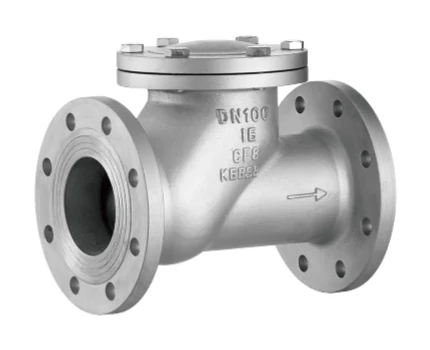
Geri kazanılan İngilizce ürün kataloğu, Bilyalı Çek Valf on PDF page 103 (printed catalog pages 195–196), under the Hidrolik Kontrol Valfi Serisi başlığı altında listeler. Bu bir çek valf katalog kaydıdır, çeyrek turlu bilyalı izolasyon valfi değildir. Bölüm başlığı katalogdaki yerleşimi kaydeder; hidrolik aktüasyonu veya belirli bir kontrol düzenini doğrulamaz.
- Ürün ailesi: Çek Valf
Ürün kimliği
Kataloğun bu kayıt için doğruladıkları
Bu sayfa, Çek Valf kategorisindeki bir ürün kaydını tanımlar. Sunulan tam konfigürasyon için siparişe hazır model kodu, eksiksiz veri sayfası veya montaj ve işletme kılavuzu sağlamaz.
Ürün ailesi
Çek Valf. Üst kategori, çek valf konstrüksiyonlarını ve ilgili katalog kayıtlarını karşılaştırmak için ticari yoldur.
Katalog serisi
Hidrolik Kontrol Valfi Serisi. Bu, geri kazanılan katalog sayfasının başlığıdır; Bilyalı Çek Valfin hidrolik olarak aktüatörlü olduğunun veya pilot kontrollerle birlikte verildiğinin kanıtı değildir.
Kanıt kaynağı
Kurtarılan İngilizce ürün kataloğu, PDF sayfa 103 (basılı sayfalar 195–196); eşlenen ürün görseli AST-R1-0361.
Katalog kanıtı
Katalog belgeli ürün verileri
Kaynak açılım, katalog adını ve bölüm yerleşimini doğrular. Bu giriş için modele özgü ölçüler, malzemeler, sınıflandırmalar, akış limitleri veya montaj talimatları yayımlamaz. Yalnızca aşağıdaki alanlar belgelenmiş olarak kabul edilir.
| Alan | Katalogda belgelenen değer | Kanıt durumu |
|---|---|---|
| Katalog ürün adı | Bilyalı Çek Valf | DOĞRULANDI — PDF katalog etiketi |
| Site ürün ailesi | Çek Valfli | DOĞRULANDI — üst ticari kategori |
| Katalog bölüm başlığı | Hidrolik Kontrol Valfi Serisi | DOĞRULANDI — kurtarılan katalog açılım başlığı; aktüasyon spesifikasyonu değildir |
| Katalog referansı | PDF sayfa 103 (basılı sayfalar 195–196) | DOĞRULANDI — kurtarılan PDF eşlemesi |
Önemli: katalog başlığı ve fotoğraf yalnızca katalog kimliğini ve görünür görünümü ortaya koyar. Hidrolik aktüatör, malzeme sınıfı, basınç sınıfı, boyut aralığı, açılma fark basıncı, izin verilen montaj konumu veya su darbesi performansını ortaya koymaz. Bu ayrıntıları tam olarak sunulan veri sayfasından ve montaj ile işletme kılavuzundan doğrulayın.
Kanıt kapsamı
Belgelenmiş gerçekler ve modele özgü alanlar
Katalog ürünü tanımlar ancak tam bir teknik spesifikasyon sunmaz. Aşağıdaki sorular uygunluğu, montajı veya teklifi değiştirebilir ve başka bir bilyalı çek valf tasarımından çıkarılmak yerine sunulan model için yanıtlanmalıdır.
Katalog tarafından doğrulandı
- Catalog identity: Ball Check Valve. The entry is placed in the Check Valve family; no complete model code or performance schedule is shown.
Teklif öncesi doğrulayın
- Exact model and internal ball arrangement (for example, sinking/floating ball or any spring/assisted mechanism, if applicable)
- Body, ball, seat, seal and other wetted-part materials and grades
- Nominal size, end connection, face-to-face dimensions and mating standard
- Design and operating pressure and temperature limits, including pressure–temperature derating
- Opening differential and minimum stable operating flow or velocity
- Flow capacity and pressure-drop data across minimum, normal and maximum flow cases
- Permitted installation positions and required forward-flow direction
- Closure response, allowable reverse flow, seat-leakage criteria and surge/water-hammer test evidence
- Design code or standard and its exact scope
- Shell/seat testing, inspection, marking and material certificates
- Third-party witness or project-specific inspection hold points, if required
- Quantity, price and lead time
Mühendislik incelemesi
Specify the forward-flow and reversal cases
DN and pressure class alone cannot show whether the ball will open stably, impose acceptable pressure loss or reach its seat before reverse velocity builds. Describe both normal operation and the event that stops or reverses flow.
Forward flow and reversal
Provide the plant/equipment and piping function, minimum, normal and maximum flow or velocity, upstream and downstream pressures, any vacuum or reverse-pressure case, normal flow direction and the event that may reverse flow—such as a pump trip, power loss, downstream pressure rise or duty-pump changeover. State the allowable reverse flow and required response.
Opening and pressure loss
Request the offered design’s opening differential, minimum stable flow or velocity and pressure-drop data. Check these against low-load and peak-flow cases; do not borrow opening-pressure or flow values from another manufacturer’s ball check valve.
Malzemeler ve bağlantılar
Identify the fluid, concentration, viscosity, solids or fibers, particle size, temperature, cleaning conditions and corrosion/erosion risks or any project corrosion allowance. Confirm body, ball, seat/seal and wetted-part materials, plus the end connection, face-to-face dimensions and mating standard. The word “ball” alone does not prove solids-handling suitability.
Passive or assisted closure
The catalog section title “Hydraulic Control Valve Series” does not identify an actuator. State whether a passive self-acting check valve is required or whether the project calls for an auxiliary closing or control arrangement. If so, provide the available utility, control signal and required fail action, and have the supplier confirm what is actually offered.
Closing dynamics and records
For pump-trip or rapid flow-decay cases, provide pump coast-down/trip data, static head, line profile, downstream conditions and the allowable transient pressure. Request model-specific closure behavior, leakage/test evidence, an approved datasheet and order drawing. Do not assume non-slam or water-hammer protection from the catalog name.
Installation review
Confirm the installation before ordering
The same valve designation can behave differently with another ball, body geometry or mounting position. Confirm the exact installation drawing and operating manual for the offered configuration.
Flow direction and orientation
Show the normal forward-flow direction and pipe elevation. Confirm whether the offered model is approved for horizontal, vertical-up, vertical-down or inclined installation. Align the body flow arrow with normal flow and follow the exact model’s installation manual; do not assume every ball-check design permits the same positions.
Installation location and flow stability
Provide the distances to nearby pumps, elbows, tees, reducers and control valves, together with available upstream and downstream straight runs. Turbulence or unstable flow can disturb ball movement and cause chatter; use the manufacturer’s specified spacing rather than a generic pipe-diameter rule.
Pipework, access and maintenance
Confirm pipe support, flange alignment, imposed loads, ambient conditions, space above and around the cover, isolation and drainage provisions, and the inspection/cleaning method. Keep external pipe strain off the valve and leave the access required to inspect or remove the ball on the approved design.
İlgili ürün rotaları
Compare separate check-valve catalog entries
These linked entries are separate catalog products, not verified drop-in substitutes. Compare each one against its own datasheet, operating limits, connection and installation requirements; specifications do not transfer to this Ball Check Valve.
Kelebek Tipi Yavaş Kapanan Çekvalf
A separate catalog entry with a slow-closing designation. Check its own closing arrangement and transient evidence before comparing it with a pump-trip duty.
Dövme Çelik Yüksek Basınç Çek Valf
A separate forged-steel/high-pressure catalog entry. Its title is not a numeric pressure rating or a substitute for the offered datasheet.
Yüksek Sıcaklık ve Yüksek Basınç Enerji Santrali Çekvalfi
A separate power-plant catalog entry with high-temperature/high-pressure descriptors. Confirm its own service limits and project documentation; do not transfer them to this product.
Alıcı soruları
Ball Check Valve FAQ
These answers distinguish the recovered catalog facts from the operating data needed to check the actual line duty.
What does the recovered catalog confirm?
It lists the product as Ball Check Valve on PDF page 103 (printed catalog pages 195–196), under the Hydraulic Control Valve Series heading, and maps the image AST-R1-0361. The heading is catalog placement only; it does not confirm hydraulic actuation or a model-specific rating.
Can the catalog entry establish suitability for a pump discharge?
No. Provide the pump flow range, trip/coast-down case, static head, line profile, reverse-flow allowance and allowable transient pressure. The offered valve’s closure behavior must be assessed against the system transient; the catalog title does not establish non-slam performance.
Which installation positions and opening conditions are permitted?
The recovered catalog spread does not specify them. Confirm the exact model’s approved orientation, flow direction, opening differential, minimum stable flow and pressure-drop data in its datasheet and installation/operating manual. Do not copy another manufacturer’s limits.
What should be included in the RFQ?
Send the medium and solids data, corrosion/erosion conditions and equipment/piping function; minimum, normal and maximum flow; design and operating pressure/temperature, including any vacuum case; flow direction and pipe orientation; pump-trip or other reversal case; allowable pressure loss and reverse flow; end connection and material requirements; piping layout, support and access; any auxiliary closing/control requirement; quantity; and required drawings, tests, inspection and certificates.
Teknik talep
Request a configuration review for Ball Check Valve
Submit this catalog identity with the actual operating and installation data below. Request written confirmation of the offered configuration, its operating limits and the documents applicable to the stated duty before order.
- Service medium, composition, solids/fibers, corrosion/erosion risks, cleaning conditions and plant/equipment piping function
- DN/NPS, minimum/normal/maximum flow, design/operating pressure and temperature, including any vacuum or reverse-pressure case
- Normal flow direction, pipe orientation, end connection, mating standard, body/ball/seat/seal material and corrosion allowance
- Opening differential, minimum stable flow, allowable pressure loss and any auxiliary closure/control utility, signal or fail-action requirement
- Pump trip/reversal scenario, line layout/support/access, quantity and required drawings, tests, inspection and certificates