
Endüstriyel izolasyon • belgelenmiş sabit küreli ürün seçenekleri
Trunnion (Muylu) Tipli Küresel Vanalar
Trunnion (muylu) tipli küresel vana, küreyi yataklar veya muylular üzerinde destekler; böylece basınç yükü, küreyi tek bir alt akış yönü segmanına doğru zorlamak yerine destek yapısı üzerinden taşınır. Bu düzenleme, çap, diferansiyel basınç ve çalıştırma torku daha zorlayıcı hale geldikçe değerlendirilmeye değerdir. Nihai seçim yine segman düzenine, servis limitlerine ve sunulan vananın tam konfigürasyonuna bağlıdır.
Katalog başlangıç noktaları: sayfa 89 sert sızdırmazlıklı, yüksek sıcaklık/yüksek basınç ve elektrikli üç parçalı dövme çelik Sabit Küreli Vanalar. Bu sayfadaki iki kaynak fotoğraf kesin olarak tanımlanmıştır; yüksek sıcaklık/yüksek basınç kaydı, yanlış ilişkilendirilmiş bir fotoğraf olmadan bağlanmıştır. Destek düzenini ve sunulan konfigürasyonu siparişe özel bir çizim üzerinde teyit edin.
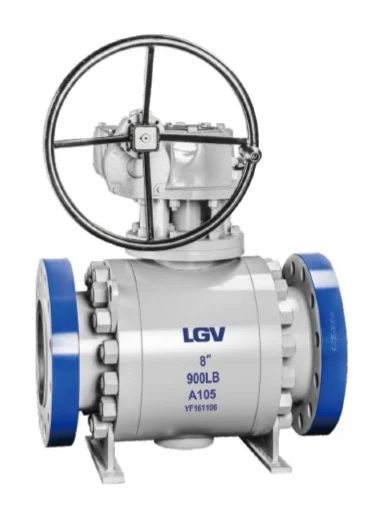
Katalogda listelenen sabit küreli ürünler
Katalogda listelenen sabit küreli konfigürasyonları karşılaştırın
Bu üç kayıt, tedarikçi kataloğunun 89. fiziksel sayfasında adlandırılmıştır. Sağlanan fotoğraflar sert sızdırmazlıklı el çarklı ürün ve elektrikli çalıştırılan ürün ile eşleşmektedir; bu girdi setinde ilgili yüksek sıcaklık/yüksek basınç fotoğrafı verilmemiştir. Ürün adları ve görseller, basınç–sıcaklık aralıklarını veya eksiksiz bir spesifikasyonu kanıtlamaz.
Katalog şunu tanımlar: üç parçalı dövme çelik, sert sızdırmazlıklı sabit bilyalı vana. “Sert sızdırmazlık” tam oturma malzemelerini, sızdırmazlık sınıfını, oturma konfigürasyonunu veya izin verilen sıcaklığı tanımlamaz. Kesit çizimi ve belirtilmiş oturma/trim şeması talep edin.
Katalog ayrı olarak şunları adlandırır: yüksek sıcaklık/yüksek basınç üç parçalı dövme çelik sabit bilyalı vana. Bunlar açıklayıcı terimlerdir; doğrulanmış sıcaklık veya basınç limitleri değildir. Sunulan gövde, trim ve oturma malzemelerini basınç–sıcaklık sınıflandırmalarına ve servis koşullarına göre kontrol edin.
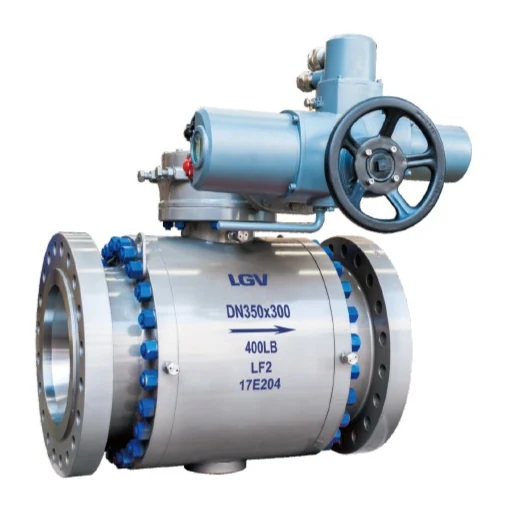
Sağlanan fotoğraf, yüksek sıcaklık/yüksek basınç ürününden farklı olan elektrikle çalıştırılan sabit bilyalı katalog kaydını göstermektedir. Tahrik tipi, tork limitleri, güç, kontroller ve arıza konumu için siparişe özel aktüatör paketi gereklidir.
Orijinal ürün referansı
Çalışma prensibi ve oturma düzeni
Why ball support and seat design must be specified together
In a floating-ball valve, line pressure shifts the ball into the downstream seat. In a trunnion-supported design, the ball is restrained and the seat assemblies provide sealing contact. That changes the load path, but it does not define the seat sealing direction or the body-cavity relief route. The offered cross-section must establish both.
Support and torque
Supporting the ball independently of the seats can make large-bore or high-differential-pressure isolation more practical. Do not assume a particular torque saving: compare maximum operating differential pressure and the supplier’s breakaway, running and seating torque data before choosing a gearbox or actuator.
Self-relieving seats (SPE)
With a single-piston-effect seat design, a seat may lift to relieve excessive trapped body-cavity pressure into a pipeline side. Which side receives relief and under what pressure conditions depend on the actual seat geometry and valve configuration. It is not guaranteed by the term “trunnion mounted.”
Non-self-relieving seats (DPE)
A double-piston-effect seat may seal against pressure from the line or the body cavity. Two non-self-relieving seats can retain pressure from thermal expansion of trapped liquid; the system must provide an engineered cavity-pressure protection route. Request the actual SPE/DPE combination and isolation/bleed performance before specifying DBB or DIB service.
Configuration decisions
Specify the duty before choosing the valve configuration
Use the table to determine what must be decided at series level and what must be verified for the exact offered product. A pressure class or “high-pressure” label alone cannot establish suitability at the operating temperature.
| Karar | Alıcı girdisi | What the supplier must establish |
|---|---|---|
| Load and shutoff | Maximum and minimum operating pressure; design pressure; all temperature cases; medium; isolation leakage requirement | Compare pressure–temperature data and the appropriate seat/trim arrangement. Do not assume Class rating is a fixed allowable working pressure. |
| Seat and cavity | Required isolation direction; SPE/DPE arrangement; trapped-liquid risk; vent or relief destination; DBB/DIB intent | Specify a demonstrated seat configuration and safe cavity-pressure management, rather than assuming these functions from ball support. |
| Bore and connections | Nominal pipe size; full/reduced bore; required minimum flow passage; pigging; flanged/welded ends and mating standard | Confirm dimensions and unobstructed passage from an approved GA/section drawing. A product photograph cannot prove piggability. |
| Çalıştırma | Maximum operating differential pressure; operating frequency; required opening time; manual or powered operation; fail position | Obtain supplier torque curves/values for the selected service and size the gearbox or actuator with the applicable margin and controls. |
| Verification | Valve construction; pressure test and shutoff criteria; project standards; material records; inspection and documentation | Agree the applicable standard edition and order-specific evidence. A catalog entry does not establish API approval or product certifications. |
Where the supported-ball design is worth evaluating
Three duties that change the specification
The following are common engineering selection scenarios, not documented installations or approved operating claims for the catalog entries shown here.
Pipeline isolation and possible pigging
Consider a supported-ball design when valve bore and pressure differential make downstream-seat loading a concern. If pigs must pass, specify the minimum clear bore and require an approved through-bore drawing; “full port” and piggable service are not proved by an exterior photo.
Hot or thermally cycled isolation
Check the complete pressure–temperature envelope, including shutdown and trapped-liquid conditions. High-temperature service may change the allowable seat, stem seal and body-joint materials; the high-temperature/high-pressure catalog entry’s name alone establishes no numeric limit. Verify the cavity-pressure relief route.
Gear-operated or automated valves
For remote or frequent operation, obtain operating and maximum differential pressure, start/run/end torque, cycling duty, actuator power, fail action and controls interface. Confirm gearbox or actuator mounting and the final installed arrangement; a photographed handwheel is not proof of automatic actuation availability.
Evidence and purchasing documents
What the catalog confirms—and what a quotation must add
The original catalog is useful for identifying real product options. Before order approval, use the exact product drawing and quotation to establish the performance and document package.
Belgelenmiş kimlik
Physical catalog page 89 lists separate three-piece forged-steel fixed-ball entries: hard-sealed, high-temperature/high-pressure and electric. The supplied photographs show the gray hard-sealed handwheel valve and the electrically operated valve; the high-temperature/high-pressure product retains a text-only catalog link here. No numeric pressure or temperature rating is established.
Confirm the offered build
Ask for the ball support section, body-entry construction, seat/trim and seals, size, rated pressure–temperature envelope, bore, ends, cavity-relief path, torque and actuator/gearbox arrangement. If a requirement cannot be supported by the offered catalog entry, seek a different verified configuration.
Agree documentation
Identify the requested GA/dimensional drawing, datasheet, inspection and pressure-test basis, material traceability, and any project-required certification. Confirm which documents will be supplied for the actual order; catalog presentation and a general quality page do not constitute test results.
Select the appropriate buying route
Trunnion, floating, fully welded and DBB are different decisions
If the load path is still undecided, compare floating ball valves. If minimizing body joints is the priority, review fully welded ball valves; a welded body does not, by itself, prove a particular ball support or seat design. For a specified isolation-and-bleed function, see DBB ball valves and define the required sealing and bleed test. This page remains the trunnion-series selection and RFQ route; the linked product records retain their exact identities.
Browse the Ball Valves category
Use the parent category to choose a different ball-valve construction or operating function.
Explore other industrial valves
Compare ball valves with other isolation and control valve families.
Review service requirements
Connect material, pressure, thermal cycling and operating conditions to the relevant industry context.
Read technical comparisons
Use the technical library for additional design explanations; the supplier proposal must still identify the exact configuration.
Before issuing a purchase specification
Questions that resolve a trunnion-ball-valve RFQ
These answers concern series-level selection. The catalog entries shown here do not establish verified size, pressure, temperature or certification ranges.
What project data is needed to specify Trunnion Mounted Ball Valves?
Yalıtım veya kontrol görevini, delik (bore) gereksinimini, akış yönünü, basınç ve sıcaklık durumlarını, çevrim sıklığını, oturma/sızdırmazlık (shutoff) beklentisini, kavite tahliye (cavity-relief) gereksinimini ve aktüasyon yöntemini belirtin.
Does the Trunnion Mounted Ball Valves series name define every available size, pressure class and material?
No. Bir seri adı, belgelenmiş bir küresel vana seçim yolunu tanımlar; ancak sipariş edilebilir boyut, basınç sınıfı, malzeme, bağlantı, standart ve çalışma limitleri sunulan veri sayfasında ve onaylı sipariş çiziminde teyit edilmelidir.
How should buyers compare products within the Trunnion Mounted Ball Valves series?
Compare body construction, entry and maintenance access, bore/port geometry, seat concept, end connection, actuation, cavity-pressure management and required project documents.
Which documents should be requested before order approval?
Request the offered datasheet, general arrangement or dimensional drawing, material and trim schedule, applicable inspection and test plan, required certificates, marking details and the final order-specific document list.
Request a configuration and supporting documents
Request a trunnion mounted ball valve quotation
Name the catalog product or describe the required trunnion-supported construction. Include the conditions you know, especially differential pressure, seat isolation direction and body-cavity relief. Ask the supplier to identify any unsupported requirements and return a product-specific datasheet and drawing with the quotation.
- Exact product or series identity under review
- Design and operating pressure and temperature cases
- Medium, composition, phase and solids where relevant
- Nominal size, end connection and installation orientation
- Valve duty, operating frequency and actuation requirements
- Applicable project specification and required standards
- Drawings, testing, inspection and documentation requirements
- Unknown fields clearly marked for technical confirmation