
VÁLVULA DE CONTROLE PNEUMÁTICA LISTADA EM CATÁLOGO
Válvula de Controle Pneumática de Assento Simples
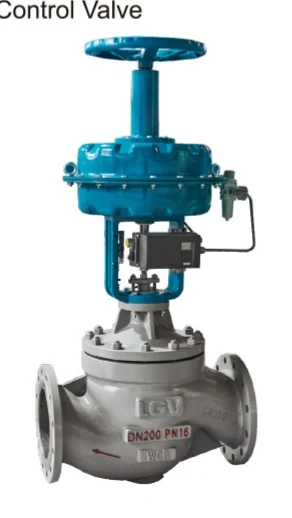
O catálogo de origem lista uma Válvula de Controle Pneumática de Assento Simples em sua série de Válvulas de Controle. Para serviço de modulação, o pedido deve estabelecer o coeficiente de vazão e o curso utilizável, o requisito de vazamento na sede e o atuador pneumático e os controles. A imagem do catálogo identifica a válvula fotografada; ela não define seu trim interno nem uma especificação completa para pedido.
- Tipo de válvula: Válvula de Controle
- Acionamento: pneumático
IDENTIDADE E ESCOPO DO PRODUTO
O que está efetivamente documentado para esta válvula?
O catálogo confirma uma válvula de controle pneumática de sede simples nomeada e seu exterior fotografado. Ele não publica uma folha de dimensionamento específica do modelo, envelope de pressão/temperatura, desenho do trim da válvula ou pacote de atuador para este item.
Identidade de catálogo
Nomeada Válvula de Controle Pneumática de Assento Simples na Válvula de Controle série, página 100 do PDF físico (página impressa da dupla 189).
Conjunto fotografado
A foto corrigida da fonte mostra uma válvula e um conjunto de operador pneumático. A aparência externa não é prova da construção da sede, do balanceamento do obturador ou do modelo do acessório.
Dados específicos da oferta
Cv/Kv nominal, característica de vazão, tamanho e classe de pressão, materiais em contato com o fluido, classe de vazamento na sede, força do atuador, estado de falha e documentação devem estar vinculados à configuração ofertada.
DADOS TÉCNICOS E FATOS DO CATÁLOGO
Identidade publicada versus configuração ainda a selecionar
Não trate as faixas comuns de válvulas de controle como especificações deste item. O conjunto de dados da fonte fornece as seguintes evidências de identidade; qualquer capacidade ou classificação numérica pertence à folha de dados da oferta exata.
| Item | Valor documentado ou exigido | Limite de evidência |
|---|---|---|
| Nome do produto no catálogo | Válvula de Controle Pneumática de Assento Simples | Confirmado pelo rótulo do PDF original |
| Família de produtos | Série da válvula de controle | Confirmado pelo título da página do PDF |
| Categoria de acionamento | Pneumático | Nomeado no catálogo; diafragma/pistão e pacote de controle não especificados |
| Foto do catálogo | Imagem original associada a este rótulo na página 100 do PDF | Apenas aparência externa; não é um desenho GA nem de trim |
| Flow capacity and trim | Cv/Kv, characteristic, rangeability, plug/seat design | Not published for this entry; required for sizing |
| Pressure, size and materials | DN/NPS, requested PN/Class, body/trim/seat materials, end connection | Must be confirmed against the offered build and service conditions |
| Closure and controls | Seat leakage class/test, air-failure response, positioner and accessories | Must be specified and confirmed; not implied by the name |
For an RFQ: request a valve/actuator datasheet and general arrangement drawing against the process conditions below. No pressure rating, Cv/Kv, seat leakage class or fail position has been established for this catalog entry.
WHAT SINGLE-SEAT DOES — AND DOES NOT — MEAN
Specify the valve trim and actuator as separate decisions
“Single-seat” distinguishes the general seating arrangement from double-seat constructions; it does not establish whether the plug is balanced, how it is guided, its achievable leakage class, or the actuator thrust needed against differential pressure. These details matter when choosing a controllable and safe assembly.
Confirmed in the original catalog
- Product label: Pneumatic Single-Seat Control Valve
- Category: Control Valve series; pneumatic actuation
- Correct photo: blue actuator with gray valve body
Define for the offered configuration
- Valve construction: plug guidance, balance and trim/seat design
- Cv/Kv, characteristic and travel at each process case
- DN/NPS, PN/Class and pressure–temperature suitability
- Wetted materials, packing and specified leakage class/test
- Actuator type, air supply, action and loss-of-air state
- Positioner, solenoid, feedback and certified area requirements, if any
SIZING AND CONFIGURATION
Size the valve for the actual control range
A nominal pipe size does not determine valve capacity. Establish minimum, normal and maximum flow and the corresponding pressures at the valve before choosing Cv/Kv, trim and actuator. Then check low-flow controllability as well as maximum-flow duty; no capacity curve is published for this listing.
Flow, pressure and temperature cases
Para each operating case, send the flow value and units, upstream pressure P1, downstream pressure P2 (or their differential), and valve-inlet temperature. State whether pressures are absolute or gauge. Give liquid density/viscosity and vapor pressure when relevant, or gas/steam composition and thermodynamic conditions. Separately state design pressure and temperature extremes.
Cv/Kv, characteristic and controllable travel
Use the operating cases to calculate required Cv/Kv and compare them with an offered trim curve. Check predicted valve travel at low and normal flow, not just that maximum flow passes. If normal flow uses only a small part of travel, ask about a reduced-capacity trim or a different valve size. Linear versus equal-percentage trim and usable rangeability require confirmation; they are not catalog promises.
Seat leakage, materials and connections
Specify the required shutoff leakage class and applicable test procedure separately from throttling accuracy. A single seat is not a guarantee of zero leakage or Class VI performance. Match body, plug, seat, packing and other wetted materials to fluid chemistry, solids, erosion and service temperature; supply DN/NPS, buyer-required PN/Class, end type, flange facing or welding details, and mating pipe dimensions.
Pneumatic actuator and loop interface
State available instrument-air pressure and quality, plus the required valve position on loss of air (fail-open, fail-close or an engineered stay-put arrangement). Also provide the maximum credible differential pressure the valve must close against or hold closed under, including applicable startup, shutdown or upset cases, and the minimum guaranteed instrument-air supply pressure. Verify actuator thrust and seat-loading capability at those conditions rather than using normal throttling pressure drop alone. Specify the separate response to loss of control signal or electrical power. Direct/reverse actuator action, diaphragm versus piston construction, spring return, solenoid logic and a positioner’s input/feedback (such as 4–20 mA if specified) must be engineered as a package, not inferred from the photo.
Documentos de inspeção e do pedido
Request the proposed sizing sheet with Cv/Kv and calculated travel, actuator sizing and air requirements, GA/face-to-face drawing, materials list, pressure–temperature basis and seat test criteria. State any material traceability, coating, site-area electrical approval, third-party witness or special inspection documents required by the purchase specification; availability must be confirmed in the offer.
SERVICE LIMITS AND ALTERNATIVES
Check when a standard single-seat selection may be inadequate
The next decision is whether the proposed trim and actuator can handle the actual fluid, differential pressure and control response. A catalog name is not evidence that this specific assembly meets every high-pressure-drop, corrosive or demanding shutoff duty.
Fluid composition and phase
Identify liquid, gas, steam or mixed-phase service; fluid composition and concentration; solids and contamination; viscosity, density and vapor pressure as relevant; and corrosive or erosive constituents. Material or seat recommendations without these data are premature, especially for slurries, aggressive fluids or frequent clean-in-place exposure.
High differential pressure and flashing risk
High differential pressure may demand more actuator force and a different trim design. For liquids, evaluate cavitation, flashing and noise using the actual P1/P2, temperature and vapor pressure; for compressible flow, review choking and noise. If the duty requires pressure-balanced, cage-guided or severe-service trim, obtain a verified alternative instead of assuming it is inside this single-seat offering.
Piping, utilities and hazardous areas
Confirm face-to-face and flange or weld interface, flow direction, installation orientation, actuator clearance, plant air supply and access for maintenance. For positioners, solenoids and switches, specify supply voltage, signal/communication, environmental protection and hazardous-area classification where applicable; do not assume any certification is supplied.
ORIGINAL CATALOG PHOTO
Inspect the actual pictured configuration
The blue-and-gray assembly is the original photo aligned with the Pneumatic Single-Seat Control Valve label on PDF page 100. Use the photo to recognize the general external arrangement, not to verify internals, dimensions, materials, actuator model or approval status. Request the offered GA and trim drawing for those details.
OTHER CONTROL VALVE ROUTES
When to consider a different control valve route
Keep the specified control duty in view when comparing alternatives. The links below are separate catalog listings; none supplies missing specifications for this valve.
Válvula de controle pneumática em aço forjado
Consider this separate catalog record if a forged-body construction is required by the project specification. Confirm its actual ratings, geometry and trim; the word “forged” alone does not establish suitability.
Válvula de Controle Elétrica
Where instrument air is unavailable or electric actuation is preferred, compare the electrical power, stroke/speed, positioning control and power-failure response of the offered electric assembly.
Válvula de Controle Elétrica para Alta Temperatura
For elevated-temperature processes with electric actuation, evaluate a dedicated high-temperature offering, including bonnet/packing limits and materials. The title is not a verified temperature rating.
PRACTICAL DECISION EXAMPLES
Four conditions that change the valve specification
The situations below illustrate engineering selection logic; they are not VALMORA performance tests or examples of supplied projects.
The minimum flow is much lower than the maximum
Do not size solely for the maximum flow. If the proposed valve operates near its seat through normal duty, request reduced-Cv trim or a different body size and compare the predicted travel at minimum, normal and maximum flow.
Liquid flow may cavitate or flash
Calculate the liquid pressure-drop limits using temperature and vapor-pressure data. Persistent flashing cannot be solved by labeling a valve “single-seat”; specify suitable body/trim geometry and erosion-resistance only after reviewing the actual duty.
The process must go to a safe position when air fails
Write down the safe physical valve position on loss of instrument air, then separately define behavior on loss of the electrical command or solenoid power. Require a compatible actuator/positioner/solenoid package and proof of its intended response.
The valve must also provide positive isolation
Do not replace a required independent block valve with a modulating valve on the strength of the single-seat name. Specify the exact allowable seat leakage and test method, and retain dedicated isolation where the process design demands it.
SEND A DUTY-BASED RFQ
Request a pneumatic single-seat valve sizing and configuration review
Send the process cases and the required shutoff and failure behavior so the proposed valve, actuator and accessories can be evaluated together. Ask for the resulting offer datasheet, sizing basis and drawing rather than assuming the picture represents an available final configuration.
- Fluid composition/phase, min–normal–max flow with units
- P1, P2, temperature at each case; design limits and ΔP risks
- DN/NPS, buyer PN/Class, end connections and material/seat requirements
- Minimum guaranteed instrument-air supply pressure and air quality; maximum credible shutoff differential pressure (startup/shutdown/upset as applicable); fail-open/close/engineered stay-put duty; control/feedback signals
- Quantity, target delivery, GA/datasheet, leakage test, inspection and witness documents