
Produit documenté au format PDF
Robinet-vanne à auto-étanchéité haute pression pour centrale électrique
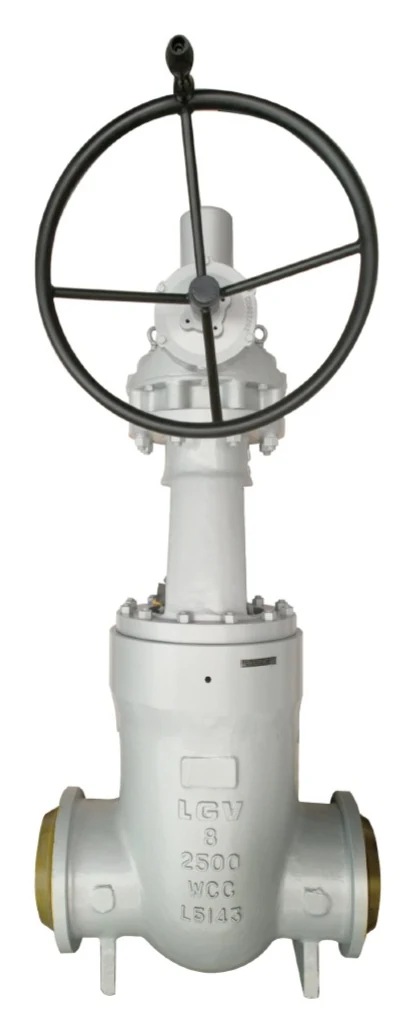
Le Robinet-vanne à auto-étanchéité haute pression pour centrale électrique est répertorié dans la série Robinets pour centrales électriques du catalogue source. Sa description à joint autoclave concerne le joint corps–chapeau, et non la classe d'étanchéité du siège. Pour une demande d'isolation en centrale électrique, vérifiez l'enveloppe pression–température requise et la pression différentielle maximale à l'ouverture avant de choisir l'actionneur. Les vues catalogue vérifiées figurent aux pages physiques 61–62.
- Famille robinet-vanne : normalement évaluée pour une isolation ouvert/fermé
- Chapeau : descripteur catalogue à auto-étanchéité par pression
- Classe pression / température : non établie par les images du catalogue
- Actionnement et fuite au siège : à confirmer pour la configuration proposée
Identification du produit
Signification de “ auto-étanchéité par pression ” sur ce robinet-vanne
Un chapeau à joint autoclave utilise la pression interne pour contribuer à comprimer l'interface d'étanchéité corps–chapeau. La conception initiale de l'étanchéité, le matériau du joint et la conception du dispositif de retenue doivent néanmoins être établis pour la configuration réelle. L'étanchéité du chapeau ne correspond pas à l'étanchéité de fermeture au niveau du robinet et des sièges, et ni l'une ni l'autre n'établit la classe de pression.
Joint corps–chapeau
La fermeture assistée par la pression constitue le concept de construction déterminant. Demandez la section approuvée et les détails du joint de chapeau plutôt que de considérer une photo de catalogue comme un plan de coupe.
Fonction du clapet
Les robinets-vannes sont principalement destinés à un service tout ouvert ou tout fermé. Si une régulation continue du débit est requise, spécifiez un service de vanne de régulation approprié au lieu de supposer que ce robinet-vanne peut réguler.
Fiche catalogue vérifiée
Catalogue source d'origine, pages physiques 61–62 (pages imprimées 111–114). La vue principale en p. 61 et la vue alternative en p. 62 portent cette légende produit exacte ; les conceptions adjacentes électriques et marquées ASME constituent des identités catalogue distinctes.
Justification de la configuration
Ce qui est documenté — et ce qui doit être spécifié
La désignation du catalogue établit la famille robinet-vanne, le descripteur d'auto-étanchéité par pression et le contexte de centrale électrique. Elle n' ne identifie pas une plage de tailles commandable, une classe de pression, une nuance de matériau, un différentiel de service, une limite de fuite au siège ni une conformité normative pour WP174. Utilisez la fiche de configuration proposée pour ces décisions.
| Champ de sélection | Information connue ou document requis | Statut de la preuve |
|---|---|---|
| Identification du produit | Robinet-vanne ; série de catalogue pour centrale électrique | CONFIRMÉ — titres de source, p. 61–62 |
| Construction du chapeau | Auto-étanchéité par pression (descriptif de catalogue) | CONFIRMÉ COMME DÉSIGNATION — internes à confirmer par plan |
| Classe de pression / rating | Non spécifié pour cette identité de catalogue | DONNÉES PRESSION–TEMPÉRATURE À FOURNIR |
| Dimension et raccordements d'extrémité | Non spécifié ; ne pas dimensionner à partir de photos | PLAN DE FABRICATION ET DÉTAIL DES EXTRÉMITÉS À FOURNIR |
| Disque, coin, siège et étanchéité | Not specified by verified image captions | REQUIRES TRIM DETAIL AND SEAT-TEST CRITERIA |
| Actuation / opening differential | Configuration not established by catalog caption | REQUIRES OPERATOR AND ΔP REVIEW |
| Materials and gasket | Exact body, trim and bonnet seal materials not identified | REQUIRES MATERIAL SCHEDULE |
| Product-specific design / test standards | No compliance claim supported by these labels | REQUIRES APPLICABLE CODE AND TEST PLAN |
| Mapped catalog photographs | Primary image: physical p. 61; alternative view: p. 62 | CONFIRMED — caption-to-image comparison |
Selection rule: first check the permitted pressure at the actual design temperature, then check seat shutoff and opening force as separate requirements. A nominal Class or PN designation alone is not a maximum allowable pressure at every temperature.
Engineering distinction
Keep bonnet sealing, shutoff and operating load separate
Three different conditions can cause an unsuitable selection even when the product name sounds appropriate: a bonnet-seal concept does not set seat leakage; the word “high pressure” does not set the pressure–temperature rating; and line pressure does not tell you how much differential pressure the operator must overcome at opening.
Do not infer these from the name or photos
- Bonnet joint: pressure-assisted sealing is a closure principle, not a zero-leak claim.
- Seat shutoff: wedge/disc type, seat materials and leakage acceptance need their own specification.
- Pressure class: check the offered material and rating basis at design temperature.
- Operator: the handwheels shown in catalog illustrations do not establish the supplied drive.
- Standards: the adjacent ASME-captioned entry is a different product and proves no WP174 compliance.
Ask for these project-specific proofs
- Offered GA drawing, sectional drawing and connection details
- Pressure–temperature rating, body/bonnet materials and gasket design
- Seat arrangement and stated shutoff/leakage test acceptance
- Maximum ΔP during opening and required operator torque/thrust
- Applicable design, inspection and pressure-test standards
- Inspection records, certificates and IOM documentation as specified
Procurement engineering
How to decide whether this pressure-seal gate valve fits
Use this catalog identity as a starting point for high-pressure isolation, not an approved configuration. The following checks separate a feasible offer from a visually similar valve that cannot meet the line duty.
Isolation versus throttling
If the duty is isolation with defined open and closed states, a gate valve can be evaluated. If the process must regulate flow while partly open, specify a purpose-designed control valve: sustained partial opening can damage gate and seat surfaces. Define the required shutoff test separately from the bonnet joint.
Pressure rating at temperature
State design pressure, normal and upset pressures, design/minimum temperature and service medium. Ask for the offered valve’s material-dependent pressure–temperature rating; do not interpret “high pressure” as a particular Class, PN or allowable pressure across the full temperature range.
Opening against differential pressure
The highest differential pressure when the valve must open may be different from its steady operating pressure. Provide upstream/downstream pressures for startup and emergency states. The supplier must check unseating thrust, operating torque and whether an engineered pressure-equalization arrangement is necessary; no bypass is established for this catalog entry.
Bonnet seal, seats and materials
Request body and trim grades, gate/seat construction, stem packing, pressure-seal gasket and sealing faces. Thermal cycling, fluid chemistry and erosion conditions can change the appropriate materials and leakage requirement. Neither the visible wheel nor cast markings prove a complete materials schedule.
Drawing, test and operator evidence
Use the approved general arrangement, pressure–temperature basis, seat-test acceptance, body test, bonnet detail and torque/thrust calculation to compare offers. Specify gear/manual/electric actuation as a requested configuration, with electrical or control details only when relevant. Documents and inspection scope must be included in the actual quotation.
Power-plant service review
Where operating conditions can change the selection
The catalog places the valve in its power-station series. Whether a specific steam, condensate or other power-plant line is suitable depends on the proposed configuration and service history—not the catalog heading alone.
Startup and thermal cycling
Repeated heat-up and cool-down cycles can affect gasket loading, stem/seat clearances and operation. Give the startup sequence, expected thermal transients and cycling frequency so the bonnet, trim and operator can be reviewed together.
Trapped pressure and difficult opening
For lines that can trap fluid in the valve cavity or experience substantial closing/opening differential, ask engineering to assess pressure locking and thermal binding for the actual disc and body geometry. These are evaluation hazards, not verified faults or features of WP174.
End connections and installation
Check weld-end or flange requirements, pipeline bore, available stem clearance, orientation, pipe loads and maintenance access against the approved drawing. Photos cannot establish end preparation, dimensions or installation limits.
Verified photography
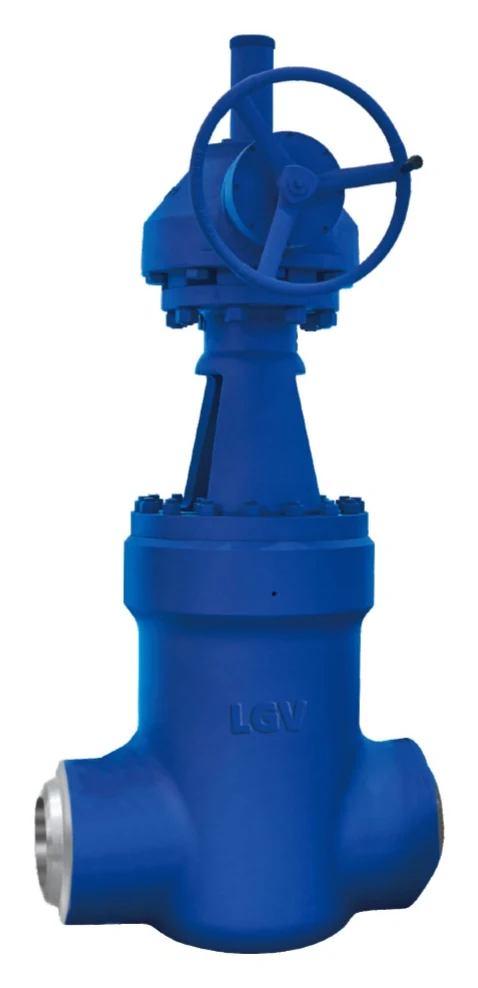
An alternate catalog view of this product
The main image is from physical catalog page 61. The different view below is from page 62 and carries the same product caption. Both illustrate catalog appearance only—not the final supplied operator, dimensions, pressure class or seat arrangement.
Related catalog choices
Compare a manual, electric or forged alternative
Do not transfer ratings or actuator choices from the following pages. Use each linked catalog identity to decide which construction to request for technical review.
Robinet-vanne électrique en acier forgé pour centrale électrique
Un electric, forged-steel catalog identity. Compare only when the project explicitly requires that construction and an electric operator; its specifications need separate confirmation.
Robinet-vanne forgé auto-étanche à commande manuelle
The linked title specifies a manually controlled, forged pressure-seal design. Review it as a distinct material and operating-route option, not an interchangeable part number.
Robinet-vanne électrique haute pression auto-étanche en acier forgé pour centrale électrique
Cette electric, high-pressure, self-sealing product is separately labeled in the catalog. Choose its page for an electric-drive request rather than assuming WP174 includes an actuator.
Questions des acheteurs
Pressure-seal gate valve buying questions
Clarifications that matter when comparing a catalog name with an order-ready specification.
Does pressure self-sealing guarantee zero seat leakage?
No. Pressure sealing describes the body–bonnet joint. Shutoff across the gate and seats is a different sealing interface, with leakage limits determined by the offered seat design and specified acceptance test.
What pressure class and temperature limit does this entry cover?
The verified catalog captions do not establish numeric pressure or temperature limits. Request the offered size, material, pressure–temperature rating basis and design conditions before accepting a Class or PN designation.
Is an electric operator included on the illustrated valve?
No supplied operator is established by this catalog identity. A separately captioned electric high-pressure self-sealing gate valve exists; specify required actuation, maximum opening differential pressure and control or utility needs for a quote.
Which data makes an RFQ technically actionable?
Send the medium, size and end connections, design pressure and temperature, upstream/downstream pressures during opening, isolation and seat-leakage requirements, actuation preference, quantity and required drawings, tests and certificates.
Technical RFQ
Request an offer for this pressure-seal gate valve
Reference Robinet-vanne à auto-étanchéité haute pression pour centrale électrique and send the main line conditions. VALMORA can review a proposed size, operator, seat arrangement, bonnet detail and documentation scope against the stated duty; any supplied configuration must be confirmed in the quote and approved drawings.
- Service medium and isolation duty; required seat-leakage acceptance
- DN/NPS, end connection, design pressure and temperature
- Maximum differential pressure during opening and transient conditions
- Requested body/trim/gasket materials and actuation method
- Quantity, GA drawing, tests, certificates and witness requirements