
Prodotto documentato in PDF
Valvola a saracinesca autobloccante ad alta pressione per centrali elettriche
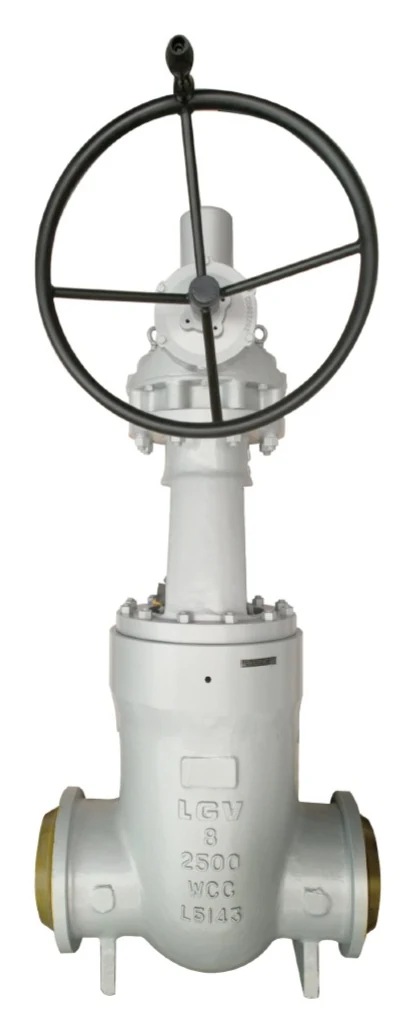
La Valvola a saracinesca autobloccante ad alta pressione per centrali elettriche è elencata nella serie Valvole per centrali elettriche del catalogo di origine. La sua descrizione con tenuta a pressione riguarda il giunto corpo–coperchio, non la classe di tenuta della sede. Per una richiesta di isolamento in centrale elettrica, verificare l'inviluppo pressione–temperatura richiesto e la massima pressione differenziale durante l'apertura prima di scegliere l'operatore. Le viste verificate del catalogo compaiono alle pagine fisiche 61–62.
- Famiglia valvole a saracinesca: normalmente valutata per l'isolamento aperto/chiuso
- Coperchio: descrizione di catalogo con autotentuta a pressione
- Classe pressione / temperatura: non stabilita dalle immagini del catalogo
- Attuazione e tenuta della sede: da confermare per la configurazione offerta
Identità del prodotto
Cosa significa “autotentuta a pressione” su questa valvola a saracinesca
Un coperchio con tenuta a pressione utilizza la pressione interna per contribuire a comprimere l'interfaccia di tenuta corpo–coperchio. La disposizione di tenuta iniziale, il materiale della guarnizione e il design del dispositivo di ritenuta devono comunque essere stabiliti per la configurazione effettiva. La tenuta del coperchio non equivale alla tenuta tra saracinesca e sedi, e nessuna delle due stabilisce la classe di pressione.
Giunto corpo–coperchio
La chiusura assistita dalla pressione è il concetto costruttivo distintivo. Richiedere la sezione approvata e i dettagli della tenuta del coperchio invece di considerare una foto di catalogo come un disegno in sezione.
Funzione della valvola
Le valvole a saracinesca sono principalmente previste per servizio tutto aperto o tutto chiuso. Se è richiesta una regolazione continua della portata, specificare un servizio adeguato con valvola di regolazione invece di presumere che questa valvola a saracinesca possa strozzare.
Scheda di catalogo verificata
Catalogo originale del produttore, pagine fisiche 61–62 (pagine stampate 111–114). La vista principale a p. 61 e la vista alternativa a p. 62 riportano esattamente questa didascalia di prodotto; le varianti adiacenti con attuatore elettrico e con marcatura ASME costituiscono identità di catalogo separate.
Documentazione della configurazione
Cosa è documentato—e cosa deve essere specificato
L'etichetta di catalogo stabilisce la famiglia delle valvole a saracinesca, il descrittore di autotenuta a pressione e il contesto di centrale elettrica. Non stabiliscono identifica per WP174 un intervallo di dimensioni ordinabili, una classe di pressione, un grado di materiale, un differenziale di esercizio, un limite di tenuta della sede o una conformità a norme. Per tali decisioni utilizzare la scheda tecnica della configurazione proposta.
| Campo di selezione | Informazione nota o documento richiesto | Stato della documentazione |
|---|---|---|
| Identità del prodotto | Valvola a saracinesca; serie catalogo per centrali elettriche | CONFERMATO — intestazioni di origine, pp. 61–62 |
| Costruzione del coperchio | Autotentata in pressione (descrittore di catalogo) | CONFERMATO COME DENOMINAZIONE — componenti interni richiedono disegno |
| Classe di pressione / rating | Non specificato per questa identità di catalogo | RICHIEDE DATI PRESSIONE–TEMPERATURA FORNITI |
| Dimensioni e connessioni di estremità | Non specificato; non ricavare le dimensioni dalle foto | RICHIEDE DISEGNO GA E DETTAGLIO ESTREMITÀ |
| Disco, cuneo, sede e tenuta | Not specified by verified image captions | REQUIRES TRIM DETAIL AND SEAT-TEST CRITERIA |
| Actuation / opening differential | Configuration not established by catalog caption | REQUIRES OPERATOR AND ΔP REVIEW |
| Materials and gasket | Exact body, trim and bonnet seal materials not identified | REQUIRES MATERIAL SCHEDULE |
| Product-specific design / test standards | No compliance claim supported by these labels | REQUIRES APPLICABLE CODE AND TEST PLAN |
| Mapped catalog photographs | Primary image: physical p. 61; alternative view: p. 62 | CONFIRMED — caption-to-image comparison |
Selection rule: first check the permitted pressure at the actual design temperature, then check seat shutoff and opening force as separate requirements. A nominal Class or PN designation alone is not a maximum allowable pressure at every temperature.
Engineering distinction
Keep bonnet sealing, shutoff and operating load separate
Three different conditions can cause an unsuitable selection even when the product name sounds appropriate: a bonnet-seal concept does not set seat leakage; the word “high pressure” does not set the pressure–temperature rating; and line pressure does not tell you how much differential pressure the operator must overcome at opening.
Do not infer these from the name or photos
- Bonnet joint: pressure-assisted sealing is a closure principle, not a zero-leak claim.
- Seat shutoff: wedge/disc type, seat materials and leakage acceptance need their own specification.
- Pressure class: check the offered material and rating basis at design temperature.
- Operator: the handwheels shown in catalog illustrations do not establish the supplied drive.
- Standards: the adjacent ASME-captioned entry is a different product and proves no WP174 compliance.
Ask for these project-specific proofs
- Offered GA drawing, sectional drawing and connection details
- Pressure–temperature rating, body/bonnet materials and gasket design
- Seat arrangement and stated shutoff/leakage test acceptance
- Maximum ΔP during opening and required operator torque/thrust
- Applicable design, inspection and pressure-test standards
- Inspection records, certificates and IOM documentation as specified
Procurement engineering
How to decide whether this pressure-seal gate valve fits
Use this catalog identity as a starting point for high-pressure isolation, not an approved configuration. The following checks separate a feasible offer from a visually similar valve that cannot meet the line duty.
Isolation versus throttling
If the duty is isolation with defined open and closed states, a gate valve can be evaluated. If the process must regulate flow while partly open, specify a purpose-designed control valve: sustained partial opening can damage gate and seat surfaces. Define the required shutoff test separately from the bonnet joint.
Pressure rating at temperature
State design pressure, normal and upset pressures, design/minimum temperature and service medium. Ask for the offered valve’s material-dependent pressure–temperature rating; do not interpret “high pressure” as a particular Class, PN or allowable pressure across the full temperature range.
Opening against differential pressure
The highest differential pressure when the valve must open may be different from its steady operating pressure. Provide upstream/downstream pressures for startup and emergency states. The supplier must check unseating thrust, operating torque and whether an engineered pressure-equalization arrangement is necessary; no bypass is established for this catalog entry.
Bonnet seal, seats and materials
Request body and trim grades, gate/seat construction, stem packing, pressure-seal gasket and sealing faces. Thermal cycling, fluid chemistry and erosion conditions can change the appropriate materials and leakage requirement. Neither the visible wheel nor cast markings prove a complete materials schedule.
Drawing, test and operator evidence
Use the approved general arrangement, pressure–temperature basis, seat-test acceptance, body test, bonnet detail and torque/thrust calculation to compare offers. Specify gear/manual/electric actuation as a requested configuration, with electrical or control details only when relevant. Documents and inspection scope must be included in the actual quotation.
Power-plant service review
Where operating conditions can change the selection
The catalog places the valve in its power-station series. Whether a specific steam, condensate or other power-plant line is suitable depends on the proposed configuration and service history—not the catalog heading alone.
Startup and thermal cycling
Repeated heat-up and cool-down cycles can affect gasket loading, stem/seat clearances and operation. Give the startup sequence, expected thermal transients and cycling frequency so the bonnet, trim and operator can be reviewed together.
Trapped pressure and difficult opening
For lines that can trap fluid in the valve cavity or experience substantial closing/opening differential, ask engineering to assess pressure locking and thermal binding for the actual disc and body geometry. These are evaluation hazards, not verified faults or features of WP174.
End connections and installation
Check weld-end or flange requirements, pipeline bore, available stem clearance, orientation, pipe loads and maintenance access against the approved drawing. Photos cannot establish end preparation, dimensions or installation limits.
Verified photography
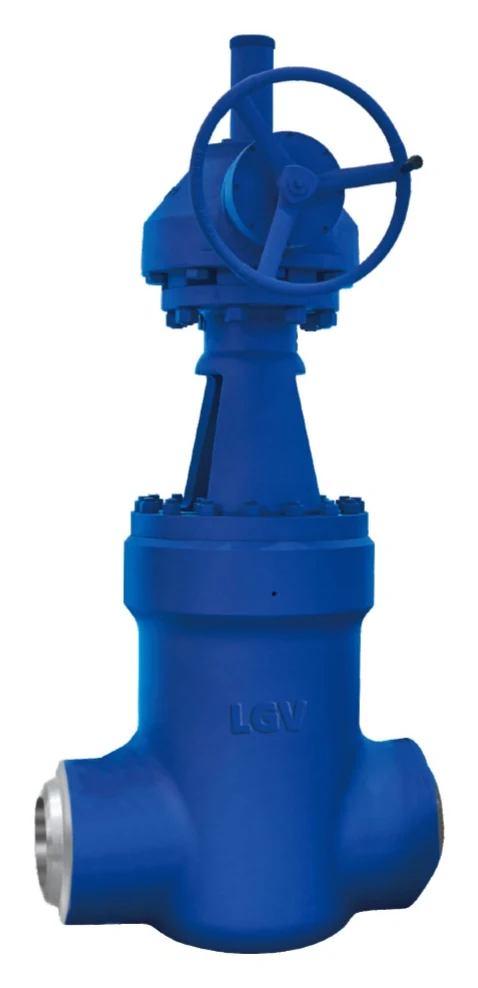
An alternate catalog view of this product
The main image is from physical catalog page 61. The different view below is from page 62 and carries the same product caption. Both illustrate catalog appearance only—not the final supplied operator, dimensions, pressure class or seat arrangement.
Related catalog choices
Compare a manual, electric or forged alternative
Do not transfer ratings or actuator choices from the following pages. Use each linked catalog identity to decide which construction to request for technical review.
Valvola a saracinesca elettrica in acciaio forgiato per centrale elettrica
Una electric, forged-steel catalog identity. Compare only when the project explicitly requires that construction and an electric operator; its specifications need separate confirmation.
Valvola a saracinesca forgiata autosigillante a comando manuale
The linked title specifies a manually controlled, forged pressure-seal design. Review it as a distinct material and operating-route option, not an interchangeable part number.
Valvola a saracinesca elettrica autosigillante in acciaio forgiato per alta pressione in centrale elettrica
Questa electric, high-pressure, self-sealing product is separately labeled in the catalog. Choose its page for an electric-drive request rather than assuming WP174 includes an actuator.
Domande degli acquirenti
Pressure-seal gate valve buying questions
Clarifications that matter when comparing a catalog name with an order-ready specification.
Does pressure self-sealing guarantee zero seat leakage?
No. Pressure sealing describes the body–bonnet joint. Shutoff across the gate and seats is a different sealing interface, with leakage limits determined by the offered seat design and specified acceptance test.
What pressure class and temperature limit does this entry cover?
The verified catalog captions do not establish numeric pressure or temperature limits. Request the offered size, material, pressure–temperature rating basis and design conditions before accepting a Class or PN designation.
Is an electric operator included on the illustrated valve?
No supplied operator is established by this catalog identity. A separately captioned electric high-pressure self-sealing gate valve exists; specify required actuation, maximum opening differential pressure and control or utility needs for a quote.
Which data makes an RFQ technically actionable?
Send the medium, size and end connections, design pressure and temperature, upstream/downstream pressures during opening, isolation and seat-leakage requirements, actuation preference, quantity and required drawings, tests and certificates.
Technical RFQ
Request an offer for this pressure-seal gate valve
Reference Valvola a saracinesca autobloccante ad alta pressione per centrali elettriche and send the main line conditions. VALMORA can review a proposed size, operator, seat arrangement, bonnet detail and documentation scope against the stated duty; any supplied configuration must be confirmed in the quote and approved drawings.
- Service medium and isolation duty; required seat-leakage acceptance
- DN/NPS, end connection, design pressure and temperature
- Maximum differential pressure during opening and transient conditions
- Requested body/trim/gasket materials and actuation method
- Quantity, GA drawing, tests, certificates and witness requirements