
Robinet à tournant sphérique référencé au catalogue
Robinet à tournant sphérique fixe à joint dur en acier forgé en trois pièces
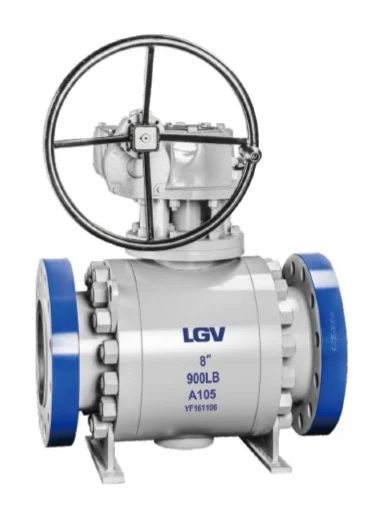
Le catalogue du fabricant répertorie ce robinet Robinet à tournant sphérique fixe à joint dur en acier forgé en trois pièces et présente un exemple correspondant à la page 89 du PDF. Il s'agit d'un point de départ pour une analyse de configuration d'un robinet d'isolement, et non d'un programme de dimensions, de classes de pression ou de performances publié.
Si le service implique une pression différentielle de fermeture élevée, des solides ou une température élevée, la construction de siège proposée, les limites pression–température et les critères d'acceptation des fuites doivent être vérifiés par rapport à l'offre réelle.
- Construction en acier forgé en trois pièces — description du catalogue
- Conception à bille fixe et joint dur — description du catalogue
- Dimensions, nuance de corps, service nominal et performances de fermeture — propres à l'offre
Interprétation de la conception
Ce que les termes de construction signifient pour la sélection
Le catalogue identifie une construction forgée en trois pièces, une étanchéité dure et une bille fixe. Ces termes aident à définir la famille de conception ; le plan de coupe et la fiche technique propre au service doivent établir les détails internes réels.
Corps forgé en trois pièces
La construction en trois pièces et l'acier forgé sont indiqués dans le nom du produit. Ils n'identifient pas la configuration du joint de corps, la boulonnerie, la nuance de forgeage ni les charges de tuyauterie admissibles. Consultez les plans de coupe et d'encombrement avant d'approuver les interfaces ou l'accès de maintenance.
Siège à étanchéité dure
“ Étanchéité dure ” décrit le concept de siège, mais pas un revêtement, un alliage de siège ni une classe d'étanchéité. Lorsque les solides, la température ou les cycles guident la sélection, demandez les matériaux de contact bille/siège, le traitement de surface et le critère d'étanchéité testé pour la conception proposée.
Montage à bille fixe
Une bille fixe est supportée plutôt que poussée vers l'aval comme une bille flottante. La charge du siège et le comportement de la pression dans la cavité du corps dépendent de la conception interne. Demandez un plan de coupe et une description de la décharge siège/cavité ; ne déduisez pas DBB ou DIB de l'appellation du catalogue.
Fiche catalogue
Ce que la page 89 du PDF confirme réellement
The page-89 caption identifies the product; its photograph documents one illustrated example. Visible cast or stamped markings belong to that example and are ne une taille commandable, une classe de pression ou une nuance de matériau vérifiée pour WP361.
| Champ | Valeur documentée | Périmètre des preuves |
|---|---|---|
| Nom du produit | Robinet à tournant sphérique fixe à joint dur en acier forgé en trois pièces | Légende du catalogue |
| Famille de produits | Robinet à tournant sphérique | Section du catalogue |
| Body construction descriptor | Trois pièces | Catalog caption; geometry not detailed |
| Descriptif matière | Acier forgé | Catalog caption; forging grade unspecified |
| Seating descriptor | Hard sealed | Catalog caption; seat materials/test unknown |
| Ball arrangement descriptor | Fixed ball | Catalog caption; internal support details unknown |
| Source image / location | AST-R1-0263; PDF page 89, upper row | Verified catalog pixels and source WebP |
Non spécifié dans cette fiche catalogue : NPS/DN, Class/PN, pressure–temperature ratings, bore, connection dimensions, body grade, seat leakage acceptance, fire testing or certification. Obtain an offered datasheet and approved drawing before purchase approval.
Engineering acceptance
Two checks that can change the valve selection
A hard-sealed fixed-ball name is not an acceptance criterion. Shutoff performance and trapped-cavity behavior must be defined for the intended duty, particularly where liquid can be blocked between closed seats.
Seat integrity and shutoff
- Define differential pressure across the closed valve, fluid temperature, solids and cycle frequency.
- Request ball/seat contact materials, any hard-facing, and the proposed service limits.
- Specify the leakage test method, direction(s), test pressure/medium and allowable rate; do not assume zero leakage.
Body cavity and isolation philosophy
- Identify trapped-liquid or thermal-expansion conditions that could pressurize the body cavity.
- Request the actual seat arrangement and the cavity-pressure relief/venting method on a drawing.
- If DBB or DIB is required, state the isolation function and acceptance procedure; neither follows automatically from “fixed ball.”
Project specification
Ce que le devis doit établir
Comparable quotations need the same operating case, sealing acceptance and connection requirements. Provide the duty first, then request drawings and test documentation against that duty rather than selecting from the catalog photo.
Isolation duty or modulating duty?
For on/off isolation, state shutoff direction(s), leakage criterion, maximum differential pressure and cycle frequency. For continuous throttling or frequent partly-open operation, do not assume this ball valve is a control valve. Ask for explicit partial-open service qualification or select a control-valve design intended for regulation.
Pressure, temperature and cavity conditions
Provide design and normal pressures, maximum shutoff differential pressure, minimum/maximum fluid temperatures, transients and vacuum conditions. State whether liquid can become trapped. Request pressure–temperature limits for the offered body and seat configuration at the relevant operating points; a Class/PN designation alone does not establish allowable pressure at all temperatures.
Bore, connections and wetted materials
Specify NPS/DN, required bore, mating flange facing/drilling or weld-end geometry, face-to-face constraints and pipe details. Include fluid composition, particles, cleaning requirements, corrosion conditions and any specified corrosion allowance. Request the proposed forging grade, ball/seat hard-facing, stem, secondary seals and packing on the bill of materials; no grade follows from the word “forged.”
Operator sizing and installation
State manual, gear or actuator requirements, cycle time, available air/power, fail position if applicable, required flow direction, orientation, piping loads, maintenance clearance and ambient conditions. Request the valve operating torque across the specified differential-pressure and temperature envelope before selecting a gearbox or actuator.
Inspection, leakage tests and traceable records
Agree the applicable design and inspection standard editions, shell/seat test conditions, allowable leakage, test direction(s) and witness points. Request the approved GA/section drawings, datasheet and material records. Fire-safe, fugitive-emission, NDE or PMI evidence should be included only where required by the contract and supported for the actual configuration.
Purchase decision
When this listing fits the inquiry—and when it does not
Use this catalog identity to request a three-piece, forged-steel, hard-sealed fixed-ball design. Whether an offered valve is suitable must be determined from its duty-specific datasheet, drawings and required tests—not its product name.
Defined on/off isolation
Continue to technical quotation when the buyer can state the isolation direction(s), shutoff differential pressure, leakage allowance and service envelope. Compare only offers that document those same conditions.
Abrasive, hot or cycling service
Keep approval conditional where solids, high temperature or frequent operation may affect the sealing faces. Request the proposed hard-facing and validated service limits; “hard sealed” is not proof of abrasion resistance or a temperature rating.
Continuous control or special integrity duty
Change or qualify the specification if throttling, DBB/DIB, fire-safe performance or low fugitive emissions is mandatory. Ask for the specific tested valve configuration and records; otherwise seek a valve expressly designed for that requirement.
Verified catalog image
The example shown in the original catalog
This image matches the upper-row Robinet à tournant sphérique fixe à joint dur en acier forgé en trois pièces caption on PDF page 89. The photographed valve’s markings describe that example only; use the offered GA drawing for final dimensions and the proposed datasheet for grades and ratings. Click the image to enlarge it.
Other ball valve records
Compare other catalog identities by duty
These links lead to separately labeled products, not interchangeable specifications. Compare each offered datasheet and construction drawing before switching the requested model.
Robinet à tournant sphérique haute pression en acier forgé en trois pièces
A separate catalog listing emphasizes high pressure. Its allowable pressure, seat arrangement and exact connection must be established independently; the yellow image from PDF page 89 belongs with that listing, not WP361.
Robinet à tournant sphérique fixe en acier forgé en trois pièces pour haute température et haute pression
Review this distinct catalog identity if both temperature and pressure drive the request. Its descriptive name alone does not establish an operating range for this page or that model.
Robinet à tournant sphérique fixe à trois pièces en acier forgé, à commande électrique
Review this route when electric operation is a primary requirement. Confirm actuator torque, power, cycle duty and any specified failure behavior for its own valve configuration.
Demande technique
Request the offered configuration and quotation
Reference catalog identity CCE-R2-0083 with the information below. Request a quotation supported by a proposed datasheet, GA/section drawing, leakage-test basis and any contract-required records. Ask the supplier to confirm the quoted price and estimated lead time in writing for the offered configuration. The catalog picture is not a substitute for these documents.
- Duty: on/off or other; medium/composition, solids, operating cycles and required isolation function.
- NPS/DN, bore, connection details, normal/design pressure and maximum shutoff differential pressure.
- Minimum/maximum temperature, transients and possible trapped-liquid/cavity pressure.
- Required materials, hard-facing/seat performance, operator/actuator utilities and fail position where relevant.
- Quantity, destination, and required drawings, material records, tests, standard editions and witness points.