
Katalogentsprechendes Kraftwerksventil
Elektrischer Absperrschieber aus Schmiedestahl für Kraftwerke
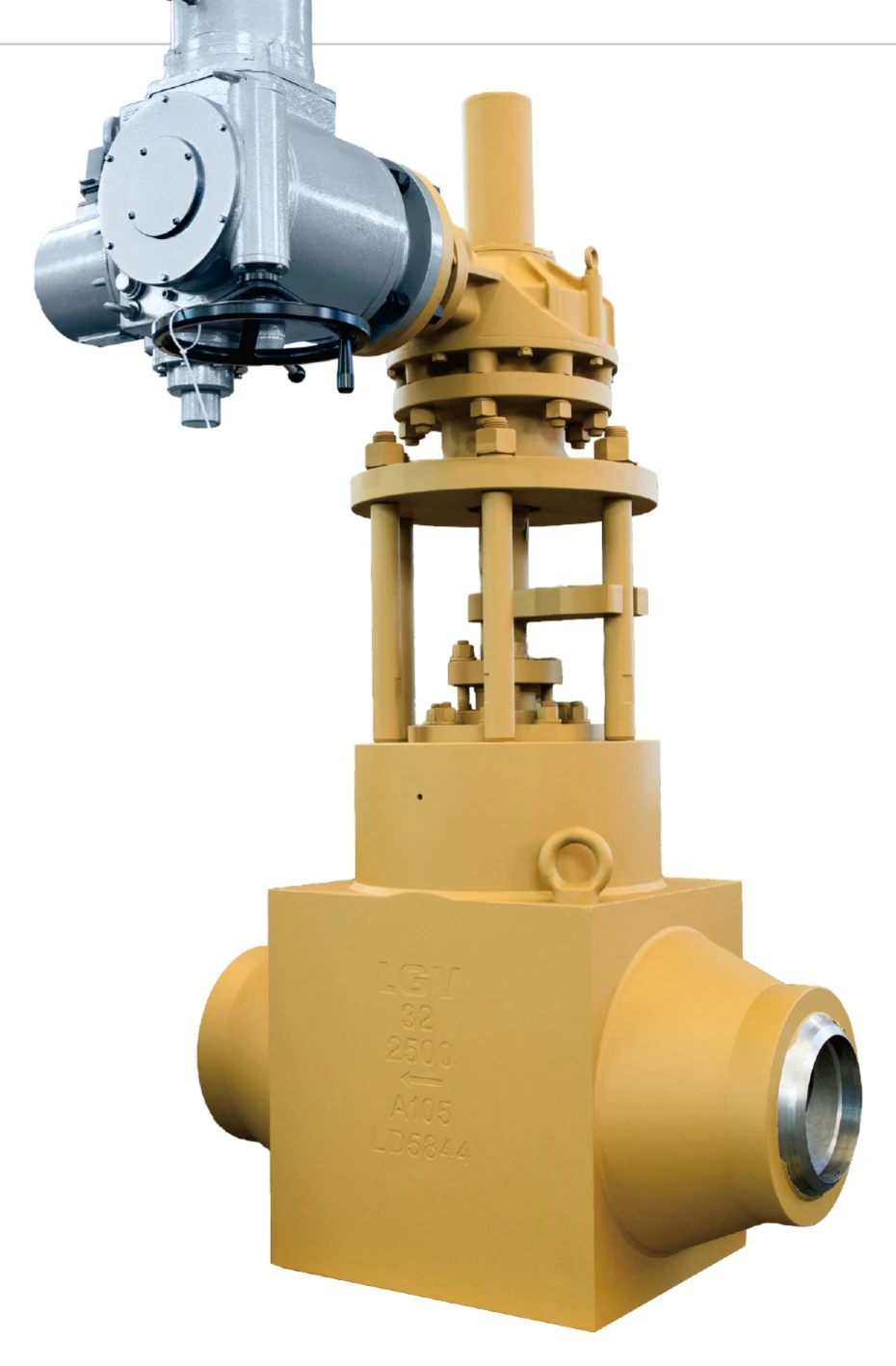
Der Katalog bezeichnet ein Elektrischer Absperrschieber aus Schmiedestahl für Kraftwerke in seinem Programm für Kraftwerksarmaturen. Behandeln Sie es als Kandidaten für motorbetriebene Auf/Zu-Absperrung, nicht als dokumentierte Druckstufe oder als Regelventil. Zur Bewertung eines Angebots sind das tatsächliche Medium, Temperatur und Druck, der maximale Differenzdruck beim Öffnen oder Schließen sowie die geforderte Funktion des Elektroantriebs anzugeben.
- Absperrschieber — Auf/Zu-Absperrfunktion zu prüfen
- Schmiedestahl — genaue Werkstoffgüte nicht angegeben
- Elektrischer Antrieb — Antrieb und Steuerung auszuwählen
- Kraftwerkskatalog-Kontext — Medium nicht angegeben
Produktidentität
Beginnen Sie mit der Armaturenfunktion, nicht mit der Katalogbezeichnung
Die Bezeichnung bestätigt die Produktkategorie, den Werkstoff und die Antriebsart. Sie bestimmt nicht, ob eine bestimmte Ventil-Antrieb-Kombination bei der von Ihrer Anlage geforderten Druckdifferenz oder Temperatur zuverlässig arbeitet.
Absperrung, keine regelmäßige Drosselung
Ein konventioneller Absperrschieber ist für vollständig geöffnet oder vollständig geschlossen vorgesehen. Wenn eine kontinuierliche Durchflussregelung erforderlich ist, beginnen Sie mit dem Regelventil-Programm statt davon auszugehen, dass ein teilweise geöffneter Absperrschieber geeignet ist.
Elektrischer Antrieb erfordert einen passenden Antrieb
Der elektrische Stellantrieb muss für das Betätigungsdrehmoment bzw. den Spindelschub, den vollständigen Hub, die Öffnungs-/Schließzeit und die Schalthäufigkeit der Armatur ausgewählt werden. Das Wort “elektrisch” legt weder die Stromversorgung noch die Steuerlogik oder das Verhalten bei Stromausfall fest.
Kraftwerke sind eine Branche, kein Fluid
Ermitteln Sie, ob die Leitung Dampf, Speisewasser, Kondensat oder ein anderes Medium führt, einschließlich der tatsächlichen Betriebs- und Störbedingungen. Die Katalogabbildungen auf den PDF-Seiten 58 und 64 belegen die dort aufgeführte Produktidentität, nicht den freigegebenen Einsatzbereich.
Katalogbelege
Was der Katalog tatsächlich bestätigt
Die Quelle beschriftet vier Fotografien mit “Electric Forged Steel Power Plant Gate Valve” unter “Power Station Valve”. Die Tabelle enthält nur die dort gezeigten Identitätsfelder; keine numerische Nennweite, Druckstufe, Temperaturgrenze, ASTM-Werkstoffgüte oder Stellantriebsmodell wurde verifiziert.
| Feld | Dokumentierter Wert | Nachweisgrenze |
|---|---|---|
| Ventiltyp | Absperrschieber | Katalog-Produktbezeichnung |
| Werkstoffangabe | Schmiedestahl | Katalog-Produktbezeichnung; Werkstoffgüte nicht angegeben |
| Betätigung | Elektrisch | Katalog-Produktbezeichnung; Motorspezifikation nicht angegeben |
| Branche / Einsatzbereich | Energieerzeugung | Katalogbezeichnung; keine Fluidspezifikation |
| Katalogbaureihe | Kraftwerksarmatur | Katalogabschnitt-Überschrift |
| Bild-/Beschriftungsreferenzen | PDF-Druckseiten 58 und 64; gedruckte Seiten 105–106 und 117 | Verifizierte Zuordnung von Bildunterschrift zu Bildposition |
Noch offen für die Angebotserstellung: Nennweite und Anschlussarten, Bauform, Werkstoffgüten, Druck-Temperatur-Bemessung, Absperrkriterium, Stellantriebsauslegung sowie Prüf- und Inspektionsdokumente. Diese müssen aus dem jeweils angebotenen Datenblatt und der Zeichnung stammen.
Nachweisgrenze
Welche Normen und Schnittstellenstandards sind relevant?
Beginnen Sie mit der Projektspezifikation. Als Referenz:, ASME B31.1:2026 behandelt die zutreffenden Rohrleitungssysteme für Kraftwerke; ASME B16.34:2025 behandelt Armaturenanforderungen einschließlich Druck-Temperatur-Bemessung; und ISO 5210:2026 addresses multi-turn actuator attachments. These are scope references, not verified certifications or compliance claims for this catalog item.
Valve and piping specification
- Confirm the applicable piping code and contractual edition for the plant line.
- Require a valve datasheet stating the offered design standard and construction.
- Check pressure–temperature limits for the selected grade and configuration; Class alone is not an allowable pressure at every temperature.
- Match end preparation, mating connections, testing and leakage acceptance to the actual order.
- The forged-steel descriptor does not establish an ASTM grade or a complete trim/seat material schedule.
Actuator interface and functional sizing
- ISO 5210 specifies multi-turn attachment dimensions and reference torque/thrust values; it does not select the actuator for this valve.
- Obtain the valve’s required operating torque/stem thrust at the worst specified differential-pressure condition.
- Match stem travel, number of turns, mounting interface and open/close time to the actual valve.
- Define motor power, starts per hour, duty, local/remote control, signals and position feedback.
- Specify torque/limit-switch settings and the required behavior on loss of electrical power.
- Request the matched valve–actuator datasheet and assembly drawing before order approval.
Technische Prüfung
Inputs that change the offered valve and actuator
A useful RFQ describes what the valve must do and the conditions in which it must move. Two valves with the same nominal size may require different actuator sizing if their opening differential pressure, shutoff duty or operating frequency differs.
Ventilaufgabe
Specify full-open/full-closed isolation, the required leakage acceptance and cycles or starts per hour. If the job requires regular intermediate positioning or flow control, route it to a suitable control valve rather than treating the gate valve as an automatic substitute.
Betriebsbereich
State the fluid, design and normal pressures, design and operating temperatures, and maximum differential pressure during seating and unseating. Include start-up, shutdown, vacuum or thermal transients where relevant; these may determine the valve and drive review.
Werkstoffe und Anschluss
Give the required end connection and mating line details, piping code, material specification and documentation needs. “Forged steel” alone does not choose the body grade, seat/trim materials, packing, welding requirements or pressure–temperature rating.
Daten des elektrischen Stellantriebs
State supply voltage and frequency, open/close timing, operating frequency, ambient conditions, enclosure requirement, DCS/PLC commands and feedback. Request a supplier-matched torque/thrust and travel review; specify whether any fail-position action is actually required when power is lost.
Prüfung und Dokumente
Ask for an offered datasheet, dimensional/interface drawings, material traceability documents, proposed inspection and pressure/leakage tests, and actuator electrical/control documents. State any third-party witness and acceptance requirements; availability remains subject to the quotation.
Anwendungsgrenze
Power-station conditions that can change selection
The catalog category does not prove that all steam, water or auxiliary services are interchangeable. Three project conditions should be resolved before treating this illustration as an orderable configuration.
Steam, water and temperature excursions
Identify the actual medium and its composition, operating temperature, maximum design temperature and heating/cooling cycles. A valve proposed for hot steam cannot be assumed suitable merely because this catalog groups it under power-station equipment; the offered grade, seats and pressure–temperature limits must be checked.
Opening against differential pressure
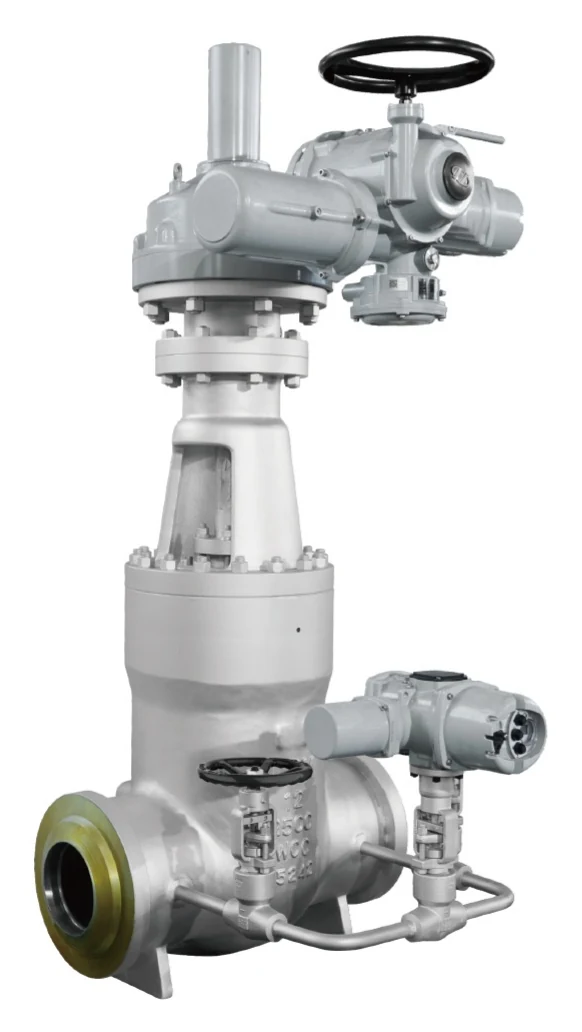
A closed isolation valve may need to open while pressure is unequal on its two sides. Give the maximum expected opening differential pressure and operating sequence so the valve and actuator can be checked. If a bypass or equalization arrangement is required, specify and approve it separately; pipework visible in one catalog photo is not evidence that a bypass is supplied as standard.
Installation and plant control interface
Check valve orientation, actuator/stem clearance, insulation and local temperature exposure, maintenance access, pipe loads, emergency operation and control-system signals. Use an approved outline drawing and valve/actuator wiring documentation rather than scaling from a catalog image.
Visueller Nachweis
Four catalog-matched product illustrations
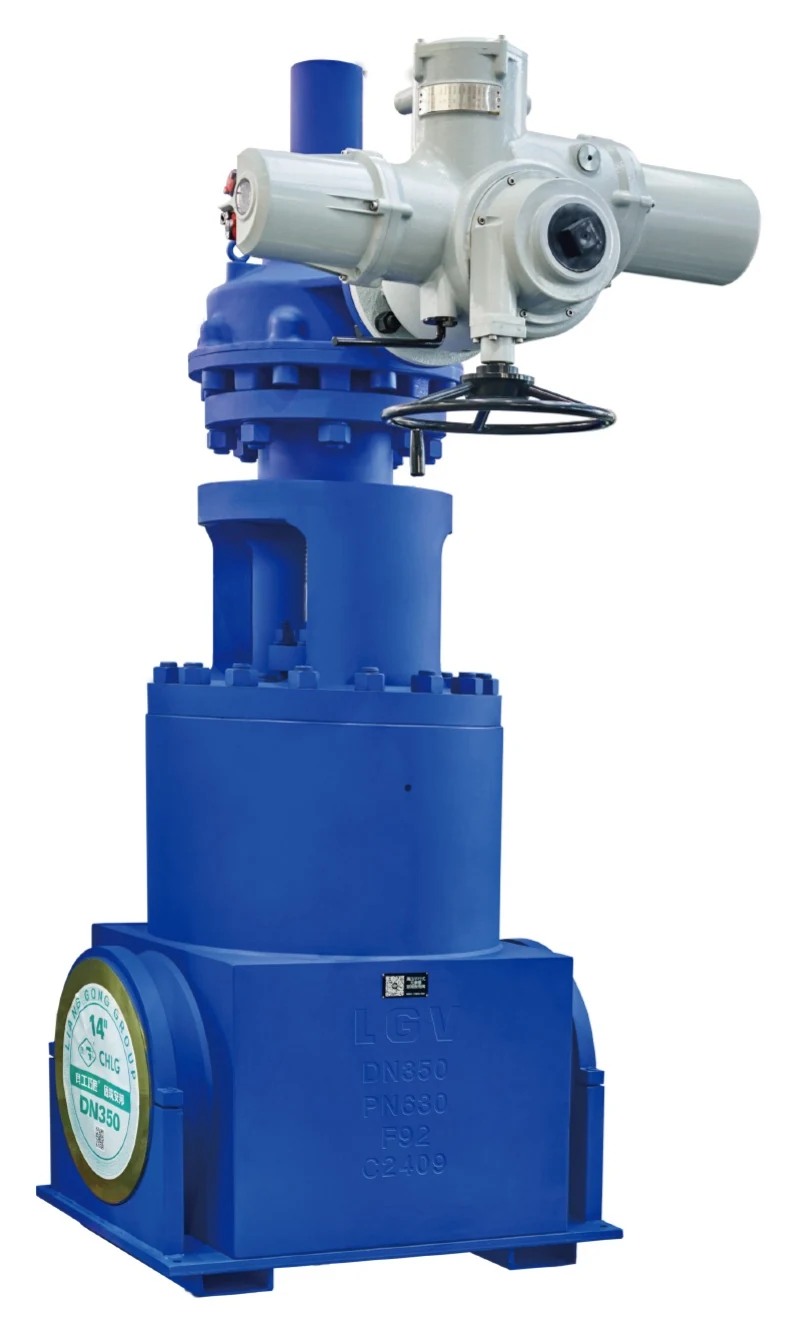
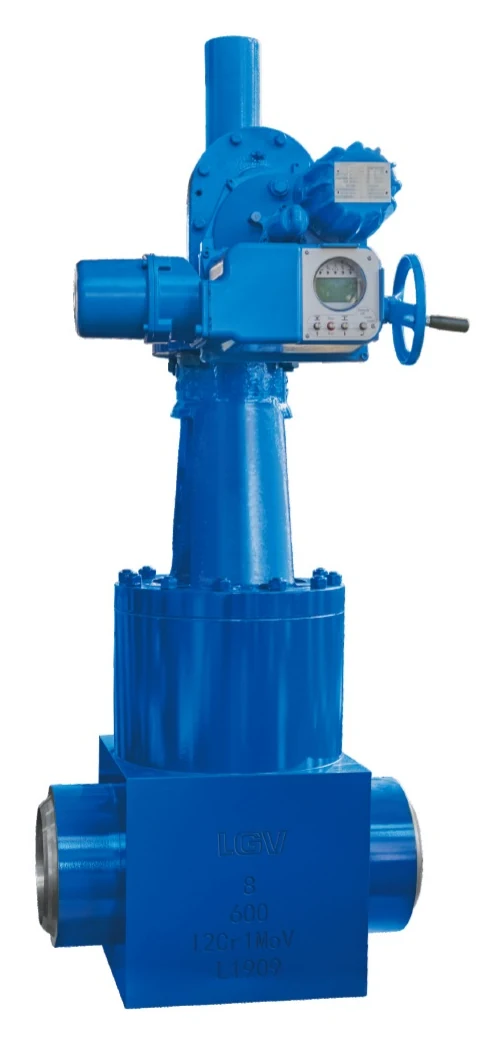
Both photographs on catalog physical page 58 and the first two on physical page 64 carry this product label. The illustrations show different appearances; they do not confirm four orderable models, standard accessories or dimensional interchangeability.
Verwandte Produktrouten
Related gate valves: compare the required function
These are separate catalog identities, not interchangeable specifications. Use the comparison to narrow the intended operation or project-standard question; verify the offered rating and configuration on each product’s own documents.
Handbetätigter selbstabdichtender Absperrschieber aus Schmiedestahl
Review this manually operated, self-sealing catalog entry when local hand operation and that construction are being evaluated. Its title does not establish a common rating with this electric model.
Elektrischer Hochdruck-Absperrschieber aus Schmiedestahl für Kraftwerke
A separately named electric high-pressure, self-sealing design. If your specification requires pressure-seal construction, request its own drawing and pressure–temperature data rather than assuming the two listings are equivalent.
GOST-elektrischer Absperrschieber aus Schmiedestahl
A separately labeled GOST electric forged-steel gate valve. Relevant when a project calls for a GOST-based specification; the name alone does not verify conformity or the applicable edition.
Fragen von Einkäufern
Questions before issuing a gate valve RFQ
Use these answers to screen the duty and prepare a technically reviewable request.
Can this gate valve be used for continuous throttling?
Not by default. Conventional gate valves are selected for fully open/fully closed duty. Continuous regulation or frequent intermediate positioning requires a different, explicitly qualified control-valve selection.
Does “power plant” identify the pressure rating or fluid?
No. It is a catalog service category, not a fluid, size, material grade or pressure–temperature rating. Supply the actual medium and maximum design/operating conditions for review.
How should the electric actuator be specified?
Provide maximum differential pressure during operation, required opening/closing time and cycles, supply voltage, control signals, enclosure conditions and power-loss requirement. The selected drive must be checked against actual valve torque, stem thrust and travel.
What documents should accompany the quotation?
Request the offered valve and actuator datasheets, dimensional and connection drawings, material schedule, applicable standard editions, inspection and leakage-test plan, and electrical/control interface documents. Specify any witness requirements in the RFQ.
Technische Anfrage
Request a matched valve and electric-actuator review
Reference Electric Forged Steel Power Plant Gate Valve / CCE-R2-0001 and describe the operating duty below. Ask for one proposed valve–actuator configuration with stated deviations, drawings and applicable standards—not just a price against a catalog photograph.
- Fluid / line service, isolation duty, required shutoff and cycle frequency
- DN or NPS, design pressure and temperature, plus maximum operating differential pressure
- End connection, material and seat/trim requirements, piping code and applicable edition
- Power supply, stroke time, control/feedback signals, environment and power-loss action
- Quantity, delivery location, approved drawings, testing/inspection and witness documents