
Katalogdokumentierter Absperrschieber
Edelstahl-Absperrschieber mit elastomerem Sitz und nicht steigender Spindel
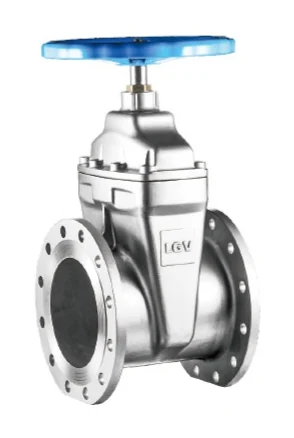
Der Quellkatalog führt diesen Absperrschieber als elastomerer Sitz und nicht steigende Spindel unter seiner Hydraulische Regelventil-Baureihe. Diese Serienüberschrift ist eine Katalogabschnittsbezeichnung und kein Nachweis für hydraulische Betätigung oder Regelbetrieb. Der Katalog verwendet “Edelstahl” außerdem als Materialbeschreibung; er benennt nicht die Werkstoffgüte jedes drucktragenden oder mediumberührten Bauteils.
- Ventiltyp: Absperrschieber
- Spindelanordnung: Nicht steigende Spindel
- Sitzausführung: Elastomerer Sitz
- Materialmerkmal: Edelstahl
Produktidentität
Was der Katalog angibt
Diese Seite erfasst eine bestimmte Katalogidentität innerhalb der übergeordneten Absperrschieber-Baureihe. Sie ist kein vollständiges technisches Datenblatt: Aus der Produktbezeichnung allein ergeben sich weder bestellbare Nennweite, Druck-Temperatur-Bemessung, Anschlussnorm, Sitzwerkstoff, Stellantriebmodell noch Projektfreigabe.
Produktfamilie
Absperrschieber. Dies ist der Produkttyp und der übergeordnete kommerzielle Pfad für die Auswahl auf Kategorieebene.
Katalogbaureihe
Hydraulische Regelventil-Baureihe. Dies ist ausschließlich die Überschrift des Katalogabschnitts; sie belegt weder einen hydraulischen Antrieb noch eine Regelventilfunktion für diesen Absperrschieber.
Nachweisquelle
Wiederhergestellter englischer Produktkatalog, PDF-Seite 103; die Produktbeschriftung ist der zugehörigen Katalogabbildung in den bereitgestellten Bildbelegen zugeordnet.
Katalogbelege
Was der Quellkatalog tatsächlich bestätigt
Der Katalog liefert Produktidentifikationsmerkmale, keine vollständige Ventilspezifikation. “Edelstahl” benennt nicht die Werkstoffgüte jeder Komponente, und “weich dichtend” benennt weder die Elastomer-Mischung noch die Sitzkonstruktion oder die zulässige Leckagerate.
| Feld | Katalogwortlaut | Was bestätigt wird |
|---|---|---|
| Produktidentität | Edelstahl-Absperrschieber mit elastomerem Sitz und nicht steigender Spindel | Exakte Produktbeschriftung auf PDF-Seite 103 |
| Ventiltyp | Absperrschieber | Produktkennzeichnung |
| Spindelanordnung | Nicht steigende Spindel | Produktbeschriftung; Antrieb und Stellungsanzeige sind nicht angegeben |
| Sitzmerkmal | Weich dichtend | Produktbeschriftung; Elastomer-Mischung und Sitzkonstruktion sind nicht angegeben |
| Werkstoffangabe | Edelstahl | Produktbezeichnung; Werkstoffgüten und Materialzuordnung sind nicht angegeben |
| Katalogabschnitt | Hydraulische Regelventil-Baureihe | Nur Abschnittsüberschrift; kein Nachweis für hydraulische Betätigung oder Regelbetrieb |
Vor der Angebotserstellung: das angebotene Datenblatt und die freigegebene Zeichnung für Nennweite, Druck-Temperatur-Grenzen, Anschlussdetails, Werkstoffgüten, Sitzsystem, Antrieb und Prüfanforderungen anfordern. Keiner dieser Werte darf aus dem Katalogbild oder der Abschnittsüberschrift abgeleitet werden.
Nachweisgrenze
Bestätigte Merkmale und offene Konfigurationsfelder
Die Produktbezeichnung bestätigt einen Absperrschieber mit nicht steigender Spindel und einem Merkmal für elastomeren Sitz. Der Katalog bezeichnet den Werkstoff außerdem als Edelstahl. Die detaillierte Konstruktion und die Betriebsgrenzen bleiben konfigurationsabhängig.
Durch den Katalog bestätigt
- Ventiltyp: Absperrschieber
- Spindelanordnung: Nicht steigende Spindel
- Sitzausführung: Elastomerer Sitz
- Materialmerkmal: Edelstahl
- Katalogabschnitt: Hydraulische Regelventil-Baureihe; nur Abschnittsbezeichnung
Vor Angebotsabgabe bestätigen
- Werkstoffgüten für Gehäuse, Gehäuseoberteil, Spindel, Absperrplatte/Keil, Innenteile und Befestigungselemente
- Sitz-/Elastomercompound, Konstruktion, Kompatibilität und erforderliche Zulassungen
- DN/NPS, Druck-Temperatur-Bemessung und Abmessungen des Endanschlusses
- Spindelantrieb, Antrieb, Öffnungsrichtung, Drehmoment/Schubkraft und Stellungsanzeige
- Leckagerichtung und Abnahmekriterien am Sitz, Gehäuse-/Sitzprüfungen und Prüfprotokolle
- Anwendbare Auslegungs-/Prüfnormen und Ausgaben, Zeichnungen und Zertifikate
Technische Prüfung
How to specify this non-rising-stem, resilient-seated gate valve
The two defining terms in this catalog name affect different parts of the purchase decision: the stem arrangement determines how the gate is operated and accessed; the resilient-seat description makes the seat compound and shutoff criteria important. Confirm both against the actual service and offered sectional drawing.
Duty and service medium
Specify the line function and whether the valve is for full-open/full-closed isolation; state required shutoff performance and operating frequency. Identify the plant/equipment duty and provide fluid composition and concentration, phase, solids or abrasives, cleaning/disinfection chemicals and corrosion or erosion concerns. If routine flow modulation is required, do not infer control capability from the catalog series heading; evaluate a suitable control-valve design.
Druck und Temperatur
Provide DN/NPS, design and operating pressure, maximum differential pressure during opening and closing, and minimum, normal and maximum temperature. Include relevant start-up, shutdown, vacuum or other transient conditions. The catalog supplies no pressure class or pressure-temperature rating for this item.
Materials, resilient seat and end connections
“Stainless steel” is a catalog descriptor, not a complete material schedule. Identify the required grades for the body, bonnet, stem, gate/wedge core, trim, fasteners and other wetted parts. Confirm the actual seat/elastomer compound, wedge coating or encapsulation/seat-ring construction, compatibility with the medium and temperature, required shutoff direction and leakage acceptance, and any potable-water or process-contact approvals. Separately specify the end type, flange standard and facing (or other mating interface), pressure rating and face-to-face dimensions.
Non-rising stem drive and installation
In a conventional non-rising-stem arrangement, the stem rotates without external axial travel while the gate moves along the stem threads. Confirm the offered stem/nut arrangement, handwheel, operating nut, gearbox or actuator, opening direction, number of turns, required torque/thrust, position indicator and mounting interface. The catalog illustration shows a handwheel but does not confirm the supplied operator. Check any valve-box or stem-extension needs, overhead clearance, orientation, flow-direction marking, piping loads, ambient exposure and maintenance access. If powered, define the utilities, control interface and any required loss-of-power action.
Testing and documents
Request the configuration-specific datasheet, general-arrangement and sectional drawings, material schedule/traceability, shell and seat leakage tests with acceptance criteria, stem-sealing and bonnet-gasket details, applicable design/test standards and editions, inspection plan, witness/hold points and required certificates. Ask which records will be supplied for the quoted configuration and purchase order.
Verwandte Produktrouten
Other gate valve catalog entries
These are separate catalog identities, not interchangeable specifications. Use the rising-stem entry for a direct stem-arrangement comparison; the forged-steel entries represent different material, operator or bonnet descriptions. Review each product against its own datasheet and drawing.
Edelstahl-Absperrschieber mit elastischer Sitzdichtung und steigender Spindel
Direct comparison for stem arrangement and external clearance. The rising-stem entry has its own catalog evidence; do not transfer its materials, dimensions or ratings to this non-rising-stem product.
Elektrischer Absperrschieber aus Schmiedestahl für Kraftwerke
A separate electric-operated forged-steel power-plant gate valve entry. Its material descriptor and operator are different; confirm its own grade, drive and operating envelope.
Handbetätigter selbstabdichtender Absperrschieber aus Schmiedestahl
A separate manually operated forged-gate entry with pressure self-sealing bonnet wording. That bonnet description does not establish this product’s resilient-seat construction or pressure rating.
Fragen von Einkäufern
Stainless Steel Resilient Seated Non-Rising Stem Gate Valve FAQ
These answers separate the source catalog descriptors from the technical details that must be confirmed for the offered valve.
What does the source catalog confirm for this gate valve?
It identifies a Gate Valve named Stainless Steel Resilient Seated Non-Rising Stem Gate Valve. The product caption specifies a non-rising stem, the name includes a resilient-seat descriptor and a stainless-steel material descriptor, and the entry appears under the Hydraulic Control Valve Series heading. The catalog does not provide a complete datasheet.
Does “Hydraulic Control Valve Series” mean this gate valve is hydraulically actuated?
No. It is the source catalog section heading. It does not establish a hydraulic operator, an actuator model or a modulating control function. Confirm the offered operator and duty separately; a conventional gate valve is generally selected for on/off isolation rather than routine throttling.
What does non-rising stem mean for operation?
In a conventional non-rising-stem arrangement, the stem rotates without moving axially outside the valve while the gate travels along the stem threads. This can reduce the external stem-travel envelope, but the actual stem/nut design, operator, opening direction, turns, torque or thrust, position indicator and access arrangement still need confirmation.
What does resilient seated confirm about the seal?
It identifies a resilient-seat design descriptor only. The catalog does not specify the elastomer compound, wedge coating or encapsulation method, seat-ring construction, replaceability, chemical compatibility, sealing direction or leakage acceptance. Obtain these details from the offered material schedule, drawing and test specification.
Can the catalog illustration be used as a dimensional or connection reference?
No. The illustration supports product identity and general appearance only. Use the approved general-arrangement and connection drawings for face-to-face dimensions, flange drilling/facing, installation clearances and mating-pipe checks.
Was sollte in die Anfrage aufgenommen werden?
Provide the valve duty and fluid composition/concentration, solids and cleaning chemicals, size, design pressure, maximum operating differential pressure, temperature range, end connection, material grades, seat compound and leakage criteria, NRS operator/drive requirements, quantity, drawings, tests, inspection and document requirements.
Technische Anfrage
Request a configuration review for Stainless Steel Resilient Seated Non-Rising Stem Gate Valve
Reference this catalog identity and provide the operating case. The quotation should identify the actual body and trim grades, resilient-seat compound, end connection and non-rising-stem drive offered, with the applicable drawings and test/document scope.
- Duty, plant/line function, fluid composition/concentration, solids and cleaning chemicals
- DN/NPS, design pressure, maximum operating differential pressure and temperature range
- End type, mating standard/facing, face-to-face dimensions and installation constraints
- Component material grades, seat compound/construction, shutoff direction and leakage acceptance
- NRS stem drive, operator, torque/thrust, turns, position indication and actuator interface if powered
- Quantity, drawings, shell/seat tests, inspection, witness and certificate requirements