
ANWENDUNGEN IN DER CHEMISCHEN UND PETROCHEMISCHEN INDUSTRIE
Ventile für die chemische und petrochemische Industrie für Prozessanwendungen
VALMORA liefert industrielle Ventiloptionen für Aufgaben in chemischen und petrochemischen Prozessen. Beginnen Sie mit der Funktion, die das Ventil erfüllen muss – Auf/Zu-Absperrung, Durchflussregelung oder zusätzliche Spindelabdichtung – und prüfen Sie dann die tatsächlichen Fluid-, Konzentrations-, Temperatur- und Druckfälle, bevor Sie Werkstoffe und Bauart auswählen.
Für Ingenieure und Einkaufsteams: Vergleichen Sie unten die Ventilfamilien und senden Sie anschließend eine mit Tags versehene Betriebsbeschreibung zur konfigurationsspezifischen Prüfung. Ein ausgekleidetes Ventil oder ein bekannter Werkstoffname allein belegt keine chemische Beständigkeit.
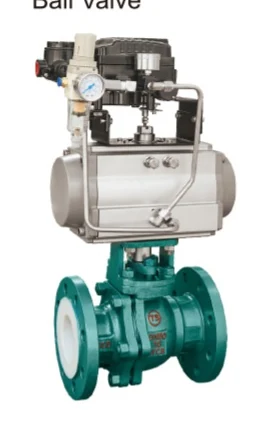
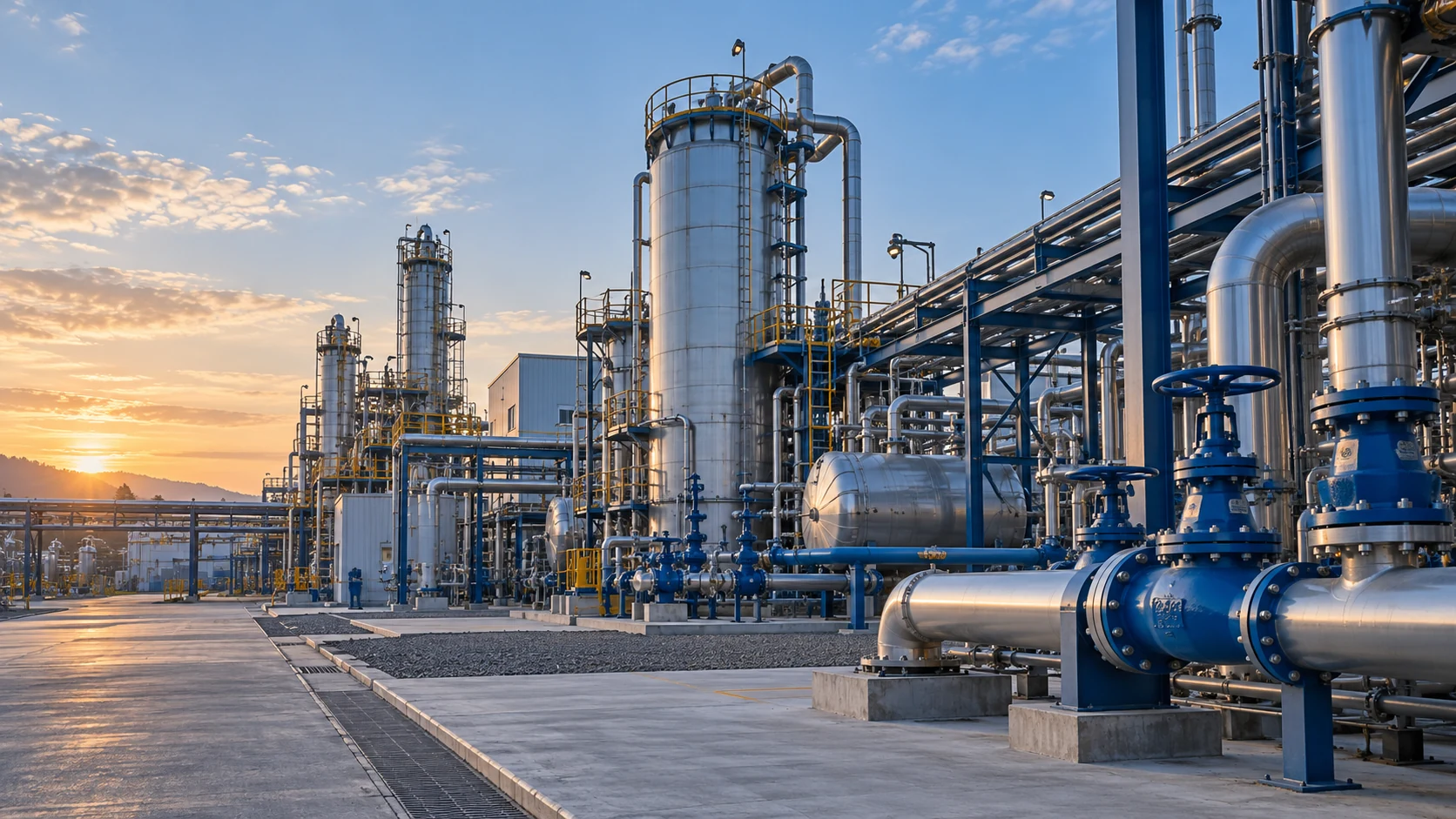
Das Bild der Prozessanlage ist eine KI-Illustration, keine VALMORA-Installation. Produktbild: Lieferantenkatalog-Beispiel eines pneumatischen PTFE-ausgekleideten Kugelhahns; die endgültigen Spezifikationen hängen von der angebotenen Konfiguration ab.
ANWENDUNGEN IN DER PROZESSLEITUNG
Dieselbe Chemieanlage kann sehr unterschiedliche Ventile erfordern
Eine Transferleitung, ein Reaktorauslass und eine Verladestation können verwandte Chemikalien führen, sind jedoch unterschiedlichen Strömungs-, Schaltzyklus- und Dichtheitsbedingungen ausgesetzt. Definieren Sie die Aufgabe für jedes Ventil-Tag, anstatt eine einzige Bauart für die gesamte Anlage auszuwählen.
Transfer-, Misch- und Dosierleitungen
Für Auf/Zu-Aufgaben sind Änderungen der Chargenzusammensetzung, eingeschlossene Flüssigkeit, Spülchemikalien und die Schalthäufigkeit des Ventils zu ermitteln. Eine ausgekleidete Absperroption kann prüfenswert sein, wenn freiliegendes Metall ein Problem darstellt, doch Ablagerungen oder abrasive Feststoffe können die Auswahl ändern.
Reaktoren und Trenneinrichtungen
Reaktionen können Temperatur und Konzentration verändern; Verdampfung und Abkühlung können Ventile einem Vakuum aussetzen. Für Regelaufgaben sind Durchflussbereich, Druckverlust und Dampfdruck der Flüssigkeit erforderlich, um Risiken durch Verdampfen (Flashing) oder Kavitation zu bewerten.
Lagerung, Verladung und Anbindung an Anlagenteile
Fordern Sie eine sichere Absperrung, die Schließrichtung, die Betätigungshäufigkeit und die Folgen externer Leckagen an. Wenn Fernbetätigung oder eine Notabschaltung erforderlich ist, geben Sie die Fail-Position und die geltenden Projektanforderungen an; ein Foto eines Stellantriebs ist keine Freigabe für diese Aufgaben.
ARMATURENFAMILIEN ENTDECKEN
Beginnen Sie mit der Ventilfunktion und grenzen Sie dann die Bauart ein
Dies sind bestehende Produktkategorie-Routen von VALMORA, keine vorab genehmigten Konfigurationen für den Chemikalieneinsatz. Die jeweilige Kategorie erläutert die Bauart; die ausgewählte Nennweite, Werkstoffe, Dichtungen und Betriebsgrenzen müssen weiterhin zur Leitung passen.
Ausgekleidete & korrosionsbeständige Armaturen
Ein Ausgangspunkt, wenn das Medium einen geschützten medienberührten Pfad erfordert. Prüfen Sie genau, welche Oberflächen ausgekleidet sind und ob Auskleidung, Sitze und Dichtungen den gesamten Betriebszyklus überstehen.
Kugelhähne
Für Vierteldrehungs-Absperrung und -Umleitung. Bestätigen Sie Absperraufgabe, medienberührte Sitze und Spindeldichtungen, Differenzdruck, Schaltspiele und Betätigung.
Regelventile
Für eine spezifizierte Durchfluss- oder Druckregelung. Geben Sie Mindest-, Normal- und Maximaldurchfluss sowie Vor- und Nachdruck, Temperatur und Phase für eine ordnungsgemäße Auslegung und Prüfung des Trimms an.
Absperrventile mit Faltenbalgdichtung
Eine Bauart zur Spindelabdichtung, wenn externe Leckagen von Bedeutung sind. Prüfen Sie den angebotenen Faltenbalg, die Ersatzdichtung und die Projektprüfanforderungen, statt Emissionsleistungen anzunehmen.
ECHTE PRODUKTFOTOS
Ausgekleidete Bauformen im Lieferantenkatalog
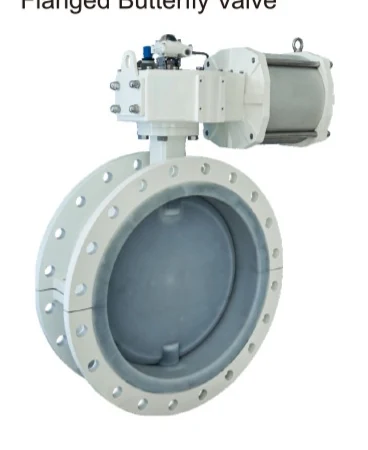
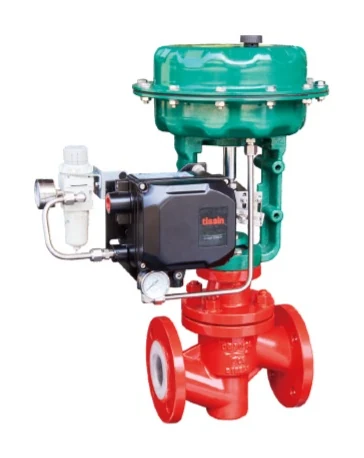
Die Fotos zeigen Konstruktionsbeispiele – keine Referenzen aus installierten Projekten und keine allgemeingültigen Freigaben für den Chemikalieneinsatz. Das Hauptbild oben zeigt einen pneumatischen PTFE-ausgekleideten Kugelhahn. Darunter sehen Sie eine pneumatische PTFE-ausgekleidete Absperrklappe mit Flanschanschluss (links) und ein pneumatisches PTFE-ausgekleidetes Absperrventil (rechts). Bestätigen Sie die tatsächlich angebotenen Werkstoffe und Abmessungen anhand des Datenblatts und der Zeichnung.
Ausgekleidet ist nicht gleich PTFE-bestuhlt
Ein PTFE-Sitz kann gegen ein Absperrelement abdichten, während andere mediumberührte Oberflächen aus Metall bleiben. Wenn die Leitung eine Trennung des Gehäusemetalls vom Medium erfordert, ist die gesamte mediumberührte Konstruktion zu spezifizieren – nicht nur der Sitzwerkstoff.
Vakuum und Permeation ändern die Auswahl
Für Heißbetrieb, Vakuum oder penetrierende Medien sind die Druck-Temperatur-Vakuum-Grenzen und die Auskleidungskonstruktion des angebotenen Ventils anzufragen. Allgemeine Beständigkeitsdaten zu Harzen können die Eignung der kompletten Baugruppe nicht belegen.
Stellantrieb und Funktion sind getrennt zu prüfen
The pictured pneumatic actuation identifies an operating arrangement, not a certified shutdown function or a sized modulating solution. State cycles, available utilities, required failure position and pressure differential.
DECISION GUIDE
Which valve route fits the chemical-service duty?
Use these starting points before requesting a specific model. The limiting condition in the third column is a reason to change the shortlist or request more data—not a blanket statement about all valves of that type.
| Line requirement | First product route | What changes or limits the choice |
|---|---|---|
| Corrosive liquid where wetted metal exposure is a concern | Ausgekleidete & korrosionsbeständige Armaturen | Identify every wetted surface and verify chemical concentration, temperature, liner support and permeation risk. |
| Frequent on/off transfer or batch isolation | Kugelhähne | Check seats, stem seals and trapped-cavity behavior; ordinary on/off ball valves are not a substitute for sized control valves. |
| Space- or size-sensitive isolation with a butterfly design | Absperrklappen | Check disc/liner exposure, required shutoff direction and flange/disc clearance; a pictured lined disc is not a service rating. |
| Stable modulation across a changing flow rate | Regelventile | Provide flow cases, differential pressure and vapor pressure; size and trim selection must address flashing, cavitation and erosion risks. |
| Isolation duty where a flexible diaphragm may separate parts of the mechanism from the process | Membranventile | Check diaphragm and lining compatibility, solids, closure differential and cycling for the actual design. |
| Isolation or diversion where a plug construction is being considered | Kükenhähne | Specify deposits, solids, actuation torque and the full wetted sealing construction. |
| Specified additional stem-containment arrangement | Absperrventile mit Faltenbalgdichtung | The bellows design is a route to review; ask for the applicable leakage-test basis and documentation for the offered unit. |
Not sure which route fits? Give the stream composition and valve duty in the RFQ rather than specifying a guessed lining, leakage class or actuator.
DATA THAT CHANGES THE SELECTION
Give suppliers the actual chemical-service envelope
A valve that works at normal temperature may face a different condition during startup, cleaning or a shutdown vacuum. For each tag, provide the following combinations where known; leave unknown values open rather than substituting a material limit for a finished-valve rating.
| RFQ-Angabe | What to report | Why it changes the selection |
|---|---|---|
| Chemical identity | Constituents and concentration ranges, contaminants, phase, particles, cleaning chemicals and any batch changes. | Narrows body, lining, seat, gasket and packing candidates; chemistry alone does not establish liner life. |
| Druck und Temperatur | Minimum, normal, design and upset values, with simultaneous conditions; minimum absolute pressure if vacuum is possible. | A positive-pressure class does not establish vacuum resistance or allowable pressure at every temperature. |
| Fluid and flow behavior | Isolation vs regulation; for control, flow rates, upstream/downstream pressures, liquid vapor pressure, solids or crystallization. | Separates an on/off valve from a properly sized control valve and reveals potential erosion, flashing or cavitation. |
| Sealing and operation | Internal shutoff requirement, external-leakage criterion if specified, operating frequency, actuator power and required fail position. | Changes seat, stem-sealing, actuation and test scope; confirm each requirement on the offered assembly. |
| Connection and approval | Line size, mating ends, piping class, orientation, space, project standard/edition and required records. | Determines installation fit and which inspections, deviations and documents must be included in the quotation. |
TECHNICAL QUOTATION & SUBMITTALS
Check the offered configuration before placing the order
Ask suppliers to answer against the same tagged datasheet and project specification. If ASME B31.3 is the project piping basis, identify the edition and related valve and flange requirements separately; a piping-code reference does not certify a specific valve. Do not treat the absence of a deviation in a quotation as proof that every requirement was accepted.
| Document or requirement | Engineering check | Beschaffungsvorgang |
|---|---|---|
| Tagged valve datasheet + arrangement drawing | Identify size, ends, body, trim, lining/diaphragm, seat, stem seal, actuation and the applicable pressure–temperature conditions. | Request with the technical quotation. |
| Material and compatibility basis | Match chemical concentration and service cases to all process-wetted parts; request available material and lining evidence and clarify any conditions excluded. | Agree what evidence is available for the offered item. |
| Inspection and leakage tests | Identify specified body/seat tests, any external-leakage test, inspection scope, acceptance basis and witness requirements. | Agree test and inspection scope before ordering. |
| Project standards and deviations | Specify applicable code, standard, edition, line class, documentation revisions and all commercial/technical exceptions. | Close deviations and approve the document register before release. |
RELATED PROJECT INFORMATION
Continue from the application to supporting records
Use these existing site sections for context. They are navigation to published information; they are not substitutes for a tagged product drawing, test report or written supply confirmation.
Other Industry Applications
See how another service changes the valve duty and shortlist.
Manufacturing Information
Explore published production information; confirm the source and scope of any project-specific manufacturing claim.
Quality Control Information
Review the described inspection processes and specify the actual records needed for this order.
Technical Resources
Find technical background while keeping the final selection tied to the quoted product data.
SUBMIT A CHEMICAL-SERVICE INQUIRY
Send your chemical and petrochemical valve requirements
Share a valve schedule or start with one service tag. Include fluid and concentration, normal and extreme conditions, valve function, connection, actuation and required documents where known. Clearly mark missing data for technical clarification; the form does not require you to invent a specification.
- Unit and valve tag; isolation or modulation duty
- Chemical constituents, concentration range and cleaning media
- Normal / design / upset temperature and pressure
- Vacuum, solids, flashing or crystallization if applicable
- Valve size, connection and actuation needs
- Applicable project code, standard edition and inspection documents
- Quantities, drawings and delivery context if available
- Unknown conditions stated as open questions