
Absperrschieber mit Handbetrieb | Druckdichtungshaube
Handbetätigter selbstabdichtender Absperrschieber aus Schmiedestahl
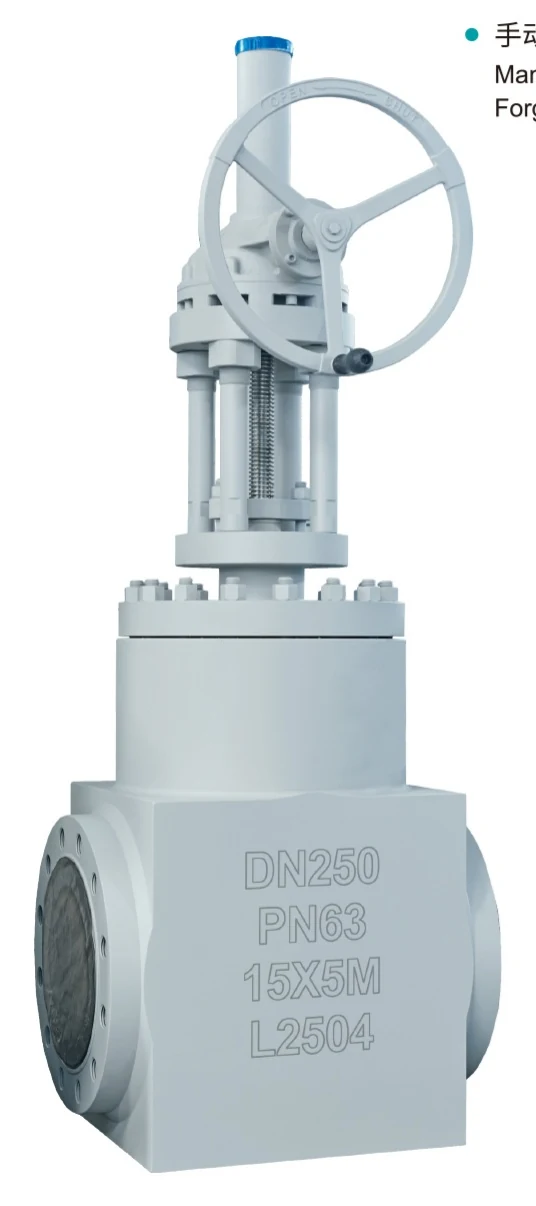
Handbetätigter selbstabdichtender Absperrschieber aus Schmiedestahl ist ein handbetriebener Absperrschieber aus der Katalogreihe Kraftwerksarmaturen. Für eine lokale Auf-/Zu-Absperrfunktion ist zunächst zu prüfen, ob der Handbetrieb bei dem geforderten Differenzdruck praktikabel ist. Die Beschreibung der Druckdichtung bezieht sich auf die Druckverbindung zwischen Gehäuse und Gehäuseoberteil; die Dichtleistung des Ventilsitzes und die bestellbare Druck-Temperatur-Bemessung erfordern weiterhin das genaue Ventildatenblatt.
- Zu bewertende Anwendung: manuelles Auf-/Zu-Absperren
- Genannte Ausführung des Gehäuseoberteils: Druckdichtung
- Katalogserie: Kraftwerksarmatur
Produktübersicht
Manuelles Absperren und Druckdichtungsausführung
Ein Absperrschieber wird üblicherweise so gewählt, dass er vollständig geöffnet oder vollständig geschlossen bleibt und nicht eine Zwischenstellung zur Durchflussregelung hält. Der Handantrieb ist sinnvoll, wenn das Personal das Ventil erreichen kann und der erforderliche Betätigungsaufwand sowie die Schließzeit akzeptabel sind. Wenn die Aufgabe einen Fern- oder Automatikbetrieb erfordert, ist stattdessen das verlinkte elektrisch betätigte Produkt anhand seiner eigenen Spezifikation zu vergleichen.
Betriebliche Funktion
Dieses Angebot ist für lokales Absperren bei vollständig geöffnetem bzw. vollständig geschlossenem Zustand vorgesehen. Für kontinuierliche Drosselung oder präzise Regelung ist eine geeignete Regelventilausführung zu spezifizieren, statt anzunehmen, dass ein teilweise geöffneter Schieber diese Aufgabe erfüllt.
Warum ein Gehäuseoberteil mit Druckdichtung?
Bei einer Druckdichtungsausführung des Gehäuseoberteils trägt der Innendruck zur Druckbelastung an der Dichtung zwischen Gehäuse und Gehäuseoberteil bei. Dies ist ein Konzept der Druckbegrenzung – keine Aussage über null Sitzleckage, null Stopfbuchsleckage oder eine unbegrenzte Druckbemessung.
Katalogreferenz
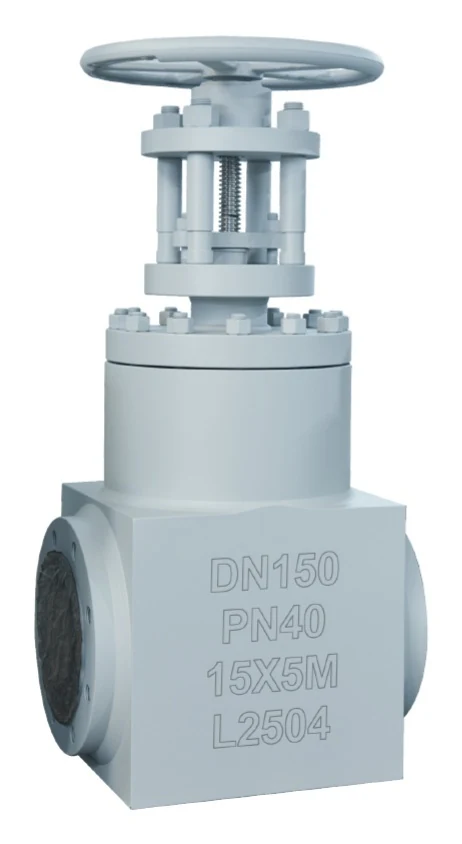
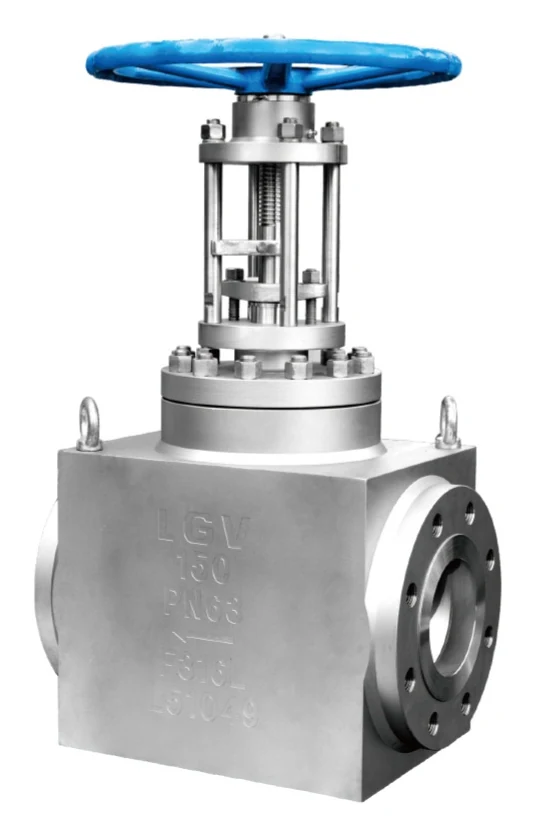
Katalogreihe Kraftwerksarmaturen, Katalog-PDF Seite 59 (gedruckte Seite 107). Die drei abgebildeten handbetriebenen Ventile erscheinen unter diesem Produkttitel; das benachbarte elektrisch betätigte Ventil ist separat auf gedruckter Seite 108 aufgeführt.
Produktdaten
Was der Produktkatalog ausweist
Der Katalog nennt Ventiltyp, Handbetätigung und Druck-Selbstdichtung als Bauart. Er enthält keine freigegebene Maßzeichnung, keine ausgewählten Werkstoffgüten, keine Dichtheitsklasse des Ventilsitzes und keine verifizierte Druck-Temperatur-Grenzkurve für diesen Auftrag.
| Feld | Katalogbeschreibung | Quelle |
|---|---|---|
| Produkt | Handbetätigter selbstabdichtender Absperrschieber aus Schmiedestahl | Beschriftung der gedruckten Seite 107 |
| Ventiltyp | Absperrschieber | Katalogbezeichnung |
| Ausführung des Gehäuseoberteils | Druck-Selbstdichtung (Katalogwortlaut) | Katalogbeschriftung; Verbindungsdetail nicht angegeben |
| Betrieb | Handbetätigung | Katalogbeschriftung und zugeordnete Bilder |
| Katalogabschnitt | Kraftwerksarmatur | Katalogseitenüberschrift |
Für einen Auftrag: verwenden Sie das vom Lieferanten bestätigte Datenblatt und die freigegebene Zeichnung für Größe, Werkstoffe, Druck-Temperatur-Bemessung, Anschlussenden, Prüfanforderungen und Betätigungskraft. Sichtbare Kennzeichnungen auf den Katalogfotos sind kein verifizierter Lieferbereich.
Details zur Druckbegrenzung
Druckdichtender Gehäuseoberteil versus Absperrung über Schieber und Ventilsitze
Ein druckdichtender Gehäuseoberteil nutzt den Innendruck, um die Kompression der Dichtung an der Gehäuseoberteil-Verbindung zu erhöhen. Dies betrifft die Gehäuse-Oberteil-Verbindung. Die Absperrung über Schieber und Ventilsitze, Leckage an der Spindelstopfbuchse und die anfänglichen Dichtbedingungen sind separate technische Fragestellungen. Fordern Sie die angebotene Konstruktionszeichnung sowie die festgelegten Abnahmekriterien für Mantel- und Sitzprüfung an; der Katalogtitel allein legt diese nicht fest.
Etablierte Produktidentität
- Absperrschieber: für reine Auf/Zu-Absperrfunktion vorgesehen; tatsächliche Sitzkonstruktion nicht spezifiziert
- Druckselbstdichtung: beschreibt die Gehäuseoberteil-Verbindung, keine Garantie gegen Sitzleckage
- Handbetätigung: abgebildete Handräder; Handradkraft und etwaige Getriebeausführung sind zu bestätigen
Details, die das angebotene Ventil bestimmen
- Auslegungs- und Betriebsdruck, Druck-Temperatur-Grenzen und instationäre Bedingungen
- Schnittzeichnung der Gehäuseoberteil-Verbindung, Dichtung, Halterung und Anordnung der Anfangsdichtung
- Schieber-/Sitzkonstruktion, Absperrrichtung und zulässige Sitzleckage
- Body, bonnet, stem, trim, packing and gasket material specifications
- Nominal size, end type, connection dimensions and mating piping
- Maximum differential pressure during opening or closing and required manual effort
- Fluid composition, operating temperature, start-up and thermal cycling
- Stem clearance, installation orientation, access and maintenance space
- Project design and test standards, editions, inspection and documentation scope
- Quantity, delivery terms, identification and required material traceability
Selection guidance
How to decide if a manual pressure-seal gate valve fits
Start with the valve’s job. A pressure-seal bonnet can be relevant to the pressure-boundary design, but it does not determine whether a gate valve, a manual operator, or a particular seat construction is right for your duty.
Absperrung oder Regelung?
Choose a gate-valve route for normally fully open or fully closed service. If the valve must regulate flow while partially open, stop this selection and evaluate a suitable globe or control valve: partial opening can damage gate seating surfaces or cause vibration.
Druck und Temperatur
Provide design pressure, operating pressure, minimum/maximum temperature, and any start-up or shutdown transients. The word “self-sealing” does not establish a pressure class or allow a Class designation to stand in for a pressure-temperature rating at the specified material and temperature.
Bonnet, seats, and connections
Specify the required pressure-boundary materials and body-to-bonnet seal arrangement separately from the gate/seat design and seat leakage. End connections, bore, facing or weld preparation must match the piping design; no end style or forged material grade is confirmed by the catalog title.
Can people operate it manually?
Check operating differential pressure, expected frequency, time available to open/close, handwheel force, position indication and access. If safe or timely local operation cannot be demonstrated, request an evaluation of a gear-assisted or powered valve rather than specifying this manual arrangement by name alone.
What documents close the decision?
Request a configuration-specific datasheet, general arrangement and sectional drawing, pressure-temperature basis, shell/seat test criteria, material records and any required inspection plan. Name the governing design/test standards and editions in the RFQ; for example, ASME B16.34 covers valve pressure-temperature and related design requirements, but the catalog title does not establish compliance. API 600 is titled for bolted-bonnet steel gate valves and must not be assumed to qualify a pressure-seal bonnet.
Site and operating conditions
Check the installation before ordering
The catalog places this entry in its Power Station Valve series, but it does not assign a specific fluid, pressure, temperature or plant duty. The purchasing decision changes with operating cycles, access and the installed pressure boundary.
Process fluid and transients
Report fluid composition and phase, debris or erosion risk, normal and upset temperatures, and pressure/temperature changes during start-up and shutdown. These affect the suitability of the proposed materials, seating and pressure-seal gasket.
Local versus remote isolation
A manual arrangement is a starting point where the valve is accessible and infrequently operated. When automatic shutdown, remote actuation, interlocks or short response time is required, review the related electric-operated valve as a different product rather than treating the two as interchangeable.
Orientation and clearance
Send the planned pipe orientation, flow direction if specified, available headroom, stem travel, operator reach and maintenance clearance. Confirm these against the approved arrangement drawing; neither the catalog photograph nor the title sets installation limits.
Catalog photos
Manual pressure-seal gate valve images
The three images below appear under the manual-valve title on printed catalog page 107. They show different illustrated configurations, but they are not dimensioned engineering drawings and do not establish selectable DN/PN ranges, material grades or accessory packages.
Related valves
When a different gate valve may be needed
Manual versus powered operation is an operating-duty decision. The following links are separate catalog products with their own technical confirmation requirements; no pressure rating, material or end connection transfers from one entry to another.
Elektrischer Absperrschieber aus Schmiedestahl für Kraftwerke
A separate electrically operated power-plant gate-valve entry. Check it when remote operation or an automatic operating sequence is required, subject to its own datasheet.
Elektrischer Hochdruck-Absperrschieber aus Schmiedestahl für Kraftwerke
An electric-operated, pressure self-sealing power-plant gate-valve entry. Compare the bonnet concept and operator requirements, but obtain its own confirmed pressure-temperature and connection details.
GOST-elektrischer Absperrschieber aus Schmiedestahl
A different catalog entry carrying a GOST designation. Review only if the project specification calls for that standard route; do not assume dimensional or performance interchangeability.
Common buying questions
Manual pressure-seal gate valve questions
These are the distinctions most likely to change a specification or delay a quotation.
Is a pressure-seal bonnet the same as leak-tight gate seating?
No. Pressure self-sealing describes the body-to-bonnet joint. Gate-to-seat shutoff and stem packing are separate sealing locations. Specify shell and seat leakage requirements for the exact valve.
When is manual operation preferable to electric actuation?
A manual valve is worth reviewing for accessible, infrequently operated isolation when the required handwheel effort and operating time are acceptable. For remote, automatic or time-critical operation, evaluate a powered valve instead.
Does the catalog prove a pressure rating, material grade or end connection?
No. The title identifies a manual, pressure self-sealing forged gate valve, but the catalog page does not provide a complete, approved datasheet. Photo markings and adjacent valve entries are not a verified offering range.
What information is essential for a meaningful quotation?
Supply the isolation duty, medium, size and end connection, operating and design pressure and temperature, differential pressure during operation, required seat shutoff, installation clearance, quantities and required standards or inspection records.
Technisches Angebot anfragen
Request a quote for a manual pressure-seal forged gate valve
Refer to the catalog title and describe the isolation service. Where key details are not yet established, request a proposed datasheet and drawing for review before accepting a pressure class, materials or end connection.
- Required isolation function, fluid and open/close frequency
- DN/NPS, design/operating pressure, temperature and operating differential pressure
- End connection and requested body, bonnet, seat, packing and trim materials
- Manual effort limit, handwheel access, travel clearance and shutoff criterion
- Quantity, drawing, applicable design/test standards, inspection and material records