
Valvola a saracinesca designazione GB | Operatore a riduttore conico
Valvola a saracinesca con riduttore conico GB
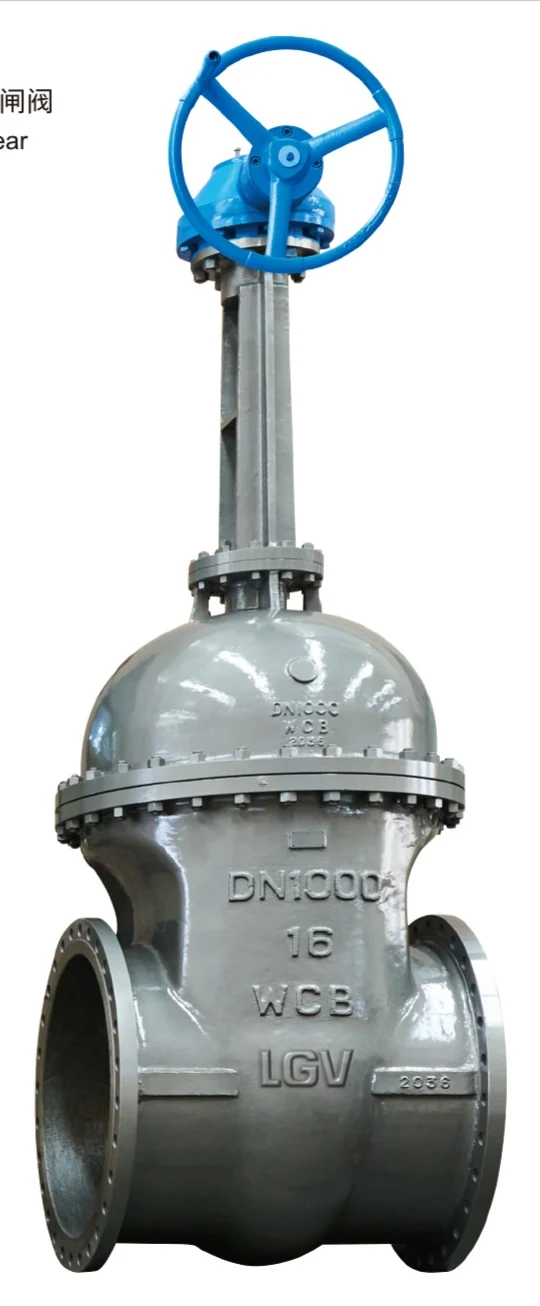
La Valvola a saracinesca con riduttore conico GB è una valvola a saracinesca a catalogo per l'isolamento on/off, raffigurata con volantino e con configurazione di azionamento a riduttore conico. Prima della selezione, definire il massimo differenziale di pressione in apertura, lo sforzo richiesto all'ingresso del riduttore, lo spazio disponibile per lo stelo e le dimensioni esatte delle connessioni di estremità. La designazione di catalogo “GB” non identifica le norme e le edizioni applicabili a un determinato ordine.
- Identità di catalogo: valvola a saracinesca con riduttore conico GB
- Configurazione di azionamento mostrata: riduttore conico con volantino
- Dimensioni, classe di pressione e costruzione: da confermare per la valvola offerta
Scopo operativo
Dove si inserisce questa valvola a saracinesca—e dove no
Si tratta di una richiesta di valvola di isolamento, non di una specifica di valvola di regolazione. Una valvola a saracinesca viene generalmente azionata in posizione completamente aperta o completamente chiusa. Il funzionamento prolungato in posizione parzialmente aperta può produrre vibrazioni e un'usura accelerata della sede o dell'otturatore; per una regolazione ripetuta o una modulazione della portata, selezionare apparecchiature progettate per il servizio di regolazione.
Servizio di isolamento
Utilizzare questa voce di catalogo per un requisito di intercettazione on/off. Specificare le prestazioni di tenuta richieste, la frequenza di manovra e le condizioni di flusso; questi dati non sono determinati dalla denominazione del prodotto.
Comando a ingranaggi
La fotografia mostra un volantino e un gruppo di comando a ingranaggi di altezza elevata. La riduzione a ingranaggi può ridurre lo sforzo manuale, ma non può dimostrare la capacità di apertura alla peggiore pressione differenziale né indicare il numero di giri necessari.
Identificazione a catalogo
La pagina fisica 72 del PDF di origine, pagina stampata 134, identifica l'articolo con volantino blu e corpo grigio come Valvola a saracinesca con riduttore conico GB. L'articolo verde a pagina stampata 133 è etichettato separatamente Valvola a saracinesca con comando a ingranaggi conici ASME.
Informazioni supportate dal catalogo
Identità confermata e informazioni ancora necessarie
Il catalogo conferma la denominazione del prodotto e la disposizione dell'organo di manovra illustrata, non uno schema completo di dimensioni ordinabili, classe di pressione o materiali. Le marcature in fusione sull'esemplare fotografato non devono essere estese all'intera gamma di prodotti.
| Campo | Dati noti | Evidenze / azione di acquisto |
|---|---|---|
| Identità del prodotto | Valvola a saracinesca con riduttore conico GB | Verificato — didascalia del catalogo |
| Funzione / tipo di valvola | Valvola a saracinesca; l'isolamento on/off è il compito di selezione previsto | Tipo di valvola verificato; il servizio dipende dal design offerto |
| Operatore nella foto del catalogo | Gruppo con riduttore a vite senza fine e volantino | Verificato visivamente e tramite didascalia; classe di pressione non confermata |
| Posizione nel catalogo | Pagina fisica PDF 72; pagina stampata 134 | Verificato — immagine del catalogo allegata |
| Numeri e edizioni delle norme | Non stabilito da “GB” nel titolo | Richiedere riferimenti scritti di progetto, dimensionali e di collaudo |
| DN, PN and material grades | No orderable series range confirmed | Require offered datasheet; photo markings are not series data |
| Ends, face-to-face and gearbox rating | Not specified for a purchasable configuration | Require approved order drawing and operator calculation |
Prima dell'acquisto: obtain a revision-controlled datasheet and general-arrangement drawing for the exact offered size and pressure-temperature duty. The catalog picture alone is not an approved dimensional or material specification.
Specification boundary
“GB” is a catalog name, not a complete standard callout
Do not assume a particular GB/T design code, flange standard, test procedure or edition from this name. Ask the supplier to list each applicable standard and edition for the actual valve, and confirm that its scope covers the specified construction and service. An ASME-labeled gate valve elsewhere in the catalog is a different product identity, not an automatic dimensional substitute.
Documented in this catalog
- Gate-valve product identity: GB Bevel Gear Gate Valve
- Bevel-gear operator designation and handwheel in the photograph
- Catalog location: PDF page 72 / printed page 134; source image maps to media 229
To be stated on the offered documents
- Design/construction standard with edition and application scope
- Pressure-temperature rating, size and exact body / trim / packing materials
- Flange or other end standard, facing and face-to-face dimension series
- Maximum opening and closing differential pressure for the real duty
- Valve stem thrust, required torque and selected gearbox capacity
- Handwheel effort, gearbox ratio, turns and accessibility
- Stem travel, total open height and maintenance clearance
- Test / inspection standard, revision-controlled GA and required records
Selezione tecnica
Five checks that can change the configuration
The presence of a bevel gear does not settle valve operability. Begin with the worst opening condition, then review the gear and installation against an exact supplier drawing rather than assuming a nominal DN or GB name is sufficient.
1. Opening against differential pressure
Identify upstream and downstream pressure when the closed gate must first move; this differential can be more important to unseating effort than the stated line pressure alone. Request the valve’s required unseating, running and seating loads at the maximum specified differential. If the supplier cannot verify operation at that condition, do not assume a larger handwheel solves it; evaluate a defined pressure-equalization or bypass arrangement with the system engineer.
2. Bevel gearbox and handwheel effort
Size the operator for the valve’s actual stem thrust and torque, including worst-case startup and seating conditions. Compare gearbox allowable output, gear ratio, maximum permitted handwheel rim force and total turns. More reduction may make turning easier but slower; it does not increase the valve body’s pressure-temperature rating.
3. Stem travel and overhead clearance
Obtain the offered stem arrangement (rising or nonrising), operating stroke and the maximum assembly height in both fully open and closed positions. Check overhead piping, platform access, handwheel reach, gearbox offset and space for packing or actuator maintenance. The tall photographed assembly is not a dimensioned travel drawing.
4. Connections and mating flanges
For flanged installation, match the exact flange standard and edition, drilling, facing, gasket interface, bolting and face-to-face length—not just DN or nominal pressure. Check line bore and installation envelope. For a replacement, use measured dimensions and approved existing-valve or piping drawings before accepting a fit.
5. Offered documentation and acceptance
Require the offered general-arrangement drawing with open/closed envelopes, end details, valve and gear sizing information, pressure-temperature ratings, material list, applicable standard editions and required inspection or test records. Agree the drawing revision and acceptance documents before finalizing the order.
Retrofit and system fit
Replacing an installed gate valve? Check the interface first
A replacement can be unsuitable even when its nominal size and catalog function look identical. Compare the new proposal with the existing valve’s tagged drawing and the actual piping, operator-access and duty conditions. Do not treat the GB and ASME catalog entries as interchangeable.
Existing valve survey
Record the existing tag, nameplate and available general-arrangement drawing. If it is safe and practical to measure, verify face-to-face, flange drilling and facing, handwheel location and installed clearance. Record the actual operating pressures, fluid and shutoff condition as well.
Separate GB and ASME catalog entries
The catalog lists a GB bevel-gear gate valve and an Valvola a saracinesca con comando a ingranaggi conici ASME as different items. Neither label, by itself, proves the exact design code, flange pattern or pressure-temperature limits. Review the proposed drawings before substitution.
Site constraints that change the choice
Check available overhead height through the full valve stroke, clear access to the handwheel, orientation, maintenance clearance, pipeline loads and any operating sequence that requires pressure equalization. A gear ratio can change the required number of turns and operating time, which matters for infrequent emergency isolation.
Photographic evidence
Catalog photograph versus an approved valve drawing
The blue-handwheel, gray-body image above identifies the catalog item. Its visible cast marks, proportions and operating hardware belong to the photographed example; they are not guaranteed supply specifications. Request a dimensioned offer drawing for the proposed valve and gearbox before using it to plan pipe fit, stem travel or maintenance space.
Adjacent catalog choices
Other gate-valve entries require their own drawings
Powered operation and ASME-labelled large-diameter variants address different catalog identities. Their specifications must not be assigned to this GB bevel-gear valve. Return to the gate valve category if the duty points to another construction.
Valvola a saracinesca elettrica di grande diametro
A separate large-diameter electric-operator entry. Review it when the project calls for powered operation rather than the pictured handwheel arrangement.
Valvola a saracinesca elettrica ASME di grande diametro
A distinct ASME-labelled large-diameter electric entry. Its operator and dimensional requirements must be confirmed on its own documents.
Valvola a saracinesca ASME di grande diametro
A distinct ASME-labelled large-diameter gate-valve entry. Do not transfer its ratings, flange dimensions or components to this GB catalog product.
Buying questions
GB Bevel Gear Gate Valve: technical questions
Short answers to common configuration questions. The actual purchase specification must still be supported by the offered drawings and datasheet.
Does “GB” identify the exact standards used on this valve?
No. It is the catalog designation. Request the numbers and editions for design, dimensions, end connections and testing on the actual offered documents.
Can a bevel gearbox open the gate at full line pressure?
Not necessarily. Opening load depends on the differential pressure across the closed gate and the valve design. Ask for the worst-case unseating load and a matching gearbox/handwheel sizing check.
How much room should be allowed for stem travel?
Use an approved general-arrangement drawing showing the offered stem arrangement and both fully open and closed envelopes, including handwheel access and maintenance clearance.
Can this GB valve directly replace an ASME gate valve?
Not from a name or nominal size alone. Confirm face-to-face length, flange interface, pressure-temperature rating, materials, stem clearance and project standard editions before approving replacement.
Request a configuration-specific quotation
Request a GB Bevel Gear Gate Valve Configuration Review
Reference this product name and provide the actual operating case. For an existing installation, mention in the inquiry whether you have an old valve drawing or nameplate details; our team can follow up to arrange how to share them. State whether the gate must open against full line differential pressure and identify space limitations, so the offered valve, gearbox and connection drawing can be reviewed together.
- Service fluid, design/operating pressures and temperature limits
- Required DN/pressure designation and maximum opening differential pressure
- End standards/editions, flange facing and face-to-face or existing GA drawing
- Manual gearbox operation, access, available stem height and closing time
- Body/trim/seat requirements, shutoff and test-document expectations
- Quantity, destination and drawing approval requirements