
Robinet-vanne de conception GB | Opérateur à engrenage conique
Robinet-vanne à engrenage conique GB
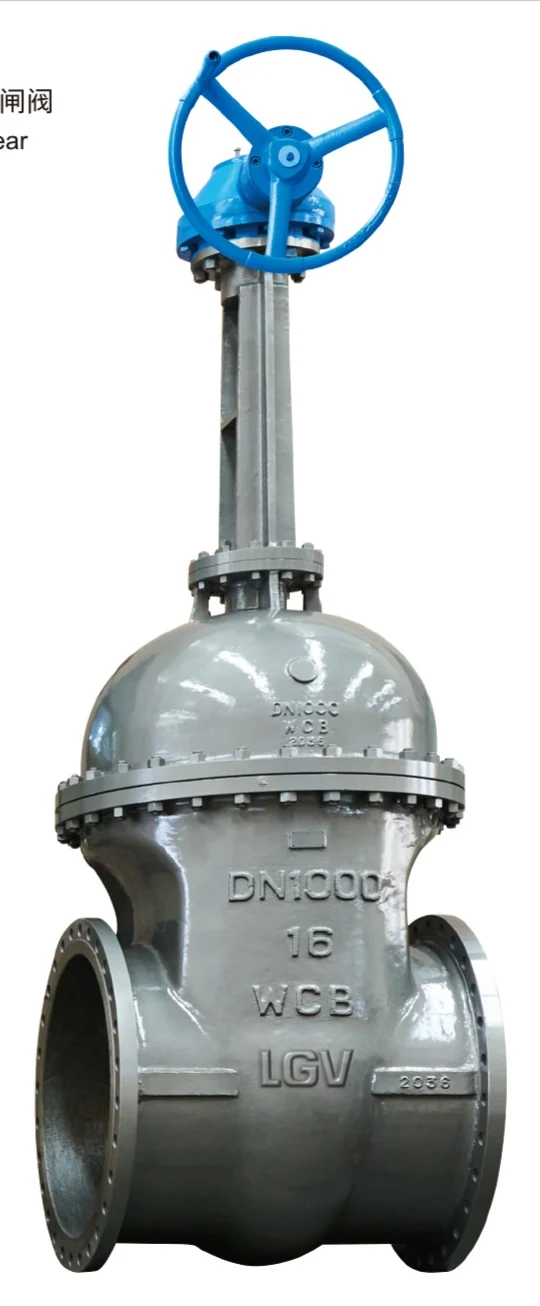
Le Robinet-vanne à engrenage conique GB est un robinet-vanne figurant au catalogue pour l'isolement tout ou rien, illustré avec un volant et un dispositif de manœuvre à engrenage conique. Avant de le sélectionner, établissez le différentiel de pression maximal à l'ouverture, l'effort d'entrée requis au réducteur, le dégagement de tige disponible et les dimensions exactes des raccordements d'extrémité. La désignation catalogue “ GB ” n'identifie pas les normes et éditions applicables à une commande particulière.
- Identité catalogue : Robinet-vanne à engrenage conique GB
- Dispositif de manœuvre représenté : Engrenage conique avec volant
- Dimension, classe de pression et construction : À confirmer pour le robinet proposé
Fonction de service
Où ce robinet-vanne convient — et où il ne convient pas
Il s'agit d'une demande de robinet d'isolement, et non d'une spécification de vanne de régulation. Un robinet-vanne est généralement manœuvré en position entièrement ouverte ou entièrement fermée. Un fonctionnement prolongé en position partiellement ouverte peut produire des vibrations et une usure accélérée du siège ou de l'obturateur ; pour un étranglement répété ou une modulation de débit, choisissez un équipement conçu pour le service de régulation.
Service d'isolement
Utilisez cette référence de catalogue pour un besoin d'isolement tout ou rien. Précisez les performances d'étanchéité requises, la fréquence de manœuvre et les conditions d'écoulement ; ces éléments ne sont pas établis par la désignation du produit.
Commande par engrenage
La photographie montre un volant et un ensemble de commande à engrenages de grande hauteur. La réduction par engrenages peut réduire l'effort manuel, mais ne permet pas de démontrer la capacité d'ouverture à la pression différentielle la plus défavorable ni d'indiquer le nombre de tours nécessaire.
Identification au catalogue
La page physique 72 du PDF source, page imprimée 134, identifie l'article à volant bleu et corps gris comme Robinet-vanne à engrenage conique GB. L'article vert de la page imprimée 133 est étiqueté séparément Robinet-vanne à engrenage conique ASME.
Informations issues du catalogue
Identité confirmée et informations encore nécessaires
Le catalogue confirme la désignation du produit et la configuration de commande illustrée, mais pas une gamme complète de tailles commandables, de classes de pression ou de matériaux. Les marquages coulés sur l'exemple photographié ne doivent pas être extrapolés à l'ensemble de la gamme de produits.
| Champ | Ce qui est établi | Éléments probants / action d'achat |
|---|---|---|
| Identification du produit | Robinet-vanne à engrenage conique GB | Vérifié — légende du catalogue |
| Fonction / type de robinet | Robinet-vanne ; l'isolement tout ou rien est la tâche de sélection prévue | Type de robinet vérifié ; le service dépend de la conception proposée |
| Organe de manœuvre sur la photo du catalogue | Ensemble à engrenages coniques avec volant | Vérifié visuellement et par la légende ; classe non confirmée |
| Emplacement dans le catalogue | Page physique 72 du PDF ; page imprimée 134 | Vérifié — image du catalogue jointe |
| Numéros et éditions des normes | Non établi par “ GB ” dans le titre | Exiger des références écrites de conception, de dimensions et d'essais |
| DN, PN and material grades | No orderable series range confirmed | Require offered datasheet; photo markings are not series data |
| Ends, face-to-face and gearbox rating | Not specified for a purchasable configuration | Require approved order drawing and operator calculation |
Avant achat : obtain a revision-controlled datasheet and general-arrangement drawing for the exact offered size and pressure-temperature duty. The catalog picture alone is not an approved dimensional or material specification.
Specification boundary
“GB” is a catalog name, not a complete standard callout
Do not assume a particular GB/T design code, flange standard, test procedure or edition from this name. Ask the supplier to list each applicable standard and edition for the actual valve, and confirm that its scope covers the specified construction and service. An ASME-labeled gate valve elsewhere in the catalog is a different product identity, not an automatic dimensional substitute.
Documented in this catalog
- Gate-valve product identity: GB Bevel Gear Gate Valve
- Bevel-gear operator designation and handwheel in the photograph
- Catalog location: PDF page 72 / printed page 134; source image maps to media 229
To be stated on the offered documents
- Design/construction standard with edition and application scope
- Pressure-temperature rating, size and exact body / trim / packing materials
- Flange or other end standard, facing and face-to-face dimension series
- Maximum opening and closing differential pressure for the real duty
- Valve stem thrust, required torque and selected gearbox capacity
- Handwheel effort, gearbox ratio, turns and accessibility
- Stem travel, total open height and maintenance clearance
- Test / inspection standard, revision-controlled GA and required records
Sélection technique
Five checks that can change the configuration
The presence of a bevel gear does not settle valve operability. Begin with the worst opening condition, then review the gear and installation against an exact supplier drawing rather than assuming a nominal DN or GB name is sufficient.
1. Opening against differential pressure
Identify upstream and downstream pressure when the closed gate must first move; this differential can be more important to unseating effort than the stated line pressure alone. Request the valve’s required unseating, running and seating loads at the maximum specified differential. If the supplier cannot verify operation at that condition, do not assume a larger handwheel solves it; evaluate a defined pressure-equalization or bypass arrangement with the system engineer.
2. Bevel gearbox and handwheel effort
Size the operator for the valve’s actual stem thrust and torque, including worst-case startup and seating conditions. Compare gearbox allowable output, gear ratio, maximum permitted handwheel rim force and total turns. More reduction may make turning easier but slower; it does not increase the valve body’s pressure-temperature rating.
3. Stem travel and overhead clearance
Obtain the offered stem arrangement (rising or nonrising), operating stroke and the maximum assembly height in both fully open and closed positions. Check overhead piping, platform access, handwheel reach, gearbox offset and space for packing or actuator maintenance. The tall photographed assembly is not a dimensioned travel drawing.
4. Connections and mating flanges
For flanged installation, match the exact flange standard and edition, drilling, facing, gasket interface, bolting and face-to-face length—not just DN or nominal pressure. Check line bore and installation envelope. For a replacement, use measured dimensions and approved existing-valve or piping drawings before accepting a fit.
5. Offered documentation and acceptance
Require the offered general-arrangement drawing with open/closed envelopes, end details, valve and gear sizing information, pressure-temperature ratings, material list, applicable standard editions and required inspection or test records. Agree the drawing revision and acceptance documents before finalizing the order.
Retrofit and system fit
Replacing an installed gate valve? Check the interface first
A replacement can be unsuitable even when its nominal size and catalog function look identical. Compare the new proposal with the existing valve’s tagged drawing and the actual piping, operator-access and duty conditions. Do not treat the GB and ASME catalog entries as interchangeable.
Existing valve survey
Record the existing tag, nameplate and available general-arrangement drawing. If it is safe and practical to measure, verify face-to-face, flange drilling and facing, handwheel location and installed clearance. Record the actual operating pressures, fluid and shutoff condition as well.
Separate GB and ASME catalog entries
The catalog lists a GB bevel-gear gate valve and an Robinet-vanne à engrenage conique ASME as different items. Neither label, by itself, proves the exact design code, flange pattern or pressure-temperature limits. Review the proposed drawings before substitution.
Site constraints that change the choice
Check available overhead height through the full valve stroke, clear access to the handwheel, orientation, maintenance clearance, pipeline loads and any operating sequence that requires pressure equalization. A gear ratio can change the required number of turns and operating time, which matters for infrequent emergency isolation.
Photographic evidence
Catalog photograph versus an approved valve drawing
The blue-handwheel, gray-body image above identifies the catalog item. Its visible cast marks, proportions and operating hardware belong to the photographed example; they are not guaranteed supply specifications. Request a dimensioned offer drawing for the proposed valve and gearbox before using it to plan pipe fit, stem travel or maintenance space.
Adjacent catalog choices
Other gate-valve entries require their own drawings
Powered operation and ASME-labelled large-diameter variants address different catalog identities. Their specifications must not be assigned to this GB bevel-gear valve. Return to the gate valve category if the duty points to another construction.
Robinet-vanne électrique grand diamètre
A separate large-diameter electric-operator entry. Review it when the project calls for powered operation rather than the pictured handwheel arrangement.
Robinet-vanne électrique ASME grand diamètre
A distinct ASME-labelled large-diameter electric entry. Its operator and dimensional requirements must be confirmed on its own documents.
Robinet-vanne ASME grand diamètre
A distinct ASME-labelled large-diameter gate-valve entry. Do not transfer its ratings, flange dimensions or components to this GB catalog product.
Buying questions
GB Bevel Gear Gate Valve: technical questions
Short answers to common configuration questions. The actual purchase specification must still be supported by the offered drawings and datasheet.
Does “GB” identify the exact standards used on this valve?
No. It is the catalog designation. Request the numbers and editions for design, dimensions, end connections and testing on the actual offered documents.
Can a bevel gearbox open the gate at full line pressure?
Not necessarily. Opening load depends on the differential pressure across the closed gate and the valve design. Ask for the worst-case unseating load and a matching gearbox/handwheel sizing check.
How much room should be allowed for stem travel?
Use an approved general-arrangement drawing showing the offered stem arrangement and both fully open and closed envelopes, including handwheel access and maintenance clearance.
Can this GB valve directly replace an ASME gate valve?
Not from a name or nominal size alone. Confirm face-to-face length, flange interface, pressure-temperature rating, materials, stem clearance and project standard editions before approving replacement.
Request a configuration-specific quotation
Request a GB Bevel Gear Gate Valve Configuration Review
Reference this product name and provide the actual operating case. For an existing installation, mention in the inquiry whether you have an old valve drawing or nameplate details; our team can follow up to arrange how to share them. State whether the gate must open against full line differential pressure and identify space limitations, so the offered valve, gearbox and connection drawing can be reviewed together.
- Service fluid, design/operating pressures and temperature limits
- Required DN/pressure designation and maximum opening differential pressure
- End standards/editions, flange facing and face-to-face or existing GA drawing
- Manual gearbox operation, access, available stem height and closing time
- Body/trim/seat requirements, shutoff and test-document expectations
- Quantity, destination and drawing approval requirements