
Isolamento on/off industriale
Valvola a saracinesca in acciaio fuso

Una valvola a saracinesca in acciaio fuso è una candidata per l'isolamento on/off di una tubazione isolamento on/off quando la saracinesca sarà normalmente completamente aperta o completamente chiusa. Non è il punto di partenza corretto per una regolazione continua: una saracinesca parzialmente aperta può essere soggetta a vibrazioni ed erosione della sede.
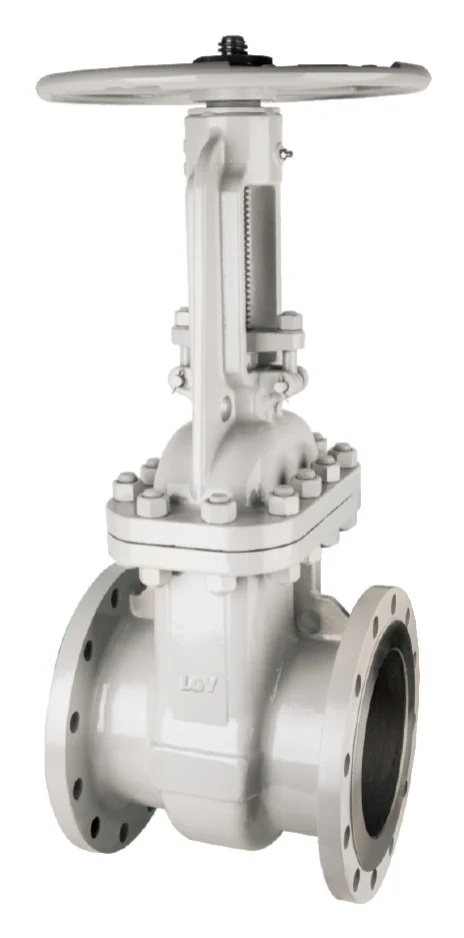
Il catalogo di origine identifica la valvola blu, azionata a volantino, qui illustrata Valvola a saracinesca in acciaio fuso. Le sue estremità flangiate e il giunto a coperchio bullonato sono visibili in questo esempio; il grado esatto del corpo, il trim, la norma dimensionale e la classe di servizio devono essere ricavati dai documenti della valvola offerta.
- Servizio: isolamento tutto aperto / tutto chiuso, soggetto alla specifica di processo
- Esempio illustrato: estremità flangiate e volantino; nessuna dimensione o gamma di pressione confermata per l'intero ordine
Documentazione del catalogo
Valvola a saracinesca in acciaio fuso: cosa specificare
Il catalogo fornisce un'etichetta di prodotto e immagini, non una scheda tecnica pronta per l'ordine. Utilizzare il campione visibile come riferimento, quindi ottenere un disegno, una distinta materiali e una classificazione pressione–temperatura specifici per la singola configurazione della valvola che si intende acquistare.
| Voce di selezione | Riscontro da catalogo / foto | Cosa deve stabilire il preventivo |
|---|---|---|
| Identità del prodotto | “Cast Steel Gate Valve” nella serie valvole a saracinesca; unità blu nel catalogo PDF a p. 75 (pagina stampata p. 140). | Utilizzare il nome di questa pagina quando si richiede un'offerta corrispondente. |
| Componenti illustrati | Sono visibili volantino, attacchi flangiati e giunto corpo-coperchio bullonato. | Confermare coperchio, stelo, operatore, faccia della flangia e foratura offerti. |
| Marcature di fusione illustrate | The blue example shows “DN400”, “16” and “WCB” on the casting. | Si tratta di marcature su un'immagine, non di una classe, di un rating o di una gamma completa commercializzabile certificati. |
| Dimensioni e rating | Su questa pagina non è riportato alcuno schema DN/NPS o PN/Class confermato per l'intera gamma di prodotti. | Richiedere dimensione nominale, designazione del rating e pressione ammissibile alla temperatura di progetto. |
| Materiali e trim | “Acciaio fuso” è il descrittore di catalogo; non è disponibile una distinta base completa verificata. | Specificare grado di corpo/coperchio, cuneo/otturatore, stelo, superfici di tenuta, guarnizioni di baderna, guarnizione e bulloneria. |
| End dimensions & testing | The image is not a flange dimension drawing or pressure-test record. | Request face-to-face, end/facing drawings, shell and seat test standard, results and marking schedule. |
Image-marking distinction: a legible casting mark is not a material certificate or a pressure–temperature table. For engineering approval, match the final drawing, nameplate/marking, material records and test documents to one specified valve.
Limite delle evidenze
Is this the right valve for the duty?
Start with how the valve will operate and what passes through it. These two questions can rule out the wrong design before comparing material grades or nominal ratings.
Use it for isolation when…
- The intended duty is mostly fully open or fully closed, with a specified shutoff requirement.
- The fluid and its solids content are compatible with the proposed gate, seat faces and packing.
- The expected opening/closing differential pressure and operating frequency are within the selected assembly’s capability.
Reconsider the design when…
- Continuous flow control or frequent part-open positioning is required: use a valve designed and sized for throttling.
- Abrasive solids, deposits or crystallization could foul the seat or travel path: review a suitable severe-service isolation design.
- The specified operating differential pressure makes manual closing torque impractical: assess gearing or an engineered actuator.
- The pipeline cannot accommodate valve height, mechanical loads or maintenance access: check a different construction or location.
Configuration details
Build a quotation around the service conditions
A meaningful quote identifies one working valve assembly, not only “cast steel” and a nominal size. Give the process requirements below and ask VALMORA to return the matching configuration and supporting documents.
Pressure, temperature and shutoff
Provide design and operating pressures, maximum differential pressure during closure/opening, minimum and maximum temperatures, vacuum or surge cases, and required seat leakage performance. PN/Class is a rating designation, not a fixed allowable working pressure at every temperature. The selected body material, design standard and pressure–temperature table must agree for the complete duty.
Body, gate, seats and stem
Specify fluid composition, concentration, chlorides or other relevant corrosives, suspended solids, erosion potential and any cleaning fluid. Ask for the exact cast body/bonnet grade; gate or wedge construction; seat and hardfacing materials; stem, packing, gasket and bolting details. “Cast steel” does not automatically mean ASTM A216 WCB, nor does a body grade alone establish wetted-part compatibility.
Flanged interface and dimensions
The pictured sample has flanges, but the photograph does not identify their standard, pressure class, facing, drilling or gasket. Supply the mating pipe/flange specification, pipe bore, face-to-face requirement and preferred end connection. Require dimensioned drawings before fabrication; do not assume different flange standards or nominally similar drilling are interchangeable. If a weld end is requested, treat it as a separate configuration to confirm.
Operator, torque and travel
A handwheel appears in the source image. Confirm whether the order needs manual operation, gear assistance or engineered actuation, based on valve size, differential pressure, cycling frequency and safe operator access. Request required operating torque and full-open travel/height; any electrical or pneumatic utilities, controls and fail action belong in the actuator specification, not in the unverified base catalog identity.
Inspection, documents and markings
State the required design and test standards with editions, shell and seat test criteria, material certification/heat traceability, inspection and third-party witness points. Request the nameplate/marking schedule, approved general arrangement and end drawings, plus applicable packing, installation and maintenance instructions. Require records for the offered valve and order, not generic brochure statements.
Limite di applicazione
Check the piping and access before release
A valve can meet the process rating and still be wrong for the available installation. Review these constraints against the supplier drawing and installation instructions before approving the purchase.
Orientation and piping loads
For typical handwheel gate valves, installation in a horizontal run with the stem upright is commonly recommended. Do not assume this specific item may be installed sideways or inverted without written design approval. Support the adjacent pipework, account for thermal expansion and avoid using flange bolts to pull a misaligned system into place. Respect any actual flow-direction marking.
Operating clearance and service
Check the open-height envelope, handwheel reach, lifting access and space for bonnet, stem and packing maintenance. A rising-stem design may need substantial vertical clearance; the stem arrangement and full-open dimension of the offered valve must be shown on the drawing. Plan safe isolation, depressurization and drainage before service.
Deposits, corrosion and flushing
Check the medium’s chemistry across all operating and cleaning conditions, including stagnant periods, solids and deposits. Debris trapped at the seats can prevent shutoff; high-velocity flow through a partly opened gate can damage seating surfaces. Specify flushing/cleanliness expectations and ask how the proposed trim and seat construction address the actual fluid.
Evidenza visiva
Catalog photo and an adjacent GOST variant
Both images come from the same physical PDF page, but they are different catalog entries. The blue valve is labeled Valvola a saracinesca in acciaio fuso; the silver valve to its right is labeled GOST Cast Steel Gate Valve. The silver image is retained here only to prevent confusion when comparing the catalog—not as a second view, specification or supplied variant of this product.
Different purchase requirements
Other valve routes for different specifications
Utilizzare il Gate Valves category for the full family. The pages below own different catalog or material questions; a term on one page does not establish the materials, standards, accessories or ratings of another.
Additional original catalog routes: Valvola a saracinesca elettrica di grande diametro, Valvola a saracinesca elettrica ASME di grande diametro, e Valvola a saracinesca ASME di grande diametro. These are separate designs, not specifications for this item.
Valvola a saracinesca ASME
An independently labeled ASME catalog identity. Choose this route when the project specifically cites an ASME-based valve specification; check its own offered standard and configuration instead of transferring them here.
Valvola a saracinesca elettrica
Use this separate record when motorized operation is part of the buyer requirement. The electric-drive description must not be applied to the handwheel example on this page.
Valvole in acciaio forgiato
Different material-form and product-family route. When a project specifically requires forged construction, check this series rather than treating a cast-steel label as interchangeable.
Domande degli acquirenti
Questions before ordering
These points matter when translating a catalog photo into a purchase order.
Does “WCB” on the photograph guarantee WCB construction?
No. “WCB” is legible on the photographed blue casting, but the catalog spread does not establish that every offer under this name uses ASTM A216 Grade WCB. Request the exact body and bonnet material grade, a traceable material certificate and the corresponding marking schedule for the actual order.
Can this gate valve be held partly open to regulate flow?
Do not select it for continuous throttling on the basis of this catalog label. Conventional gate valves are intended primarily for fully open or fully closed service; partial opening can accelerate vibration and seat wear. Use a valve selected for flow regulation when throttling is a process requirement.
Do the visible “DN400” and “16” marks set the order rating?
No. Those characters are visible on one photographed valve and do not establish the complete DN/NPS range, a confirmed PN/Class designation, or the maximum working pressure at service temperature. The applicable pressure–temperature rating, end dimensions and nameplate must match the specific supplied valve.
Which documents should accompany the technical offer?
Request a configuration datasheet and general-arrangement drawing; pressure–temperature rating; complete body, gate, stem, seat and seal materials; applicable design and test standards; inspection/test records and witness plan where required; material certificates and traceability; nameplate/marking details; and installation/maintenance information. State which items are required before order placement or shipment.
Technical RFQ
Request the Cast Steel Gate Valve configuration
Send your line conditions or piping specification with the catalog reference. VALMORA can review the proposed valve configuration and identify the drawing, material, inspection and commercial details to confirm in a quotation.
- Service medium, composition, solids/corrosion risks and isolation duty
- Required DN/NPS, design and operating pressures, PN/Class and minimum/maximum temperatures
- Flange/end standard, facing, mating pipe dimensions, available height and preferred orientation
- Body/bonnet grade, gate and seat trim, packing and desired handwheel/gear/actuator
- Quantity, required delivery documents, tests, material records, marking and third-party witness points