
Valvole a sfera di regolazione pneumatiche tipo V
Valvole a sfera con porta a V per il controllo modulante della portata
Le valvole a sfera con porta a V vengono considerate quando un processo richiede un controllo regolabile della portata anziché una semplice intercettazione aperto-chiuso. Una porta sagomata modifica l'area di passaggio disponibile mentre la sfera ruota, ma la risposta installata dipende dal trim della valvola, dalla pressione differenziale e dal circuito di regolazione. Il catalogo di riferimento VALMORA identifica Valvola a sfera di regolazione pneumatica tipo V prodotti; la capacità di portata finale, l'intercettazione e i dettagli dell'attuatore richiedono una selezione specifica del prodotto.
Parti dal servizio: Se la valvola deve mantenere posizioni intermedie su un intervallo di portata definito, esaminare i casi operativi riportati di seguito. Se è necessaria solo un'intercettazione affidabile, confrontare invece i progetti standard di valvole a sfera .
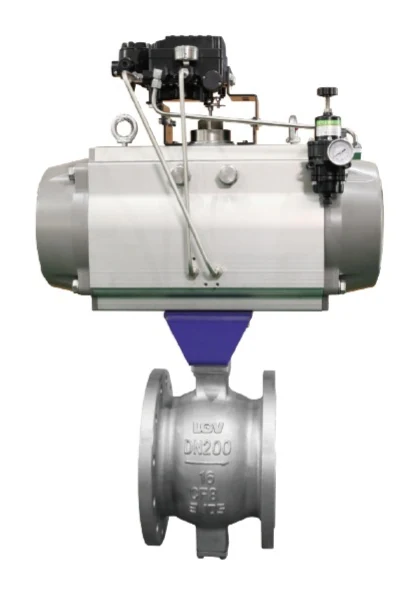
Prodotto conforme a catalogo
Valvola a sfera di regolazione pneumatica tipo V
del catalogo di origine pagina fisica 93 (pagina stampata 176) identifica due immagini di valvola a sfera di regolazione pneumatica tipo V. La sua pagina fisica 100 (pagina stampata 189) elenca inoltre una valvola a sfera di regolazione pneumatica tipo V nella sezione valvole di regolazione. Le fotografie stabiliscono l'identità del prodotto, non un angolo V, un Cv, una dimensione o una classe di pressione approvati.
Il catalogo mostra l'azionamento pneumatico. Richiedere la configurazione valvola/attuatore offerta, il profilo della porta, i dati di dimensionamento e il disegno per il servizio effettivo prima di considerarla una specifica ordinabile.
Dimensionamento valvola di regolazione
Dimensionare per portata operativa minima, normale e massima
Non selezionare una valvola a V-port basandosi solo sul diametro nominale. Stabilire prima il coefficiente di portata richiesto per ciascun caso operativo e verificare se la valvola proposta è in grado di regolare la portata minima senza operare in prossimità di un estremo di corsa instabile, pur garantendo il passaggio della portata massima. La sola caratteristica intrinseca della porta non può prevedere il comportamento installato: la perdita di carico disponibile varia con il sistema di tubazioni. Richiedere la curva Cv o Kv in funzione della corsa della valvola del costruttore, specificando la convenzione del coefficiente e i casi operativi minimo, normale e massimo utilizzati per la selezione.
| Criterio di dimensionamento | Dati da fornire all'acquirente | Cosa stabilisce il confronto |
|---|---|---|
| Portata e corsa utile | Portata minima, normale, massima e di avviamento; campo di regolazione richiesto | Se un singolo trim proposto è in grado di gestire il controllo a bassa portata e la capacità a piena richiesta |
| Pressione e comportamento del liquido | Pressione di ingresso e di uscita per ciascun caso; tensione di vapore per i liquidi | Pressione differenziale, rischio di flusso critico, cavitazione o flashing e idoneità del trim |
| Fluid and wear | Liquid, gas or vapor; density, viscosity, temperature, solids/fibers and concentration | Sizing method, seat/trim compatibility, erosion and blockage risk |
| Shutoff and automation | Allowable leakage, fail position, control signal, air supply, feedback and cycle duty | Whether valve seat, actuator and positioner form a suitable operating package |
| Piping and verification | Line size, flange/end details, installation arrangement and required documents | Final dimensional fit, pressure-temperature limits and inspection basis |
Which duties fit?
When V-port control is worth evaluating—and when it is not
The catalog supports a pneumatic V-Type product identity, not a blanket suitability claim for every process. Use the following duty distinctions to decide which specification route to request.
Continuous or frequent throttling
A characterized-port ball valve is a candidate when flow must be adjusted through intermediate positions. Compare the proposed travel-versus-Cv data with minimum and maximum process cases; if control falls into a narrow travel band, ask for different trim sizing or another control-valve design.
Fibers, solids or abrasive liquid
Some V-notch designs can shear or pass fibrous material, but this must not be assumed for the catalog product. Give solids size/concentration, erosion history, cleaning requirements and valve orientation. Conventional IEC 60534-2-1 liquid sizing equations are not intended for slurries or liquid-solid conveyance; request an application-specific review rather than a generic Cv calculation.
Simple isolation or severe pressure reduction
For primarily on/off isolation, first compare standard ball valves and the required seat leakage. For high liquid pressure drop, possible cavitation/flashing, or severe gas noise, do not assume a V-port alone solves the problem: the valve type and trim must be assessed against the actual pressure and fluid cases. See the broader control-valve range if another control architecture may be needed.
Avoid an underspecified quote
Four errors that change the valve you should buy
Nominal size is not a Cv selection. An oversized valve can be difficult to control at low flow even if it passes design maximum. A V-cut does not establish a particular characteristic. Request the actual trim curve and usable travel. Throttling is not zero leakage. State the permitted shutoff leakage separately. An actuator is part of the sizing. Required differential pressure, torque, fail position and positioner performance must be checked together.
- Selecting from nominal size instead of Cv calculation
- Assuming a universal V angle or flow characteristic
- Ignoring shutoff and seat duty
- Using actuator torque without maximum differential pressure
Page and product relationships
Compare the relevant valve routes
Use the V-port series for modulating-flow selection, then open the catalog product for the precise assembly. Broader categories handle other designs rather than competing for this page’s main query.
Ball valves: isolation and other constructions
Ball Valves covers the family, including floating and trunnion-mounted designs. Choose this path if the problem is shutoff, end configuration or ball support rather than continuous modulation.
Control valves: alternative throttling designs
Control Valves is the broader route when pressure control, noise, cavitation, a different trim or a linear control valve may be more suitable.
Exact catalog identity: pneumatic V-Type
Open the Pneumatic V-Type Control Ball Valve catalog entry for its specific identity. The series page does not replace product-level dimensions or a matched quotation.
Valve resources and technical inquiry
Open the VALMORA resources section for additional valve background. For assembly-specific sizing curves, drawings and test records, use the technical RFQ on this page and identify the operating cases and documents required.
Common purchasing questions
V-Port Ball Valve Questions
These are series-level questions. The specific product datasheet and quotation determine orderable values and the accepted documentation.
What project data is needed to specify V-Port Ball Valves?
Give minimum, normal and maximum flow rates (with units), the inlet and outlet pressures at each case, and the fluid phase, temperature, composition and viscosity. Also identify any solids or fibers, line size and end connections, shutoff/leakage duty, required fail action, control signal and available instrument-air supply. The proposed trim, actuator and positioner must then be checked against these operating conditions.
Does the V-Port Ball Valves series name define every available size, pressure class and material?
No. A series name identifies a documented ball valve selection route, but the orderable size, rating, material, connection, standard and operating limits must be confirmed on the offered datasheet and approved order drawing.
How should buyers compare products within the V-Port Ball Valves series?
Compare the manufacturer's Cv or Kv versus travel data against the installed pressure drops and required usable throttling range, including minimum-flow control and maximum-flow capacity. Then compare seat/leakage requirements, port and body construction, end connections, actuator and positioner compatibility, maintenance access, and the offered drawings and test documents.
Which documents should be requested before order approval?
Request the offered datasheet, general arrangement or dimensional drawing, material and trim schedule, applicable inspection and test plan, required certificates, marking details and the final order-specific document list.
Richiesta tecnica
Request a V-port valve and actuator review
Send the process cases you already know. At minimum, provide minimum/normal/maximum flow, inlet and outlet pressures, fluid and operating temperature. Add shutoff criteria, end connections, automation details and the documents you need. If an item is unknown, identify it rather than substituting a nominal-size guess.
- Duty and minimum / normal / maximum flow (with units)
- Inlet and outlet pressures at each flow case; design pressure and temperature
- Fluid composition, phase, viscosity and any solids or fibers
- Line size, end connections, installation arrangement and flow direction
- Shutoff leakage requirement, operating frequency and fail action
- Control signal, available air supply, positioner and feedback requirements
- Requested Cv/travel curve, drawing, material details and testing documents
- Reference the Pneumatic V-Type Control Ball Valve catalog item where relevant