
Produit documenté au format PDF
Robinet-vanne à joint hydraulique électrique
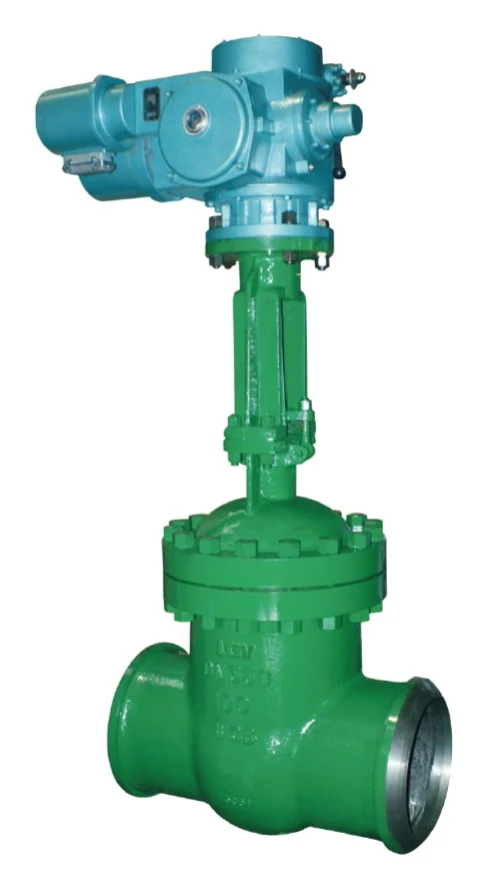
Le Robinet-vanne à joint hydraulique électrique est identifié dans la série Robinets-vannes du catalogue produits Lianggong. Pour une offre de projet, déterminez si le procédé nécessite un dispositif de joint hydraulique et si l'utilité d'étanchéité nécessaire peut être fournie. Le fluide de la tuyauterie, les conditions de l'eau d'étanchéité, l'alimentation de l'actionneur, les raccordements d'extrémité et les documents de réception doivent être examinés séparément ; aucun n'est spécifié par cette photographie.
- Famille de robinets : robinet-vanne (libellé du catalogue)
- Actionnement : électrique (libellé du catalogue)
- Joint hydraulique : caractéristique nommée ; disposition et utilité non confirmées
Identification du produit
Ce que “ joint hydraulique ” signifie pour la sélection
Le joint hydraulique ne signifie pas que le fluide de procédé est nécessairement de l'eau. Le titre du catalogue identifie une variante de robinet à joint hydraulique, mais n'explique pas sa méthode d'étanchéité interne ni ne précise si une alimentation externe en eau d'étanchéité est requise. Obtenez ces détails à partir du plan de coupe proposé avant de spécifier le robinet ou ses utilités.
Fluide de procédé
Décrivez le fluide circulant dans la conduite principale, y compris la phase, la température, les contaminants et toute inversion de vide ou de pression. Le titre n'établit pas les fluides de procédé admissibles.
Utilité d'eau d'étanchéité
Si le joint proposé nécessite de l'eau auxiliaire, le fournisseur doit identifier sa qualité requise, les conditions d'alimentation disponibles, les raccordements et la méthode de drainage ou de récupération. Ne supposez pas que la conduite de procédé alimente le joint.
Identité vérifiée
La page physique 76 du catalogue, page imprimée 142, identifie le robinet-vanne vert à actionneur électrique comme “ Electric Water Seal Gate Valve ”. Cela établit l'identité et l'apparence du produit, non sa construction interne, sa taille ni sa classe de pression.
Éléments du catalogue
Identité catalogue et limites documentées
La source identifie un robinet-vanne à commande électrique avec une désignation de joint à eau. La photographie du catalogue ne constitue pas une fiche technique : le circuit d'eau de joint, le fluide de process, la taille nominale, les limites pression-température, les matériaux, les caractéristiques électriques et les dimensions de raccordement restent soumis à la documentation proposée.
| Champ | Valeur documentée au catalogue | Statut de la preuve |
|---|---|---|
| Désignation produit | Robinet-vanne à joint hydraulique électrique | VÉRIFIÉ — titre du catalogue |
| Famille de robinets | Robinet-vanne | VÉRIFIÉ — section du catalogue |
| Type d'actionneur | Électrique | VÉRIFIÉ — titre du catalogue / photographie |
| Configuration du joint à eau | Joint à eau nommé ; construction et fonction d'étanchéité non précisées | TITRE UNIQUEMENT — confirmation technique requise |
| Fluide de process | Non précisé par le titre du catalogue | NON CONFIRMÉ — revue du projet et du fournisseur |
| Emplacement source | Page 76 du catalogue physique ; page imprimée 142 | VÉRIFIÉ — image de catalogue fournie |
Pour approbation technique : demander une fiche technique proposée, un plan de coupe et un plan d'encombrement/raccordement. Ne pas reprendre les dimensions, la pression d'étanchéité à l'eau ni les performances d'un autre fabricant ou de la photographie du catalogue.
Périmètre des preuves
Que faut-il définir avant la demande de devis ?
Confirmer la conception d'étanchéité et l'ensemble électrique par rapport à un cas de fonctionnement défini. Si le service est sensible à l'entrée d'air ou à une perte de vide, préciser cette exigence d'acceptation ; ne pas supposer que le titre du catalogue suffit à démontrer une étanchéité au vide.
Confirmé par le catalogue
- Famille robinet-vanne : documentée dans la section catalogue Robinet-vanne
- Commande électrique : documentée par le titre du produit et la photographie de catalogue correspondante
- Désignation d'étanchéité à l'eau : mentionnée dans le titre, mais son circuit réel et ses performances ne sont pas détaillés
À résoudre entre le fournisseur et l'acheteur
- Fluide de process : composition, état, solides, exposition à la corrosion et exigences de nettoyage
- Seal-water provision: whether external water is required; source, quality, temperature and available pressure
- Seal circuit: interfaces, isolation, drainage/recovery and monitoring, if applicable to the offered design
- Valve duty: size, line pressure/temperature, differential pressure, vacuum and shutoff criteria
- Pressure-boundary / trim / packing materials and the governing design and test requirements
- Pipe ends, installation orientation, general arrangement and stem/actuator clearances
- Motor supply, control/feedback, power-loss response, torque/limit configuration and protection
- Approved drawings, inspection records, commissioning procedure and maintenance instructions
Revue d'ingénierie
Select the seal arrangement and electric drive together
Selection decision: where leakage to atmosphere or air ingress is a critical process risk, ask for an offered water-seal schematic, the required sealing-water conditions and the applicable acceptance test. If the necessary sealing-water supply cannot be maintained, do not approve a water-dependent offer until the supplier provides a technically suitable alternative. Where no water-seal function is required, compare conventional gate-valve options instead of assuming this design adds value.
Duty and isolation requirement
State the intended on/off duty, direction of differential pressure, operating cycles and required isolation or external-leakage limit. If sustained throttling is required, assess a valve designed for that function rather than assuming an isolation gate valve will regulate flow acceptably.
Pressure, temperature and vacuum
Provide normal and design line pressures and temperatures, maximum differential across the closed gate, start-up transients and any vacuum/air-ingress case. Request the offered valve pressure-temperature rating and a distinct sealing-water operating envelope, where relevant. A single catalog label does not define either.
Material and mating pipe ends
Match body, trim, seating and packing materials to the actual process fluid and to any sealing-water exposure. Confirm the valve end form, mating pipe dimensions, relevant end-connection specification, installation loads and approved dimensional drawing; visible end geometry is not enough for fabrication.
Actuator power and controls
Specify available voltage, phase and frequency, motor duty, required opening/closing time, local/remote control, open/closed feedback, enclosure environment and permitted operating frequency. Valve torque demand and the manufacturer’s limit-versus-torque seating instructions govern actuator setup. State the required response to power loss explicitly; do not assume electric actuation includes automatic fail-open or fail-closed travel.
Inspection and handover records
Ask for the final valve/actuator datasheets, approved sectional and general-arrangement drawings, wiring and terminal diagrams, applicable pressure/leakage test records, and any water-seal functional or tightness test relevant to the agreed design. Request material traceability and inspection certificates only to the scope required in the purchase specification.
Limite d'application
Plan seal-water integration, installation and maintenance
The plant must coordinate three independent interfaces: the process line, the sealing-water service (if required by the offered construction), and electrical power/control. Resolve their boundaries on approved drawings before pipe fabrication and control-system commissioning.
Seal-water source and monitoring
Ask the supplier to identify the seal-water inlet/outlet or drain, if fitted, plus required water condition, pressure and temperature, supply continuity, isolation and acceptable leakage or monitoring approach. A vacuum-sensitive application may need a defined response to loss of sealing utility; actual piping and control logic must be agreed, not inferred from the photo.
Control and loss-of-utility response
Confirm command signals, limit/torque protection, open/closed indication and the use of manual operation during a power outage. Decide in the project controls specification which alarms or interlocks—if any—are required when motor power or sealing-water supply is lost. No such interlocks are established by this catalog record.
Installation and service access
Approve valve orientation and piping-end details, overall height, actuator envelope, travel clearance, lifting/service access and electrical cable routing. Include access for packing inspection and any seal-water line maintenance. Use the final assembly and IOM documents for installation; the catalog photograph is not an installation drawing.
Preuves visuelles
Verified catalog photograph
The photograph matches the Electric Water Seal Gate Valve entry on the supplied catalog page. It shows external appearance only: an approved section drawing is still needed to establish the sealing circuit, actual connections and dimensions.
Gammes de produits associées
Other gate-valve configurations
First decide whether the project needs the water-seal feature. These existing catalog links are comparison routes for other valve duties, sizes or operators—not evidence that the products share this valve’s sealing construction.
Robinet-vanne électrique grand diamètre
Compare when nominal bore and electric operation are the primary criteria; a water-seal arrangement is not implied.
Robinet-vanne électrique ASME grand diamètre
Review a separately named ASME large-diameter electric category. The title is not proof of interchangeability, water sealing or a specific rating.
Robinet-vanne ASME grand diamètre
A large-diameter gate-valve alternative; verify the operator, end connections and sealing requirements independently.
Questions des acheteurs
Water-seal gate valve buyer questions
These are the points that should be settled on the offered design before a purchase order or installation drawing is approved.
Does “water seal” mean the pipeline fluid is water?
No. “Water Seal” is part of the catalog product designation; it does not identify the main process fluid. The process medium and any separate sealing-water utility must each be specified and checked against the offered design.
Which sealing-water details should the supplier provide?
Ask whether external sealing water is necessary and, if so, for its approved quality, supply pressure and temperature, connection points, drainage or recovery, required availability and leakage or monitoring method. Do not assign a value from another manufacturer’s model.
What information is needed to size the electric actuator?
Provide voltage, phase, frequency, control and feedback signals, duty and travel requirements, installation environment, expected differential pressure and power-loss response. The supplier must confirm actuator torque, travel stops and seating settings for the selected valve.
Which documents are needed for installation and maintenance?
Request the offered datasheet, sectional and end-connection drawings, general arrangement with actuator clearance, wiring diagram, relevant test records and commissioning and maintenance instructions, including seal-water connections if applicable.
Demande technique
Request a quotation for Electric Water Seal Gate Valve
Reference the Electric Water Seal Gate Valve catalog entry and describe both the process-line service and the seal-water utility, if applicable. Send operating conditions and document requirements in the inquiry so the offered valve, drive, interfaces and maintenance scope can be checked before quotation.
- Process fluid, isolation duty, vacuum/leakage criteria and operating cycles
- Process pressure/temperature, differential, DN/NPS and pipe-end details
- Sealing-water source/quality/supply conditions and piping constraints, if applicable
- Electric power, control signals, feedback, power-loss response and site environment
- Quantity and requested drawings, tests, inspection and IOM documents