
Im Katalog geführtes Absperrventil mit Faltenbalgdichtung
ASME-Absperrventil mit Faltenbalgdichtung
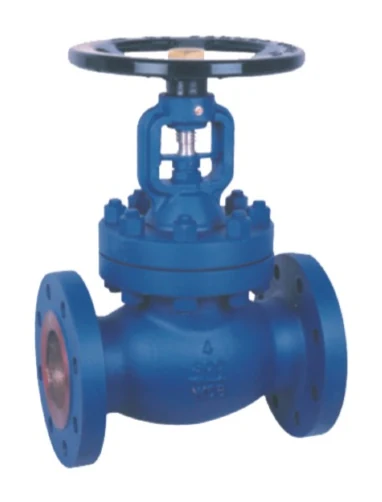
Für Projekte, bei denen die Begrenzung von Leckage entlang der Ventilspindel wichtig ist, stellt dieses im Katalog geführte ASME-Absperrventil mit Faltenbalgdichtung eine zu prüfende Konfiguration dar. Der Quellkatalog benennt die Faltenbalg-Konstruktion, gibt jedoch keine Druckstufe, keinen Nennweitenbereich, keine Werkstoffe, keine Schaltspielzahl und keine verifizierte Emissionsleistung an. Beginnen Sie mit dem geforderten Einsatzfall und den Leckagegrenzwerten, bevor Sie eine bestellbare Ausführung auswählen.
- Im Quellkatalog aufgeführte Faltenbalg-Konstruktion
- Anforderung an die Spindelabdichtung muss getrennt vom Sitzabsperrverhalten angegeben werden
- Nennweite, Class und Emissionsqualifikation: für das angebotene Ventil bestätigen
Katalogbelege
Was der Quellkatalog tatsächlich ausweist
Das Quellschild weist ein ASME-bezeichnetes Absperrventil mit Faltenbalgdichtung aus der Baureihe Faltenbalgventile aus. Es veröffentlicht weder eine zertifizierte Auslegungsnorm noch eine bestellfertige Spezifikation. “ASME” im Namen allein belegt keine Konformität mit ASME B16.34, keine Druckstufe und keine Emissionsklassifizierung.
| Feld | Im Katalog dokumentierter Wert | Nachweisstatus |
|---|---|---|
| Ventiltyp | Absperrventil | Auf dem Quell-PDF-Etikett benannt |
| Bauart / Konstruktion | Faltenbalgdichtung | Auf dem Quell-PDF-Etikett benannt |
| Standardbezeichnung | ASME | Auf dem Quell-PDF-Etikett benannt |
| Katalog-Quellserie | Faltenbalgventil | In der Abschnittsüberschrift des Quell-PDF angegeben |
| Katalog-Quellseite | PDF-Seite 109 | Auf der physischen Seite des Quell-PDF ausgewiesen |
Auf diesem Katalogschild nicht angegeben: Nennweite, ASME-Druckstufe (Class), Druck-Temperatur-Zuordnung, Werkstoffgüten, Faltenbalgausführung oder zulässige Hubzahl, Anschlussmaße, Sitzleckagetest, Qualifikation für diffuse Emissionen und verfügbare Betätigung. Fordern Sie das Datenblatt und die Bestellzeichnung der angebotenen Ausführung an, bevor Sie eines dieser Felder bestätigen.
Nachweisgrenze
Was die Faltenbalgdichtung schützt – und was nicht
Ein metallischer Balg bildet eine Barriere um die bewegte Spindel und verringert die Abhängigkeit von herkömmlicher Spindelpackung als primärem Rückhalteweg für das Prozessmedium. Die tatsächliche Baugruppe, die sekundäre Dichtungsanordnung und die Prüfleistung müssen aus dem angebotenen Design ermittelt werden – nicht aus der Produktbezeichnung abgeleitet werden.
Gründe für die Bewertung einer Balgdichtung
- Bei gefährlichen, geruchsintensiven oder kostspieligen Medien kann die Rückhaltung von Spindelleckagen eine balggedichtete Konstruktion gegenüber einem konventionellen Absperrventil mit gepackter Spindel rechtfertigen.
- Der Balg ist ein Merkmal zur Spindelabdichtung. Er definiert selbst nicht die Absperrklasse von Kegel und Sitz, die Dichtheit der Gehäuseoberteil-Verbindung oder das externe Leckageverhalten des gesamten montierten Ventils.
- Eine geeignete angebotene Baugruppe muss mit der Medienverträglichkeit, den Druck-Temperatur-Bedingungen und der Bewegungsbeanspruchung übereinstimmen; das Katalogdatenblatt liefert keine dieser Grenzwerte.
Bedingungen, die die Auswahl ändern
- Häufiges Öffnen, Schließen oder Regelbewegungen machen die Balgermüdung und die qualifizierte Hublebensdauer für die Auswahl wesentlich; aus der Ventilbezeichnung darf keine Zyklenzahl abgeleitet werden.
- Hoher Differenzdruck kann die erforderliche Öffnungskraft und die Auswahl des Innenbaus ändern; das Projekt muss den maximalen Differenzdruck über dem Ventil angeben, nicht nur den Auslegungsdruck der Anlage.
- If an external-emissions limit is contractual, name the required test method and class, and request the specific qualification evidence; the catalog page states no ISO 15848 result.
- Fordern Sie die Balg- und Sekundärdichtungsanordnung, die Wartungs- oder Austauschmethode und die Prüfprotokolle für die angebotene Konstruktion an.
Technische Prüfung
Legen Sie die Betriebsbeanspruchung vor der Auswahl einer Konfiguration fest
Nutzen Sie die Katalogbezeichnung als Ausgangspunkt für eine technische Anfrage, nicht als vollständige Beschaffungsspezifikation. Entscheiden Sie zunächst, ob die Rückhaltung von Spindelemissionen wesentlich ist und ob das Ventil hauptsächlich zum Absperren oder zum wiederholten Drosseln dient. Ordnen Sie dann die angebotenen drucktragenden Komponenten und Balgkomponenten den tatsächlichen Betriebsbedingungen zu.
Shutoff or throttling duty
For predominantly on/off isolation, specify required seat tightness, operating cycles and maximum differential pressure. For frequent throttling, request a trim/Cv and pressure-drop review: a bellows seal does not make any globe-valve trim suitable for control service, cavitation or flashing.
Pressure, temperature and ΔP
Provide design and normal operating pressures, minimum/maximum temperatures, start-up or upset conditions, and the maximum opening or closing differential (ΔP). A proposed ASME Class must be checked against material-specific pressure–temperature ratings and the assembled valve limits; a Class designation is not a single allowable pressure at every temperature.
Wetted materials and ends
Identify fluid composition, concentration, corrosion/erosion exposure and any solids. Obtain body, stem, bellows, seat, gasket and weld-material specifications for the actual construction. Confirm flanged or welded ends, bore, face-to-face and installation dimensions against the piping drawing; no dimensions or materials are established by this catalog illustration.
Stem travel and operation
State required stroke count, cycling frequency, expected service duration and whether operation is manual or automated. The catalog photo shows one illustrated configuration only; gear or powered actuation and any fail action are not established offerings. Operating thrust and cycle qualification depend on the exact valve and bellows design.
Leakage tests and documents
Specify separate acceptance requirements for seat leakage, pressure containment and external stem/bonnet leakage. If ISO 15848-1 qualification or another specified method is required, ask for its applicability to the offered size, materials, temperature and cycles. Request dimensional drawings, material certificates, relevant pressure/leak test records and any project witness plan.
Anwendungsgrenze
When to choose this valve—and when to review another type
A bellows-sealed globe valve primarily addresses the stem-sealing route. It is not automatically a low-pressure-drop valve, a precision control valve, or a certified zero-emissions solution. The service case decides whether this particular construction earns its added complexity.
Leakage-sensitive process isolation
If the fluid presents a meaningful emissions, exposure or product-loss concern, request a bellows-sealed option and a documented external-leakage acceptance basis. For benign utility service with less demanding stem containment, compare a conventional packed-stem globe valve instead of assuming the bellows arrangement is always necessary. Fluid suitability remains to be verified.
High ΔP or repeated regulation
Where ΔP is high or throttling is continuous, check flow capacity, stability, valve/seat erosion, available opening force and bellows movement duty. If accurate automatic regulation is the main function, consider an appropriately sized control-valve assembly rather than treating this catalog-listed manual-style illustration as a control-valve specification.
Piping and maintenance access
Before ordering, verify required flow direction against the manufacturer’s drawing, installation orientation, end alignment, handwheel or actuator clearance, and access for inspection or bellows replacement. The catalog image is not evidence of allowable orientation, serviceable parts or dimensions.
Verwandte Produktrouten
Compare stem sealing with other globe-valve designs
This page covers one ASME-labeled catalog entry. For the wider design family, see the Bellows Seal Globe Valves series. The alternatives below answer different construction questions; they must not inherit this page’s unconfirmed performance data.
Faltenbalg-Absperrventil
A separate bellows-seal catalog entry without the ASME label. Compare the actual offered standards, end connections and documented leakage requirements; similar photographs do not establish interchangeability.
ASME-Hochdruck-Absperrventil mit Selbstdichtung
A pressure self-sealing bonnet is primarily a body–bonnet joint design, not the same as a bellows barrier around the stem. Check whether the required leakage control is at the bonnet, stem or seat.
Hochtemperatur-Hochdruck-Absperrventil mit Selbstdichtung, T-Typ
A separate high-temperature/high-pressure self-sealing T-type catalog entry. Its name cannot provide this valve’s pressure, temperature or emission rating; review the intended pressure-seal construction and approved datasheet.
Technische Anfrage
Request an ASME bellows-seal globe valve configuration
Send the service requirements and identify whether external stem containment, seat shutoff or both drive the purchase. A quote should state the exact materials and bellows construction, rated operating envelope, dimensional interfaces, accepted tests and documents. The available version and commercial terms require written supplier confirmation.
- Fluid composition and required stem-emissions/seat-leakage limits
- Size, end connection, design and operating pressure/temperature, maximum ΔP
- Shutoff versus throttling duty, movement frequency and expected cycling
- Body, bellows, trim, seat and gasket materials; flow direction and clearances
- Actuation, quantity, approved drawing, tests, certificates and witness requirements