
Produkt mit PDF-Dokumentation
Hochtemperatur- und Hochdruck-Rückschlagventil mit Selbstabdichtung
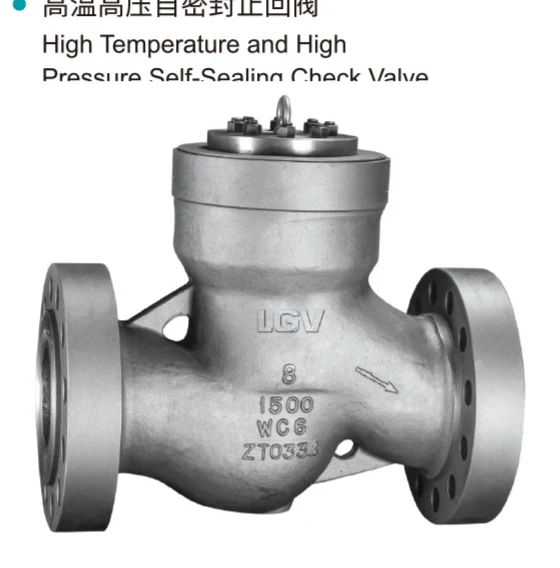
Der Hochtemperatur- und Hochdruck-Rückschlagventil mit Selbstabdichtung ist im Produktkatalog als Rückschlagventil mit der Bezeichnung „selbstdichtend“ aufgeführt. Der Katalog nennt Ventiltyp und Produktname, zeigt jedoch auf seiner Seite keine Schnittdarstellung, die die Dichtfläche oder die innere Absperranordnung bestätigt. Die numerische Druckstufe, der zulässige Temperaturbereich und die konfigurationsspezifische Bauart sind anhand der angebotenen technischen Unterlagen zu bestätigen.
- Funktion: automatisches Rückschlagventil
- Bezeichnung „selbstdichtend“: Katalogbegriff; genaue Dichtfläche zu bestätigen
- Einsatzbeschreibung: Hochtemperatur / Hochdruck; numerische Grenzwerte zu bestätigen
Produktidentität
Was die Bezeichnung „selbstdichtend“ im Katalog bestätigt
Der Katalog verwendet den Begriff “selbstdichtend”, nennt jedoch weder die Dichtfläche noch zeigt er eine Schnittdarstellung. Bei einigen Hochdruck-Dichtkonstruktionen kann der Leitungsdruck die Dichtkraft an der Gehäuse-Oberteil-Verbindung erhöhen; zu bestätigen ist, ob diese Ausführung hier vorliegt, und die Dichtungsdetails, das Dichtverhalten bei niedrigem Druck sowie der Wartungsbedarf sind der angebotenen Zeichnung zu entnehmen.
Produktfamilie
Rückschlagventil: öffnet bei der vorhandenen Vorwärts-Druckdifferenz und schließt, wenn der treibende Durchfluss abnimmt oder sich umkehrt. Dies ist eine Rückschlagfunktion, keine Drossel- oder Absperrfunktion.
Katalogbaureihe
Aufgeführt in der Baureihe Rückschlagventile. Der Katalog verwendet die Bezeichnung „selbstdichtend“, nennt jedoch nicht den Absperrmechanismus und gibt nicht an, ob die angebotene Ausführung als Schwenk-, Hub-, Kipp- oder federunterstützte Ausführung ausgeführt ist.
Nachweisquelle
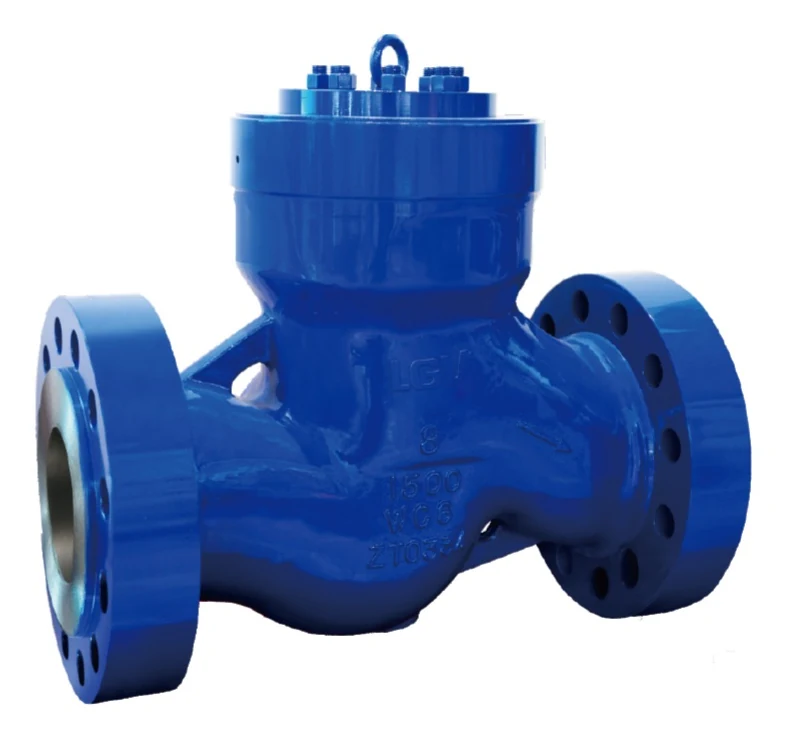
Das Ventil erscheint zweimal auf Seite 83 des Quellproduktkatalogs. Die Fotos belegen die Katalogidentität und das äußere Erscheinungsbild, nicht jedoch Abmessungen, zertifizierte Leistungsdaten oder eine vollständig bestellbare Konfiguration.
Katalogbelege
Was der Katalog zu diesem Rückschlagventil bestätigt
Der Katalog liefert eine identifizierbare Produkt- und Bauartbeschreibung, jedoch keine zulässige Druck-Temperatur-Kurve. Die Angabe „Hochdruck“ ist kein PN-/Class-Wert, und eine etwaige Druckstufe ist bei der maximal angegebenen Betriebstemperatur für die angebotenen Werkstoffe zu prüfen.
| Feld | Kataloginformationen | Angebotsgrenze |
|---|---|---|
| Ventiltyp | Rückschlagventil (Rückschlag) | Verschlussmechanismus und Betriebsverhalten nicht angegeben |
| Selbstdichtende Ausführung | Druckdichtungsselbstabdichtend | Exakte Dichtfläche und Konstruktion erfordern die angebotene Schnittzeichnung |
| Einsatzbeschreibung | Hohe Temperatur und hoher Druck | Keine numerische Temperaturgrenze oder Druckstufe bestätigt |
| Katalogbaureihe | Rückschlagventil | Nur Produktfamilienzuordnung |
| Quelle | PDF-Seite 83 | Produktfotos; kein zertifiziertes Datenblatt beigefügt |
Zur Auswahl: konfigurationsspezifisches Datenblatt, Druck-Temperatur-Bemessung, Übersichtszeichnung und zutreffenden Prüf-/Inspektionsumfang anfragen. Das Katalogfoto oder den Produkttitel nicht als freigegebene technische Spezifikation behandeln.
Nachweisgrenze
Welche Angaben sind vor der Auswahl zu verifizieren?
Die selbstdichtende Bezeichnung im Katalog benennt die Dichtfläche nicht, und die Bezeichnung als Rückschlagventil zeigt die Geometrie des Verschlusselements nicht. Die Tabelle ordnet das Produkt zu; die endgültige Abnahme hängt von der Druckbegrenzung, der Sitzanordnung, dem Betriebsdurchfluss und den geforderten Prüfkriterien für das tatsächlich angebotene Ventil ab.
Was der Katalog angibt
- Rückschlagventil: Der Vorwärtsstrom öffnet das Schließorgan; die Verhinderung des Rückflusses ist seine Grundfunktion, keine zugesicherte Leckagerate.
- Bezeichnung selbstabdichtend: Katalog-Konstruktionsbegriff; die genaue Dichtfläche, Dichtungsform und das Dichtverhalten bei niedrigem Druck erfordern die angebotene Schnittzeichnung.
- Beschreibung Hochtemperatur / Hochdruck: weist weder PN, Class, eine Temperaturgrenze noch eine Druck-Temperatur-Bemessung zu.
Was der Lieferant bestätigen muss
- Druck-Temperatur-Bemessung für alle angegebenen Betriebs- und Auslegungsbedingungen
- Anwendbare Norm, Werkstoffgüten und Größe der angebotenen Konstruktion
- Genaue selbstabdichtende Dichtfläche und Dichtungsdetails; Schließorgan, Ventilsitz, Führung (sofern vorhanden) und Angaben zu den medienberührten Teilen
- Minimaler, normaler und maximaler Durchfluss; Öffnungsdifferenzdruck und Druckverlust
- Zulässige Einbaulage und bestätigte Durchflussrichtung des Gehäuses
- Schließverhalten bei Durchflussverzögerung, Gegendruck und Transienten
- Anschlussart, Anschlussmaße und Zugänglichkeit für die Wartung
- Abnahmekriterien für Sitzleckage, Druckprüfung und erforderliche Dokumentation
- Required inspection or witness scope and material traceability
- Quotation quantity, delivery scope and lead-time confirmation
Technische Prüfung
How to review the high-temperature, high-pressure duty
First establish the actual pressure-temperature envelope, then check whether the offered closure mechanism will open steadily and close acceptably under the system’s flow changes. The catalog’s self-sealing designation does not, by itself, establish reverse-flow closing response or transient performance.
Flow and closing dynamics
A check valve must reach a stable open position at minimum sustained forward flow. If the valve is oversized for the actual duty, it may fail to open sufficiently or operate unstably. Closure response depends on the closure element’s mass and geometry, its guidance, any hinge or spring arrangement where fitted, and the system pressure transient. Request configuration-specific operating data where pump trips, rapid reversals or pulsation are possible; do not assume non-slam performance.
Pressure-temperature boundary
Compare the highest design pressure with the allowable rating at its corresponding design temperature for the offered pressure-boundary material and applicable code. A Class/PN marking alone is not a constant allowable pressure at every temperature. Include startup, shutdown, thermal cycling and any credible transient or vacuum condition in the review.
Werkstoffe und Anschlussenden
Confirm the body and cover grades, the exact self-sealing interface and seal details, and the closure element and seat materials, together with the required corrosion or erosion resistance at the specified temperature. The catalog pictures show flanged ends, but do not establish their dimensional standard, pressure rating or the end connections available for the final offer.
Flow direction and mounting
A conventional check valve responds to the fluid differential rather than a manual, electric or pneumatic operating command. Match the installed flow direction to the arrow on the delivered valve and verify permitted horizontal or vertical orientation from its drawing and instructions. The external image cannot establish the closure element’s guidance or whether vertical-flow installation is approved.
Inspection and acceptance
Specify the required shell and seat tests, leakage acceptance, material certificates, dimensional drawing and inspection or witness requirements. Request the manufacturer’s approved drawing and test documentation for the actual order; the catalog does not substantiate a leakage class or certification.
Anwendungsgrenze
Operating conditions that can change the valve selection
Two pipelines with the same line size can require different non-return mechanisms. Medium, temperature, minimum flow, pressure differential and shutdown behavior affect both opening stability and closure. Assess these conditions before treating this catalog construction as suitable.
Betriebsmedium
State whether the fluid is steam, another gas or a liquid, with composition, particulates and any condensate or deposits. The catalog name alone does not confirm compatibility with a particular medium or thermal cycle.
Normal and upset operation
Provide minimum/normal/maximum flow, pump or compressor shutdown sequence, reverse-pressure source, pulsation and expected flow deceleration. For rapid reversal, require a system transient review rather than assuming this valve eliminates pressure surge.
Einbaugrenze
Confirm the actual flow arrow, approved orientation, piping loads, flange interface, available clearance and access required to inspect and maintain the offered construction. Obtain the general arrangement drawing before checking fit or maintenance clearance.
Visueller Nachweis
Catalog photographs of the self-sealing check valve
Both photographs appear under this product name in the same catalog page. They illustrate two pictured appearances; they do not by themselves verify the construction details, installed dimensions, materials or ratings of a quoted configuration.
Verwandte Produktrouten
Browse other check valve constructions
Compare the required flow behavior and materials with other catalog entries in the Check Valves range. These links identify alternatives for review; their specifications must not be transferred to this product.
Rückschlagventil H44W nach GB-Norm
A separate check-valve entry. Confirm its closure-element arrangement, mounting limits and pressure-temperature rating independently.
Rückschlagventil aus Edelstahl nach ASME
A separate stainless-steel catalog entry. Material compatibility must be verified for the exact medium and operating temperature.
GB vertikales Hub-Rückschlagventil
A separate lift-check construction. Verify orientation, available differential pressure and opening behavior for the operating case.
Fragen von Einkäufern
Self-Sealing Check Valve: Technical Questions
The following answers distinguish the general check-valve principle from information still required for this catalog entry.
What does the catalog's self-sealing designation mean?
The catalog uses “self-sealing” as a construction designation, but the supplied page does not show a sectional view identifying the sealing interface. It therefore does not confirm whether line pressure increases sealing load at a body-cover joint, which seal arrangement is used or how the seal behaves at low pressure. Request the offered sectional drawing and configuration-specific pressure-temperature data. The designation also does not establish a seat leakage rate.
How do I verify its rating at high temperature?
Ask for the pressure-temperature rating applicable to the actual body and cover materials, nominal size, design code and connection. Check each design pressure against the allowable value at the corresponding temperature. The catalog title supplies no numerical Class, PN or temperature limit.
Does the self-sealing designation indicate water-hammer protection?
Not automatically. The self-sealing designation does not establish the valve’s closing speed or transient performance. Reverse velocity at closure, flow deceleration, closure-element dynamics and piping-system conditions affect pressure surge. Review the transient case and request the offered design’s closure characteristics where necessary.
What should I include in a technical RFQ?
Provide fluid, nominal size, end connection, flow direction, mounting orientation, minimum/normal/maximum flow, design and operating pressure and temperature, shutdown or reverse-flow case, requested materials, seat leakage acceptance, documentation, quantity and required inspection scope.
Technische Anfrage
Request a Technical Quote for This Self-Sealing Check Valve
Verwenden Sie den Technische Anforderungen und Nachricht fields below to describe your service, flow behavior and any inspection needs. Ask VALMORA to identify the offered configuration and provide its pressure-temperature limits, suitable installation orientation and relevant product documents before approval.
- Medium, minimum/normal/maximum flow and any reverse-flow or trip scenario
- Operating/design pressures and temperatures, including startup and shutdown
- Nominal size, end connection, body flow direction and mounting position
- Required materials, seat leakage criterion and applicable project code
- Quantity, drawing, test, inspection and certificate requests