
Produkt mit PDF-Dokumentation
Hochtemperatur-Hochdruck-Kugelhahn für Kraftwerke
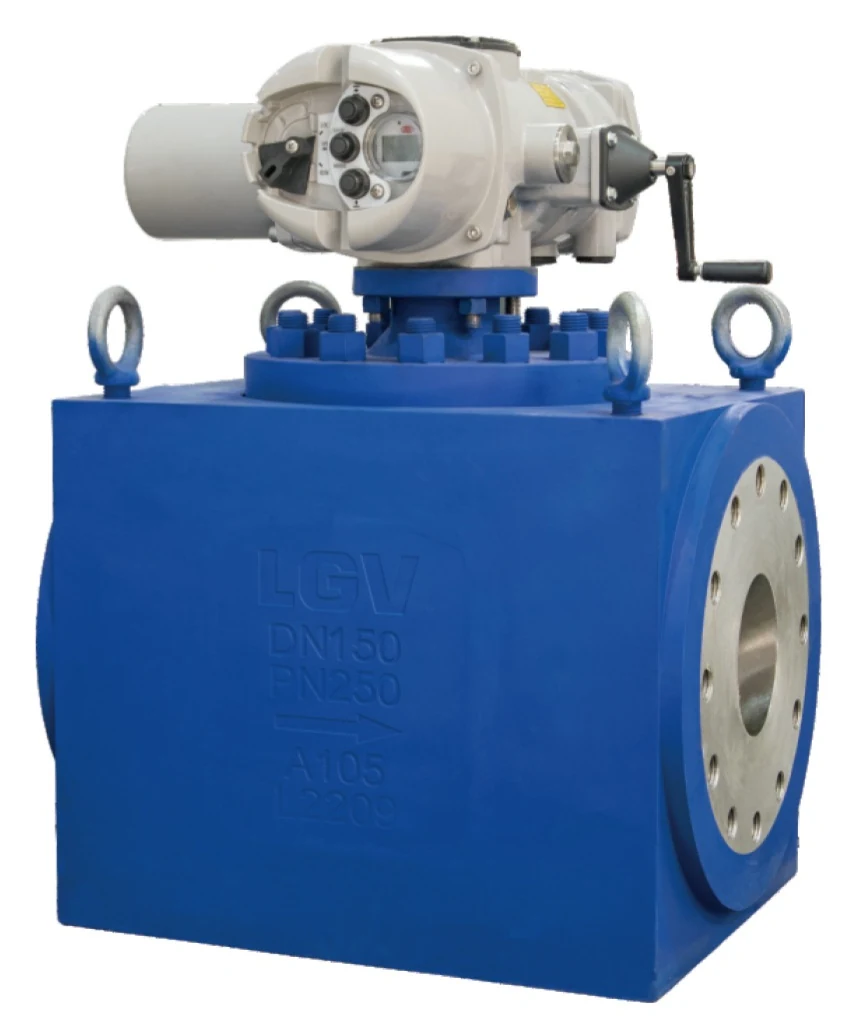
Der wiederhergestellte englische Katalog führt diesen Artikel als Hochtemperatur-Hochdruck-Kugelhahn für Kraftwerke in der Kraftwerksarmatur Abschnitt (PDF-Seite 69). Er bestätigt eine Produktidentität als Kugelhahn und einen Kontext aus der Energieerzeugung – nicht jedoch ein bestimmtes Prozessmedium, eine Druckstufe, eine Temperaturgrenze, eine Bauform, eine Werkstoffgüte oder eine Stellantriebsspezifikation. Verwenden Sie diese Seite, um den Katalogartikel zu identifizieren und eine konfigurationsspezifische Anfrage vorzubereiten; behandeln Sie den Titel oder das Bild nicht als freigegebenes Datenblatt.
- Ventiltyp: Kugelhahn
- Katalogtitel-Formulierung: High temperature and high pressure (nur beschreibend; keine numerische Nennangabe)
- Anwendungskontext: Energieerzeugung (keine Spezifikation des Prozessmediums)
- Katalogabschnitt: Kraftwerksarmatur
Produktidentität
Was dieser Katalogeintrag bestätigt
Dies ist eine dokumentierte Katalogidentität, kein bestellfertiges Modell. Die Kategorie Kugelhahn bleibt der übergeordnete Pfad für den Vergleich von Produktfamilien.
Produktfamilie
Kugelhahn. Verwenden Sie die übergeordnete Kategorie für die Auswahl und den Vergleich auf Kategorieebene.
Katalogbaureihe
Kraftwerksarmatur. Dies ist der Kontext der Quellbaureihe, der im wiederhergestellten Produktkatalog abgedruckt ist.
Nachweisquelle
Wiederhergestellter englischer Produktkatalog, PDF-Seite 69; Produktbild diesem Katalogeintrag zugeordnet.
Katalogbelege
Im Katalog dokumentierte Produktdaten
Es werden nur Felder als Produktdaten angezeigt, die im PDF-Katalogetikett angegeben sind. Ein beschreibender Begriff wie Hochdruck, großer Nenndurchmesser oder ASME begründet keine numerische Nennbelastung, keinen bestellbaren Bereich und keine Zertifizierungsaussage.
| Feld | Im Katalog dokumentierter Wert | Nachweisstatus |
|---|---|---|
| Produktname | Hochtemperatur-Hochdruck-Kugelhahn für Kraftwerke | VERIFIZIERT — PDF-Produktbezeichnung |
| Ventiltyp | Kugelhahn | VERIFIZIERT — PDF-Produktbezeichnung |
| Formulierung zu Druck / Temperatur | High Temperature and High Pressure | VERIFIZIERT — nur Titelformulierung; keine numerische Nennangabe |
| Anwendungs- / Branchenkontext | Energieerzeugung | VERIFIZIERT — Katalogformulierung; keine Prozessmedium-Spezifikation |
| Katalog-Quellserie | Kraftwerksarmatur | VERIFIZIERT — PDF-Abschnitt |
| Katalog-Quellseite | PDF-Seite 69 | VERIFIZIERT — wiederhergestellte PDF-Zuordnung |
Wichtig: Aus dem Titel keine numerische PN-/Class-Einstufung, keinen zulässigen Druck bei Temperatur, keinen Temperaturbereich und keine gelieferte Bauform ableiten. Die Einstufungsgrundlage für das exakt angebotene Gehäusematerial, den Sitz, die Ausführung und den Endanschluss dem freigegebenen Datenblatt entnehmen.
Nachweisgrenze
Bestätigte Fakten und offene Konfigurationspunkte
Das wiederhergestellte PDF bestätigt nur die Produktidentität und die Katalogformulierung. Es liefert nicht die technischen Daten, die zur Freigabe einer bestimmten Konfiguration erforderlich sind.
Durch den Katalog bestätigt
- Produktname und Ventiltyp: Hochtemperatur- und Hochdruck-Kugelhahn für Kraftwerke; Kugelhahn.
- Titelformulierung: Hochtemperatur und Hochdruck sind beschreibende Angaben, keine numerischen Betriebsgrenzen.
- Anwendungskontext: Energieerzeugung; dies ist keine Aussage zum Prozessmedium oder zu einer benannten Installation.
Vor Angebotsabgabe bestätigen
- Exakte Gehäusebauform, Durchgang/Bohrung und Sitzanordnung
- Tatsächliches Medium, Phase, Verunreinigungen und zugehörige Druck-Temperatur-Fälle
- Werkstoffgüten für Gehäuse, Kugel, Spindel, Innenteile, Sitz, Packung und Schrauben
- Nennweite, Endanschluss, Abmessungen und Schnittstelle zur Rohrleitungsklasse
- Dichtheitskriterien, Druckrichtung und Methode zur Gehäuseentlastung
- Stellantriebsdrehmoment, Versorgung, Fail-Action, anzuwendende Normen, Prüfungen und Aufzeichnungen
Technische Prüfung
Für ein technisches Angebot erforderliche technische Daten
Ein prüfbares Angebot verknüpft die vorgeschlagene Bauart, die Nenndruckgrundlage, die Schnittstellen und die Stellantriebsberechnungen mit denselben Betriebsbedingungen.
Ventilfunktion und Absperrung
Vollständig geöffnete/geschlossene Absperrung, Notabsperrung, Bypass oder Regelbetrieb angeben. Schaltfrequenz, Absperrrichtung und zulässige Leckage nennen.
Betriebsmedium und Druck-Temperatur-Bereich
Das tatsächliche Medium und die Phase (z. B. Dampf, Speisewasser, Kondensat, Kühlwasser oder ein anderer Anlagenprozess), die Zusammensetzung und Verunreinigungen angeben. Paarweise Druck-/Temperaturwerte für Normal-, Auslegungs-, Anfahr-, Abfahr- und glaubhafte Störfälle sowie Vor- und Nachdruck und maximalen Differenzdruck beim Öffnen und Schließen angeben.
Werkstoffe, Sitze und Endanschlüsse
Gehäuse/Oberteil, Kugel, Spindel, Innenteile, Sitz, Packung, Dichtung und Schraubenwerkstoffe entsprechend der Fluidchemie, Temperatur, Korrosion/Erosion, Feststoffen und thermischen Wechselbeanspruchung festlegen. Sitzanordnung, Druckrichtung, Leckageakzeptanz und etwaige Gehäuseentlastung bestätigen. DN/NPS, Bohrung, Flansch- oder Schweißendausführung, Nenndruck/Dichtfläche oder Schweißnahtvorbereitung, Maßnorm und Übereinstimmung mit der Rohrleitungsklasse angeben.
Auslegung des Stellantriebs und Betriebsanforderungen
Losbrech-, Lauf- und Rücksitzdrehmoment für die angegebenen Differenzdruck- und Temperaturfälle sowie das maximal zulässige Spindeldrehmoment anfordern. Stellantriebsausgangsleistung bei minimalem verfügbarem Versorgungsdruck bzw. minimaler Versorgungsspannung prüfen; Fail-Open-, Fail-Close- oder Stay-Put-Verhalten, Stellzeit, Schaltfrequenz, Steuerung, Rückmeldung, Handnotbetätigung und elektrische/Umgebungsklassifizierung am Aufstellungsort angeben. Ein abgebildeter Antrieb belegt weder seinen Typ noch sein Drehmomentvermögen.
Drawings, tests and inspection records
Request the tag-linked datasheet, GA/sectional drawing, bill of materials, pressure-temperature basis, torque/actuator sizing sheet, shell and seat-leakage test criteria, material traceability, any specified nondestructive examination (NDE) or positive material identification (PMI), inspection/test plan and required witness records. Name each applicable code/standard and edition; a catalog label does not prove compliance.
Anwendungsgrenze
Selection checks for power-generation duty
Three checks can change the specification even when the catalog identity is correct.
Isolation or modulating control?
For isolation, obtain confirmation of seat design and shutoff performance at the specified differential pressure. For continuous throttling, require a model-specific Cv/flow characteristic, stable operating range and pressure-drop review, including flashing, cavitation or erosion where relevant. Without this evidence, specify a dedicated control-valve design.
Pressure-temperature rating and code scope
Compare each pressure/temperature case with the rating for the exact pressure-retaining material, construction and end type. A pressure class is not one allowable pressure at every temperature. If ASME B16.34 is specified, identify the edition and request evidence that the offered design and ends fall within its scope; the standard covers pressure-temperature ratings, dimensions, materials, nondestructive examination, testing and marking for covered valves. This is not a claim of product compliance. See the ASME B16.34 scope.
Trapped-fluid pressure in the body cavity
A ball valve can trap fluid in its body cavity. Heating trapped liquid can raise cavity pressure; the relief path depends on seat geometry and valve design. Request a sectional drawing identifying the cavity-relief method, direction and limits for the operating and shutdown cases. Do not assume self-relieving seats or double-block-and-bleed from the title or photograph.
Visueller Nachweis
Verified catalog image for this product
The matched catalog image identifies the product’s appearance only. It does not confirm internal construction, materials, pressure-temperature rating, end dimensions or actuator performance.
Verwandte Produktrouten
Other ball-valve catalog routes
For a closer catalog comparison, see the Hochtemperatur-Hochdruck-Kugelhahn aus Schmiedestahl, dreiteilig, zapfengelagert. That separate record explicitly names three-piece construction, forged steel and a fixed-ball configuration; none of those descriptors is established for WP207. Treat the two as separate product identities and compare their own drawings and ratings. The three natural-gas pipeline listings below are different service routes, not substitutes for a power-generation valve. For the broader power-station range, see Armaturen für die Energieerzeugung.
Kugelhahn für erdverlegte Erdgasfernleitungen
Separate natural-gas pipeline listing; its title does not establish suitability for a power-generation line.
Pneumatisch-hydraulisch gekoppelter Kugelhahn für Erdgasleitungen
Separate pipeline listing with a pneumatic-hydraulic linkage in its name; confirm its operator from its own datasheet.
Kugelhahn für Erdgasfernleitungen
Separate natural-gas pipeline listing; do not transfer its operating limits or configuration to this product.
Fragen von Einkäufern
High Temperature and High Pressure Power Plant Ball Valve FAQ
These answers separate catalog evidence from project-specific selection data.
What does the recovered catalog confirm about this product?
It identifies the High Temperature and High Pressure Power Plant Ball Valve as a Ball Valve in the Power Station Valve section, with a power-generation context. The title does not establish a numerical pressure rating, temperature limit, process medium, construction, materials or actuator.
Does “high pressure” establish a PN or Class rating?
No. It is descriptive catalog wording, not a numerical PN/Class rating or a pressure-temperature curve. Request the exact offered construction, material grades, end type, applicable standard and pressure-temperature basis.
Does the catalog image confirm the actuator or internal seat design?
No. It shows the catalog appearance and a top-mounted operator only. It does not identify the operator type or torque output, seat arrangement, pressure direction, cavity-relief method, materials or dimensional interfaces. Request the approved datasheet and sectional drawing.
What should the RFQ include?
Provide the actual duty and medium; paired operating/design/start-up/shutdown pressure-temperature cases; upstream/downstream pressure and maximum differential pressure; size and bore; end connection; body, trim and seat requirements; leakage criteria; actuator torque, utility and fail action; quantity; and the required standards, drawings, testing, inspection and certificate documents.
Technische Anfrage
Request a configuration review for High Temperature and High Pressure Power Plant Ball Valve
Send the actual line conditions and request a written offer identifying the construction, pressure-temperature basis, seat and end arrangement, actuator sizing and document scope. Mark unresolved items as open points.
- Valve function, actual medium and phase
- DN/NPS, bore, end type and piping class
- Normal/design/start-up/shutdown pressure-temperature cases and maximum differential pressure
- Body/ball/stem/seat/packing materials, leakage and cavity-relief requirements
- Quantity, actuator torque, utilities, fail/stay-put action, controls and required documents