
Niedrigtemperatur-Absperrung | Katalogkonfiguration
Absperrschieber aus Edelstahl für kryogene Anwendungen
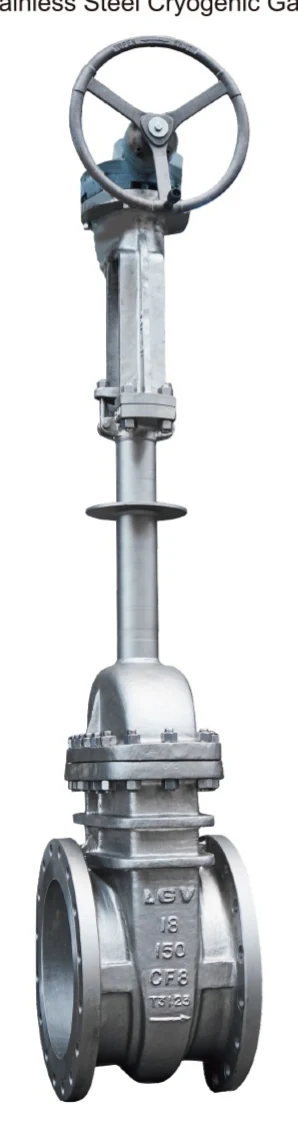
Der Absperrschieber aus Edelstahl für kryogene Anwendungen ist in der Absperrschieber-Baureihe für Niedrigtemperatur-Absperrdienst aufgeführt. Ein geeignetes Angebot muss die minimale Auslegungsmetalltemperatur und die vollständigen Werkstoffe benennen, den erforderlichen Umfang der Kaltprüfung festlegen und eine Zeichnung für die Gehäuseoberteil-Verlängerung, den Bedienzugang und die Rohranschlüsse bereitstellen. Die Katalogbezeichnung allein belegt keine zulässige Temperatur, Druckstufe oder Bescheinigung.
- Katalogidentität: Absperrschieber aus Edelstahl für kryogene Anwendungen
- Werkstofffamilie: Edelstahl; genaue Werkstoffgüten sind anzugeben
- Kryogener Einsatz: Mindesttemperatur und Prüfnachweise sind zu vereinbaren
Katalogidentität und Beschaffungsgrenze
Was ist für dieses Ventil dokumentiert?
Der Produktname, die Absperrschieber-Baureihe und das zugehörige Katalogfoto sind dokumentiert. Der Katalog legt keine genaue Edelstahlgüte, keine nutzbare tiefste Temperatur, kein Ergebnis zur Werkstoffzähigkeit und keine geprüfte Baugruppenkonfiguration fest. Ein Angebot sollte diese Lücken klären und nicht das Foto in eine Spezifikation verwandeln.
Ventilfunktion
Absperrschieber werden üblicherweise ausgelegt für Auf/Zu-Absperrung. Wenn wiederholtes Teilöffnen oder eine Durchflussregelung erforderlich ist, ist eine Regelaufgabe separat zu definieren, statt anzunehmen, dass dieser Katalogeintrag für Drosselbetrieb geeignet ist.
Katalogreferenz
Absperrschieber-Baureihe; Quell-PDF physische Seite 77, gedruckte Seite 143. Das verifizierte Produktfoto ist media 1417, zweite von links auf der Katalogdoppelseite.
Konfiguration nicht festgelegt
Die Beschriftung und das Bild belegen weder die Bauart des Gehäuseoberteils, die Verlängerungsmaße, die Sitzausführung, die Spindelanordnung, die Druck-Temperatur-Grenzen, die Prüfergebnisse noch die Konformität eines gelieferten Ventils.
Dokumentierte Katalogfelder
Katalogidentifikation und verifizierte Quelldaten
Die Tabelle erfasst ausschließlich die durch die Katalogbeschriftung und die verifizierte Seitzuordnung gestützte Identität. Sie ist kein Datenblatt für eine bestellbare Größe, Druckklasse oder Tieftemperatur-Bemessung.
| Feld | Im Katalog dokumentierter Wert | Nachweisstatus |
|---|---|---|
| Ventiltyp | Absperrschieber | VERIFIZIERT — PDF-Katalogetikett |
| Werkstoffangabe | Edelstahl | VERIFIZIERT — PDF-Katalogetikett |
| Einsatzbeschreibung | Kryogen (nur Katalogbezeichnung) | VERIFIZIERT — PDF-Katalogetikett |
| Katalog-Quellserie | Absperrschieber | VERIFIZIERT — PDF-Katalogabschnitt |
| Katalog-Quellseite | PDF-Seite 77 (gedruckte Seite 143) | VERIFIZIERT — wiederhergestellte PDF-Zuordnung |
Nicht bestätigt: Die minimal zulässige Temperatur, Edelstahlsorten, Nenngröße, Druckklasse, Baulängen, Kaltleistung und anwendbare Konformität sind durch diesen Katalogeintrag nicht festgelegt. Fordern Sie das angebotene Datenblatt und die freigegebenen Zeichnungen an.
Werkstoff- und Prüfnachweise
Was belegt die Eignung bei der festgelegten niedrigen Temperatur?
Materialidentität und Leistung des montierten Ventils sind unterschiedliche Prüfungen. Materialaufzeichnungen können die Rückverfolgbarkeit und festgelegte Tieftemperatureigenschaften belegen, zeigen jedoch nicht die Dichtheit oder Funktionsfähigkeit des montierten Ventils unter den vorgesehenen kalten Bedingungen. Legen Sie beide Nachweispakete vor dem Kauf verbindlich fest.
Materialqualifikationsnachweise
- Gehäuse, Gehäuseoberteil, Keil, Spindel, Schrauben, Ventilsitze, Dichtungen und Packung getrennt auflisten; “Edelstahl” ist keine vollständige Stückliste.
- Festgelegte Werkstoffgüten, Wärme-/Chargenrückverfolgbarkeit und Materialzeugnisse für die gelieferten Teile anfordern.
- Die minimale Auslegungsmetalltemperatur mit den ausgewählten Werkstoffen abstimmen und Kerbschlag-/Zähigkeitsnachweise anfordern, wo die maßgebliche Spezifikation dies verlangt.
Abnahmenachweise für Kaltleistung
- Übliche Fertigungs-Druck-/Dichtheitsprüfungen, Prüfungen unter kalten Bedingungen und separate Typprüfanforderungen unterscheiden.
- Prüfnorm und Ausgabe, Prüftemperatur, Medium, Druck und Temperaturstabilisierung vor der Prüfung verbindlich festlegen.
- Kriterien für Sitz- und Außendichtheit, Betätigungszyklen und Kraft-/Drehmomentprüfungen festlegen, soweit zutreffend.
- Berichte bezogen auf die angebotene Ausführung bzw. das Ventil anfordern, zudem Beisein- und Inspektionsanforderungen, soweit festgelegt.
Technische Auswahl
Five decisions before specifying this cryogenic gate valve
Select against the real fluid and installation—not just the product name. Each item below changes the offered construction or the evidence needed to accept it.
Define the cold operating case
State fluid composition and liquid/gas phase, normal and design pressure, minimum design metal temperature, cooldown/warmup conditions and shutoff duty. Without that operating envelope, a “cryogenic” label cannot establish suitability.
Match materials to the cold duty
Review the full material schedule—not only the body—for low-temperature toughness, differential contraction and seal/packing compatibility. The supplier should identify the offered grades and the material records applicable to the project specification.
Approve the bonnet and packing arrangement
The catalog photo shows a long upper assembly, but does not prove its internal construction or extension length. Ask for a dimensioned sectional/outline drawing showing the packing location, extension, insulation interface and any drip plate or thermal barrier if specified.
Check interfaces and operating access
Verify end connections, face-to-face dimensions, operating torque/thrust at the specified differential pressure, stem travel and operator type. Reserve space for the handwheel or actuator and for access to packing and bolted joints.
Set inspection and test acceptance
Agree on ambient and cold-condition leakage/operability test scope, the governing specification and acceptance limits, inspection witness points and the document package. A room-temperature test result alone does not demonstrate low-temperature performance.
Installation and maintenance
Installation details that affect cryogenic valve selection
Low-temperature service changes the location of the packing, insulation boundary and required maintenance envelope. Installation acceptability must come from the offered drawing and instructions, not the catalog silhouette.
Insulated piping or cold-box service
If the valve sits in a cold box or heavily insulated line, identify the cold boundary on the installation drawing. Check the proposed extension geometry, insulation penetration, packing accessibility and any specified insulation collar/drip plate. Do not infer that these features are included from the photograph.
Stem orientation and liquid drainage
For some extended-bonnet designs in cryogenic liquid service, an upward stem arrangement helps keep cold liquid away from the packing zone. Confirm the permitted installation orientation and drainage provisions for this offered design; do not assume horizontal or inverted mounting is acceptable.
Access, travel and trapped liquid
Use the approved outline drawing to check full stem stroke, handwheel or actuator clearance, lifting/removal space, packing maintenance and pipe support loads. Where the valve geometry can trap cold liquid, obtain the specified cavity-pressure management arrangement rather than assuming an integral relief feature.
Related catalog entries
Compare other cryogenic gate-valve configurations
Compare these separate cryogenic catalog entries for the requested material, construction and standards basis; none inherits temperature ratings or test certificates from another. For other size/actuation duties, original navigation remains available: Großer elektrischer Absperrschieber; ASME Großventil mit elektrischem Stellantrieb; ASME-Absperrschieber für große Nennweiten.
ASME Absperrschieber aus Edelstahl für kryogene Anwendungen
A separately labeled ASME stainless-steel cryogenic catalog entry. Confirm the exact governing standard and grade for the required order, not merely the name.
Kryo-Absperrschieber aus Schmiedestahl
A forged-steel cryogenic entry: review the construction and material schedule independently before comparing options.
Kryo-Absperrschieber mit verlängertem Oberteil
An extended-stem catalog identity to review when the cold boundary or operator location drives the layout. Obtain its own drawing and test basis.
Technical buyer questions
Cryogenic gate valve: procurement questions
These answers identify the evidence needed for a specific offer; they do not assign unverified performance to this catalog item.
Does “stainless steel” confirm suitability at the lowest temperature?
No. The catalog does not identify the exact grades or their low-temperature qualification. Specify the minimum design metal temperature and obtain the complete material schedule, traceability and required toughness evidence for the offered valve.
Does the catalog photo establish bonnet extension dimensions?
No. It shows an extended-looking upper arrangement, but not the internal construction, packing temperature, extension length or allowable orientation. Approve the dimensioned drawing and insulation/maintenance clearances before installation.
What testing should a cryogenic valve quotation address?
Agree on the applicable specification and edition, production versus type-test scope, test temperature and medium, seat and external leakage limits, operation cycles and reporting. A catalog label does not prove that any test was performed.
What information is needed for an actionable RFQ?
Provide fluid and phase, minimum/design temperatures, pressure, size, end connections, duty, installation orientation, insulation boundary and operator requirements. State the requested material records, cold tests, witness points, drawing and quantity.
Product-specific technical inquiry
Request a Stainless Steel Cryogenic Gate Valve quotation
Reference this catalog entry and describe the cold service, material evidence, test acceptance and installation envelope in the inquiry. VALMORA can review an offered configuration against those inputs; no unverified temperature range or qualification is implied by this listing.
- Fluid composition and phase; operating/design pressure and minimum metal temperature
- DN/NPS, end connections, isolation duty, cycles and requested operator
- Body/bonnet/trim/seal materials and required low-temperature material records
- Bonnet/packing extension, insulation boundary, stem orientation and available access
- Cold-test and witness requirements, drawings, quantity and delivery destination