
Elektrisches Absperrventil | Katalogreferenz
Großer elektrischer Absperrschieber
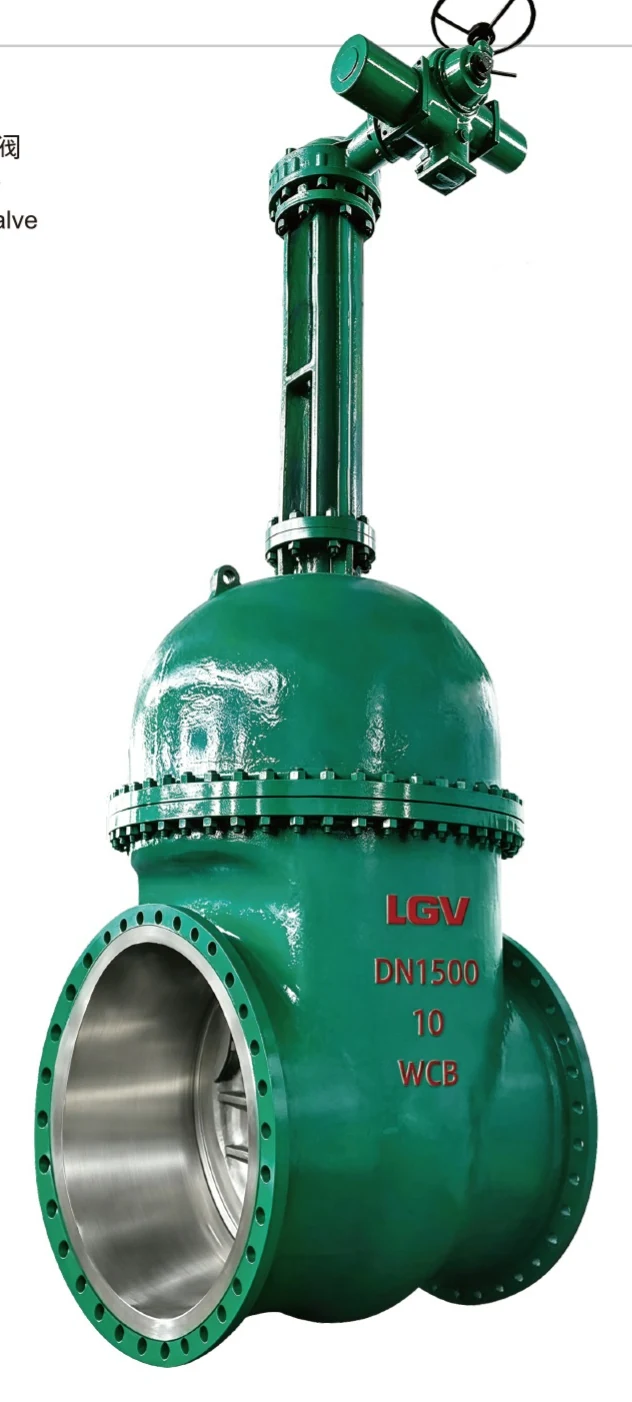
Dieser Großer elektrischer Absperrschieber ist ein katalogisiertes, elektrisch betriebenes Absperrschieberventil für eine projektdefinierte Absperraufgabe bei vollständig geöffnetem oder vollständig geschlossenem Zustand. Für ein verlässliches Angebot sind der maximale Betriebsdifferenzdruck und der Hub des Ventils auf den erforderlichen Stellantriebsschub, das Drehmoment, die Stellzeit und die bauseitigen Steuerungen abzustimmen – nicht allein auf den Nenndurchmesser.
- Absperrschieber | Prüfung der Absperrung bei vollständig geöffnetem / vollständig geschlossenem Zustand
- Elektrischer Betrieb | Auslegung des Stellantriebs und Steuerungen sind zu spezifizieren
- Katalogbezeichnung für große Nennweiten | genaue DN/NPS und Druckstufe sind zu bestätigen
Betriebszweck
Die Absperraufgabe steht im Vordergrund
Nutzen Sie diese Produktidentität zur Abstimmung der motorisierten Leitungsabsperrung. Der Produktname legt keine bestimmte Schieberbauform, kein Material, keine Druckstufe, keine Absperrleckagerate und kein Stellantriebspaket fest; diese gehören in das konfigurationsspezifische Angebot.
Vollständig geöffnet oder vollständig geschlossen
Der normale Einsatz von Absperrschiebern ist die Auf/Zu-Absperrung. Wiederholtes Drosseln bei einer Zwischenstellung kann den Verschleiß von Sitz und Schieber beschleunigen oder Schwingungen verursachen; sehen Sie keine Regelaufgabe vor, ohne eine separat ausgelegte Ventil- und Stellantriebslösung.
Maximaler Differenzdruck
Geben Sie die höchste Druckdifferenz über dem geschlossenen Absperrschieber beim Öffnen oder Schließen an, einschließlich Pumpen-, Anfahr- und Störfällen, sofern relevant. Diese Differenzlast kann die erforderliche Abhebekraft bestimmen, selbst wenn die Druckbegrenzung des Ventils eine ausreichende Nennstufe aufweist.
Elektrischer Antrieb ist keine eigensichere Funktion
Ein motorgetriebener Stellweg erfordert eine verfügbare Energiequelle. Eine erforderliche Aktion nach Netzausfall muss definiert und durch einen separat spezifizierten Stellantrieb, eine gespeicherte Energie oder eine Notstromversorgung unterstützt werden; das Katalogfoto belegt dies nicht.
Bestätigte Produktidentität
Was der Produktkatalog tatsächlich bestätigt
Der wiederhergestellte Lianggong-Katalog kennzeichnet das grüne Ventil auf physische PDF-Seite 70 (gedruckte Seite 129) als “Large Diameter Electric Gate Valve”. Er bestätigt die Absperrschieber-Baureihe und den elektrischen Antrieb. Er veröffentlicht weder einen bestellbaren Größenbereich noch die Stellantriebsleistungsdaten dieser Baugruppe.
| Feld | Dokumentierte Beschreibung | Nachweisgrenze |
|---|---|---|
| Katalogprodukt | Großer elektrischer Absperrschieber | Katalogkennzeichnung, physische Seite 70 |
| Armaturenfamilie | Absperrschieber | Überschrift der Absperrschieber-Baureihe und Produktkennzeichnung |
| Betrieb | Elektrisch | Produktbezeichnung; Stellantriebsmodell nicht angegeben |
| Größe | Großer Nenndurchmesser (beschreibend) | Exakter DN/NPS-Bereich nicht festgelegt |
| Primäres Katalogbild | Grünes Ventil — Katalog-PDF S. 70 (gedruckte S. 129) | Nur Erscheinungsbild und Produktidentifikation |
Für die Angebotserstellung: ein Ventildatenblatt und eine GA-Zeichnung mit exakter Größe, Werkstoffen, Druck-Temperatur-Grenzen, Anschlussenden, Spindelkonfiguration und Betriebshub einholen. Katalogkennzeichnungen oder abgebildete Komponenten gelten nicht als verifizierte Bestellspezifikationen.
Stellantriebsauswahl
Elektrischen Stellantrieb für die tatsächliche Ventilbelastung auslegen
Der Käufer stellt belastbare Betriebsfälle bereit; der Ventil- und Stellantriebslieferant muss die daraus resultierende erforderliche Spindelkraft und das Betriebsdrehmoment festlegen, including seating, unseating and running conditions. The proposed operator must handle those loads at the specified supply conditions without exceeding the valve stem, gearbox or seating limits.
Three questions that change the decision
- Is the maximum opening/closing differential pressure known? If not, actuator selection is incomplete.
- Is the duty intermittent on/off isolation? Frequent positioning or throttling needs a separate duty and valve-design evaluation.
- Must the valve change position during power loss? A motor actuator alone does not establish that capability.
Ask for documented actuator sizing
- Supplier-stated required stem thrust and torque, including unseating, running and seating cases
- Selected actuator and gearbox ratings, allowed settings and sizing margin under specified voltage
- Stem geometry, travel, turns, drive coupling and mounting interface
- Maximum allowable valve/stem loads and settings that prevent over-torque or over-thrust
- Specified operating time, starts per hour, duty class and ambient/enclosure conditions
Mechanical and electrical specification
What must be settled before issuing the RFQ
The following checks separate a suitable motor-operated isolating valve from an attractive but unproven catalog match. If the maximum differential pressure or required stem load is missing, request preliminary engineering rather than approving a named actuator.
Isolation and shutoff conditions
Identify normal and emergency isolation duties, direction(s) of pressure, shutoff leakage requirement and cycling frequency. A pressure-boundary rating is nicht the maximum differential pressure at which the gate can necessarily be operated.
Stroke and opening/closing time
Specify the required full travel, total actuator turns or stem displacement, and acceptable open/close time. At a fixed actuator output speed, greater required stem travel or more turns increases operating time; gearbox selection also changes speed, and a rising stem needs travel clearance. Rapid closure may increase hydraulic surge risk in liquid service. Verify these against the selected valve drawing and system transient study where needed.
Mechanical compatibility
Specify DN/NPS, line bore, design pressure and temperature, fluid, end connections, body/trim/seat materials and stem arrangement. The supplier should verify gate and stem loading, mounting flange, thrust-bearing arrangement, gearbox interface and clearance for any rising stem.
Power, signals and operating duty
Define voltage, phases, frequency, available power, local/remote controls, open/close feedback, interlocks and fault indication. State environmental/IP and hazardous-area requirements where applicable. If intermediate positioning is required, ask for explicit valve suitability and a suitable actuator duty classification; do not infer modulating capability from “electric.”
Acceptance limits and tests
Agree the allowed torque/limit-switch settings, position indication, manual operation arrangements, shop functional stroke check and any required valve shell/seat tests. Specify inspection witness points and document deliverables in the purchase order; these are requested records, not evidence that the pictured unit has passed them.
Review the offered package
Documents required to approve the assembled valve
A catalog identity supports initial product matching. For purchase approval, the quoted valve and electric operator must be traceable to a common configuration and a defined set of acceptance documents.
Valve mechanical documents
Request the configuration-specific valve datasheet, general arrangement, face-to-face and flange/end dimensions, installed height and lifting data, stem travel, pressure-temperature limits, material/trim list and applicable leakage/test requirements.
Electric operator documents
Request the actuator make/model, sizing calculation or signed selection sheet, torque/thrust settings, rated output speed, electrical supply and current data, enclosure classification, wiring/terminal diagram, control I/O schedule and installation/commissioning instructions.
Inspection and delivery records
Specify valve pressure and seat test reports, assembled-valve functional test, dimensional/setting records and material certificates when required by the purchase order. Confirm packing, lifting points, handling instructions and site access for the fully assembled actuator envelope.
More Images from the Product Catalog
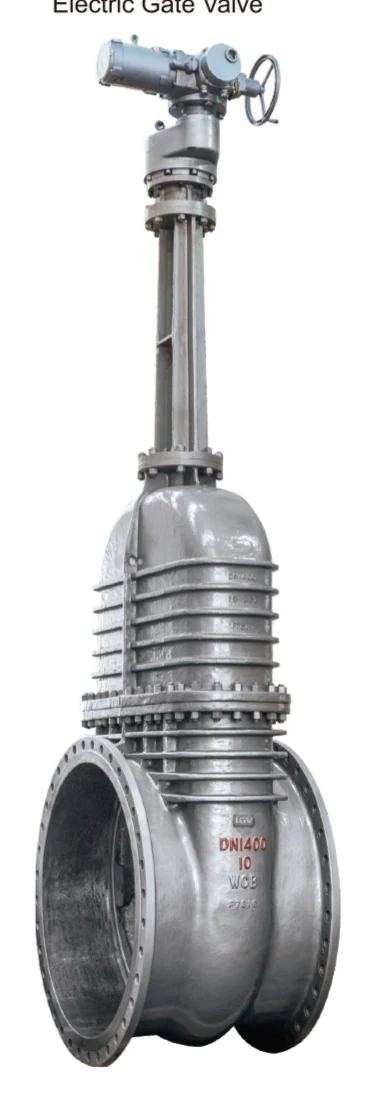
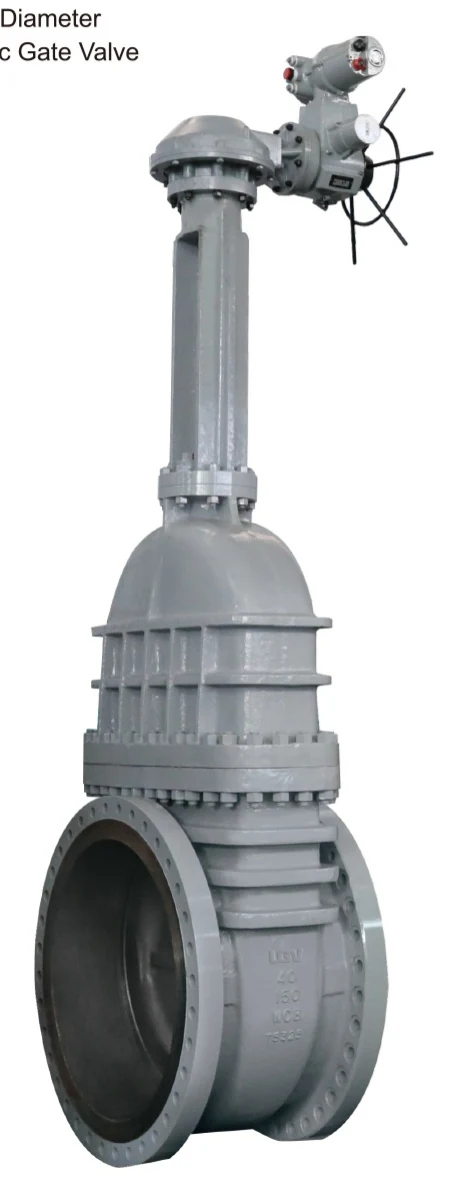
Both silver-valve illustrations are separately labeled Großer elektrischer Absperrschieber in the original catalog. They are additional examples under the same product name, not evidence of the same physical valve or a shared model, rating, material or actuator specification.
Verwandte Produktrouten
Related catalog alternatives
These are separate catalog identities, not configurations confirmed for this product. Use the Gate Valves category for broader selection, and compare each neighbor against its own evidence before specifying a standard, mechanism or operator.
ASME Großventil mit elektrischem Stellantrieb
A separately named ASME large-diameter electric variant. Verify its own applicable design requirements and operator package rather than assuming interchangeability with this record.
ASME-Absperrschieber für große Nennweiten
A separate ASME large-diameter gate valve record. Electric actuation is not established by this product name; request its own drive configuration if needed.
GOST Kegelrad-Absperrschieber
A bevel-gear-operated catalog alternative. Review manual/gear drive practicality and operating loads where motor operation is not required.
Fragen von Einkäufern
Electric gate valve buying questions
Answers below apply to initial selection of this catalog identity, not to an unverified actuator or valve rating.
Is this gate valve intended for flow throttling?
Use it as an on/off isolation candidate. Sustained intermediate opening can cause damaging flow forces and wear in many gate-valve designs. Any regulating or frequent positioning duty needs a separate valve-and-actuator assessment.
Can the electric actuator be selected from DN alone?
No. The maximum operating differential pressure, seat and packing loads, stem drive geometry, travel, operating time and duty determine the required thrust and torque. Ask the supplier for the matched valve-and-actuator sizing record.
Will the valve automatically close if electrical power is lost?
Not on the evidence available. A standard electric motor generally needs power to move. A specified loss-of-power position requires a verified backup-power or fail-safe solution and an agreed control philosophy.
Which documents should accompany the offer?
Request matching valve and actuator datasheets, a GA drawing showing stroke and clearance, actuator sizing and settings, wiring and I/O documents, agreed inspection and functional test records, and material certificates where contractually required.
Technische Anfrage
Request a Large Diameter Electric Gate Valve quotation
Reference CCE-R2-0023 and describe your isolation service and available engineering inputs. The supplier should return a matched valve-and-actuator proposal with the remaining unverified ratings, differential-pressure limits and documentation confirmed in writing.
- Valve size, service medium, design pressure/temperature, maximum operating ΔP and required shutoff
- Pipe ends, materials/trim, mounting orientation and operator clearance
- Full stroke, permitted open/close time, starts per hour and required duty
- Electrical supply, control I/O, position/fault feedback and loss-of-power requirement
- Quantity and required datasheets, drawings, actuator sizing, tests and certificates