
صمام كروي من الفولاذ المطروق / منتج كتالوجي
صمام كروي ثلاثي القطع من الفولاذ المطروق للضغط العالي
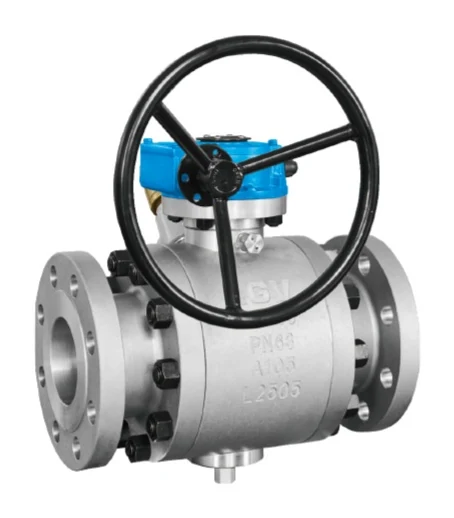
للخدمة عالية الضغط خدمة الفتح والإغلاق, يحدد هذا الكتالوج صمامًا كرويًا من الفولاذ المطروق ثلاثي القطع، ويعرض أمثلة بفلنجات ومشغلة بتروس. يعتمد الاختيار على حدود الضغط–درجة الحرارة المعروضة، ونظام المقعد، وتصميم وصلة الجسم، وواجهات الأنابيب—فكلمة “عالية الضغط” لا تحدد تصنيفًا رقميًا من Class أو PN.
- جسم من الفولاذ المطروق ثلاثي القطع — تعريف كتالوجي
- تصنيف الضغط العالي — يتطلب تأكيد PN/Class المعروض وحدود الضغط–درجة الحرارة
- تظهر في رسومات الكتالوج أطراف بفلنجات ومشغلات تروس بيدوية
- يُرجى تأكيد المقعد ودرجة الفولاذ ومسند الكرة وحدود الخدمة في ورقة البيانات المعروضة
هوية الكتالوج ومدخلات عرض السعر
ما يحدده الكتالوج — وما يجب أن يحدده العرض
يشير كتالوج المصدر إلى هذا باسم صمام كروي ثلاثي القطع من الفولاذ المطروق للضغط العالي ضمن سلسلة الصمامات الكروية الخاصة به. تتميز العناصر الموضحة بأطراف بفلنجات وعجلات يدوية مسننة. لا توفر رسوم الكتالوج مخطط تصنيف خاصًا بكل تكوين أو رسمًا أبعاديًا أو جدول مواد مفصلًا؛ ويجب عدم استخدام العلامات الظاهرة على الجسم كمواصفات لعرض السعر. استخدم المصدر لتحديد المنتج، وليس للموافقة على تكوين معين.
| حقل القرار | أدلة الكتالوج | مطلوب في العرض |
|---|---|---|
| هوية المنتج | صمام كروي ثلاثي القطع من الفولاذ المطروق للضغط العالي | رقم الجزء/الطراز ومراجعة الرسم المقدم |
| حدود الضغط | “الضغط العالي” هو تصنيف الكتالوج. العلامة الظاهرة على الرسم التوضيحي ليست تصنيف PN/Class مؤكدًا قابلًا للطلب ولا مخطط ضغط–درجة حرارة. | الضغط المقنن مقابل درجة الحرارة للجسم ووصلة الجسم والأختام |
| الأجزاء الداخلية للصمام | نوع دعم الكرة والتجويف وتكوين المقاعد غير مذكورة | دعم بكرة عائمة أو مثبتة على محاور، تجويف كامل/مخفض، مواد المقعد/الحشو/الحشية |
| المواد | “يظهر ”الفولاذ المطروق» في اسم الكتالوج، دون درجة ASTM/EN | درجات مواد الجسم/الأطراف الحاوية للضغط والكرة والساق والأجزاء الملامسة للسائل |
| الأطراف والمشغل كما هي موضحة | تظهر الأطراف بفلنجات وعجلات تشغيل يدوية ترسية في مثالَي الكتالوج | معيار/وجه الفلنجة، والمسافة بين الوجهين، وعزم الدوران، والمشغل ضمن عرض السعر |
| موقع المصدر | سلسلة الصمام الكروي؛ الصفحة الفيزيائية 89 من كتالوج PDF الأصلي (الصفحات المطبوعة 167–168) | اطلب ورقة البيانات الخاصة بالتهيئة ومخطط الترتيب العام |
حدود المواصفات: لا تعتبر الفلنجة المصورة أو مشغل الترس أو ملصق الفولاذ المطروق قائمة مواد كاملة. فئة الضغط وتصميم المقعد ومتطلبات الاختبار وتهيئة التسليم تندرج ضمن ورقة البيانات المعروضة والمخطط المعتمد.
الضغط والإحكام
Choose the pressure boundary and seat together
A valve can meet a stated body pressure class yet still be unsuitable because the selected seat, packing or body gasket is unsuitable, or because materials are incompatible with the medium. Evaluate design pressure and maximum differential pressure against the full temperature range, including credible transients.
Pressure–temperature limits
- Give design pressure, normal pressure, maximum differential pressure and minimum/maximum temperature; include thermal cycling or vacuum where relevant.
- Ask for the offered pressure–temperature chart and limits for the pressure-containing body, bolted body joints, seats, stem seals and gaskets.
- If trapped liquid could heat in a closed cavity, request the design’s cavity-pressure relief approach; do not assume self-relief.
Media, seats and shutoff
- State fluid composition, phase, solids, concentration, corrosion and erosion exposure, and cleaning media.
- Specify allowable seat leakage and the relevant test acceptance conditions. Seat material suitability depends on pressure, temperature and medium together.
- For frequent throttling or modulating duty, request a control-rated valve assessment; this standard on-off designation alone is not sufficient.
Construction and installation
What the three-piece body changes in practice
A sectional body can offer access to internal parts, but three-piece does not automatically mean swing-out, in-line repair or maintenance under pressure. Access, sealing joints and reassembly depend on the supplied construction and its installation/maintenance instructions.
Body joints and maintenance access
The body-to-end joints, bolting and gaskets form part of the pressure boundary. Before planning service in place, obtain the section drawing, bolting procedure, gasket kit scope and clearance requirements. Any disassembly requires an isolated, depressurized, drained and appropriately decontaminated system under an approved procedure.
Piping connection and fit
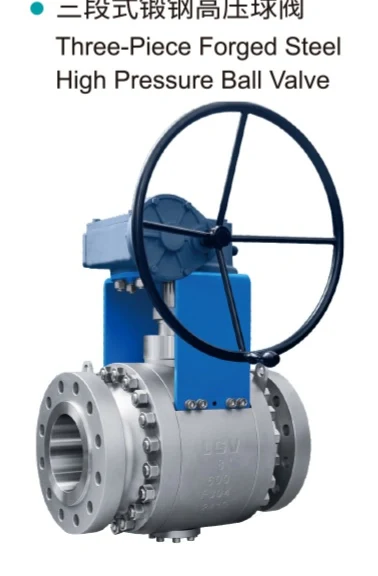
Both catalog illustrations show flanged ends, not an orderable flange specification. Provide DN/NPS, mating flange standard and facing, face-to-face length, bore requirement, gasket/bolt interface, piping loads and installation space. Confirm the actual end configuration on the proposed drawing.
Ball support and bore
The catalog label does not say whether the ball is floating or trunnion-supported. At higher differential pressure, operating torque and seat loading can influence that choice; line size alone does not settle it. State full-bore or reduced-bore requirements, pressure drop and any pigging need before accepting an offered design.
Gear operator, automation and cycling
The pictured handwheel gear units do not prove that every delivered valve includes a gearbox. Supply maximum differential pressure at operation, cycle frequency and required opening/closing time. For remote actuation, request valve torque data, actuator sizing, utility, control signal, fail action and area classification as applicable.
Documents that settle the decision
Request an offered datasheet, general arrangement and sectional drawing, detailed material list, stated design/test standards with editions, leakage acceptance criteria and the inspection/material records required by the purchase order. Do not assume fire-safe, anti-static, fugitive-emission or sour-service qualification without the applicable design and verification evidence.
Original catalog illustrations
Two catalog views of this three-piece high-pressure valve
Both images sit under the same English product label on the original catalog spread. They illustrate flanged ends and gear handwheels; differences in appearance are not proof of interchangeable dimensions, pressure ratings or supplied trim.
Nearby catalog options
When a different three-piece ball valve is the better inquiry
The linked records represent different catalog names—not automatically approved substitutes. Select the inquiry route from the service requirement, then request the datasheet for that exact record.
High Temperature and High Pressure Three-Piece Forged Steel Fixed Ball Valve
If elevated temperature and a supported-ball design are essential, compare this separately labeled high-temperature/high-pressure fixed-ball record. Verify its seat design and temperature-dependent pressure limit before selection.
صمام كروي ثلاثي القطع بكرة مثبتة محكم الإغلاق من الفولاذ المطروق
If the specification calls for hard seating, assess this separately named hard-sealed fixed-ball record. Require leakage criteria, torque, sealing materials and wear limits for the actual duty.
صمام كروي ثلاثي القطع مطروق من الصلب بكرة مثبتة على محاور بمشغل كهربائي
If the valve must be operated remotely, review the separate electric fixed-ball record. Verify the ball design and actuator torque, controls, fail action and available power for the proposed assembly.
Technical quotation
Request the three-piece forged-steel ball valve configuration
Reference this catalog product and describe the operating conditions—not just the size and “high pressure.” The inquiry can then be reviewed against a specific proposed valve, with its pressure–temperature limits, sectional drawing, seat system, testing scope and commercial terms.
- Duty, medium and phase, solids/corrosion risks, operating cycles and installation context
- Design and operating pressures, maximum differential pressure, min/max temperature and transient or vacuum cases
- DN/NPS, bore and connection/facing standard, face-to-face requirement and mating piping details
- Body/trim grade, seat and gasket preferences, leakage criteria and pressure-boundary design needs
- Gear/manual or powered actuator, torque/fail-action and utility or control requirements
- Quantity, required standards/editions, drawings, tests, certificates, inspection scope and delivery destination