
Isolation de grand diamètre | commande par renvoi d'angle
Robinet-vanne grand diamètre à renvoi d'angle
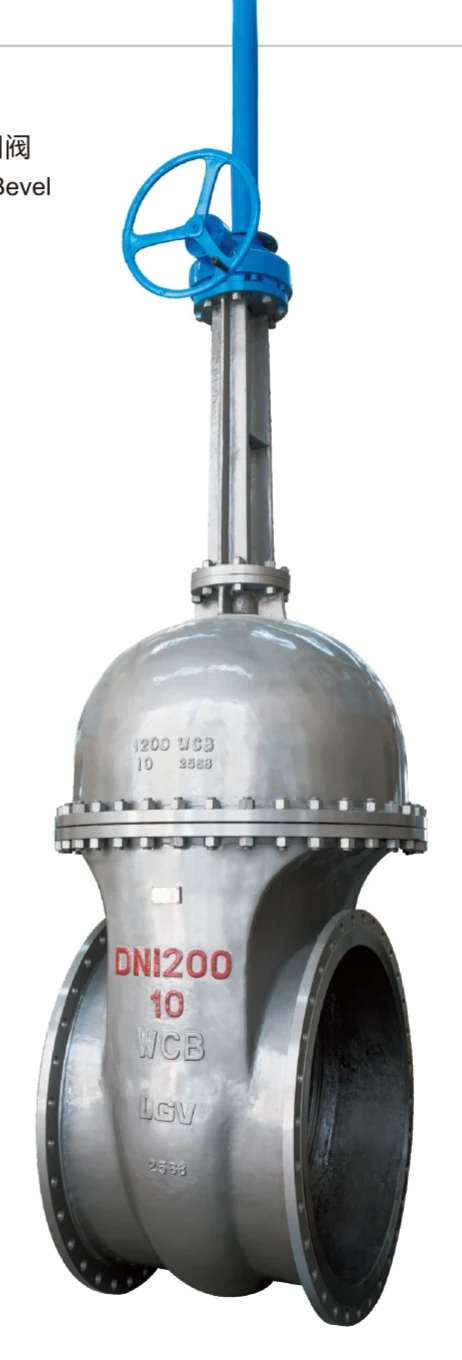
Ce produit répertorié au catalogue Robinet-vanne grand diamètre à renvoi d'angle est une option à étudier pour l'isolement de conduites en tout ouvert/tout fermé lorsque la commande locale par volant est réalisable. Avant sélection, vérifiez la différence de pression à la première ouverture, l'effort requis sur la tige, l'effort admissible sur le volant, les dimensions de raccordement et l'encombrement d'accès pour l'ensemble spécifique proposé. La photographie du catalogue n'est ni une fiche de caractéristiques ni un plan coté.
- Tâche de sélection visée : isolement tout ou rien, pas de régulation en service continu
- Identification catalogue : robinet-vanne de grand diamètre à commande par renvoi d'angle
- Vérifications propres à l'offre : effort d'ouverture, effort manuel, taille, classe de pression et interfaces
Adéquation à la sélection
Cas où cette configuration convient — et où elle ne convient pas
Un renvoi d'angle modifie la transmission de l'effort du volant à la tige du robinet-vanne ; il ne détermine ni l'effort nécessaire au robinet installé ni la capacité d'une personne à le manœuvrer dans les conditions d'ouverture les plus défavorables. Partez du besoin d'isolement requis, puis validez la combinaison robinet/réducteur et l'accès disponible.
Isolement ouvert/fermé
Les robinets-vannes sont généralement choisis pour un service entièrement ouvert ou entièrement fermé. Lorsqu'une ouverture partielle répétée ou une régulation de débit est requise, évaluer un robinet conçu et documenté pour ce service au lieu de supposer que cet ensemble peut réguler.
Ouverture sous pression différentielle
Un opercule fermé peut nécessiter une force de décollement importante lorsque les pressions amont et aval diffèrent. Si l'ouverture sous le différentiel maximal spécifié est obligatoire, exiger la charge de robinet correspondante et une capacité de réducteur vérifiée avant d'accepter la configuration.
Accès manuel pratique
Le volant côté bleu et l'ensemble supérieur de grande hauteur sont visibles sur l'image du catalogue. Leurs dégagements, l'enveloppe de course complète et l'accessibilité pour l'opérateur doivent provenir d'un plan approuvé ; une photographie ne peut établir un accès praticable ni la course de la tige.
Identification du catalogue source
Identification du catalogue et champs non renseignés
Le catalogue source identifie cet article Robinet-vanne grand diamètre à renvoi d'angle dans la série Gate Valve. La photographie correspondante est le premier produit de la page imprimée 132 (feuille de droite de la page physique 71 du PDF). “ Grand diamètre ” est descriptif ; cela ne donne aucune plage DN/NPS vérifiée, classe de pression, nuance, code de construction ni numéro de modèle.
| Champ | Valeur documentée | Niveau de preuve |
|---|---|---|
| Nom du produit dans le catalogue | Robinet-vanne grand diamètre à renvoi d'angle | Étiquette imprimée vérifiée |
| Famille de produits | Robinet-vanne | Titre de série vérifié |
| Descripteur d'opérateur | Renvoi d'angle | Étiquette imprimée vérifiée |
| Descripteur de taille | Grand diamètre ; aucune plage numérique établie | Descriptif uniquement |
| Image correspondante | Annexe 217 / AST-R1-0173, premier robinet de la page imprimée 132 | Correspondance visuelle et légende |
| Référence de catalogue | Page PDF physique 71 ; page imprimée 132 (feuille de droite) | Double page fournie vérifiée |
Not confirmed by this catalog image: pressure-temperature limits, materials, valve model, seat construction, face-to-face dimensions, end connection, stem travel, shutoff performance, design or test standard, certification and gear capacity. Obtain an offer-specific datasheet and drawing.
Opening-load check
Check differential pressure and operator load together
Do not size the gear from nominal diameter or pressure class alone. The governing opening case may be the maximum pressure difference across the closed gate when motion begins, including its direction. Obtain the selected valve’s required stem torque or thrust at unseating and during travel; then check that the gear unit can provide it without exceeding its permitted manual input.
Valve-side load and sequence
- Define maximum pressure differential at first opening, pressure direction and possible transients.
- Request the offered valve’s unseating and running load, expressed at the actual stem/drive interface.
- If opening is not verified at that load, agree on an engineered pressure-equalization sequence or reconsider the valve/actuation route.
Gearbox and handwheel limits
- Compare required valve stem load with the gearbox rated output torque/thrust and appropriate selection margin.
- Specify allowable input torque or rim effort at the handwheel, reduction ratio and total turns to complete full travel.
- Verify the stem nut, mounting/drive interface, input direction and permitted operating method from the exact assembly drawing.
- Do not compensate for an undersized operator by relying on excessive manual force or improvised handle extensions.
Installation and procurement
Verify piping fit, handwheel reach and maintenance space
A valve can match the nominal line size yet still fail the installation review because the handwheel is inaccessible, the upper assembly meets an overhead obstruction or the gear/bonnet cannot be serviced. Check the complete drawing and operating position before approving the offer.
Piping and mating connections
Match the specified end type, face-to-face length, flange drilling and facing, gasket/bolting details and pressure-temperature rating to the adjoining pipework. Ask for valve mass, support and permissible piping loads; no interface dimensions follow from the catalog photo.
Side-handwheel access
Check wheel diameter and sweep, working height, operator orientation, safe standing position and manual turning space. If practical reach is unavailable, investigate remote operation or a different actuation arrangement rather than planning to force the wheel with a long lever.
Stem travel and overhead clearance
Obtain the open and closed envelope, stem travel or protector height where applicable, and distance to structures above the valve. The long upper assembly shown in the catalog illustrates the need for this check; it does not establish a stroke dimension or the supplied stem design.
Service and lifting corridor
Reserve a route for lifting and removing heavy components, plus access to packing, bonnet joints and gear inspection or lubrication points as applicable to the chosen construction. Require the specific installation and maintenance instructions and removal clearances.
Approval documents
Request a general arrangement drawing, connection and gear-interface details, material list, pressure-temperature limits, shutoff/test acceptance criteria, gear torque/thrust and handwheel data, shipping mass, IOM, and any project-required material or inspection records. Confirm their availability for the offer, not from this catalog picture.
Alternative catalog entries
Compare the operating method before RFQ
If handwheel access or operating frequency makes local manual operation impractical, review electric-actuated alternatives. These are separate catalog records: neither pressure class nor dimensions transfer from one product name to another.
Robinet-vanne électrique grand diamètre
An electric-operator catalog route to review when the project needs powered operation. Confirm control functions, power supply, opening loads and the distinct valve datasheet.
Robinet-vanne électrique ASME grand diamètre
A separately named ASME electric gate-valve record. Check the exact governing standard and approval documents; the word “ASME” in a title is not proof of certification.
Robinet-vanne ASME grand diamètre
A separately named ASME large-diameter gate-valve record. Use its own drawing and material/rating evidence before considering it interchangeable.
Request offer-specific drawings
Request a large-diameter gate valve and gear review
Reference Large Diameter Bevel Gear Gate Valve / CCE-R2-0027 and include the pressure conditions at first opening, not just the design pressure. Ask for the exact valve and gearbox configuration, technical drawing and operator limits before accepting a quotation.
- Service fluid, size, design/operating pressure and temperature, shutoff requirements
- Maximum differential pressure at opening, pressure direction and operation frequency
- End connection, mating dimensions, piping load and support arrangement
- Wheel reach, overhead/stem envelope, working platform and maintenance access
- Required GA, gearbox load/input limits, tests, material records and IOM