
Power Station Valve · Catalog reference
Robinet-vanne ASME à auto-étanchéité haute température et haute pression
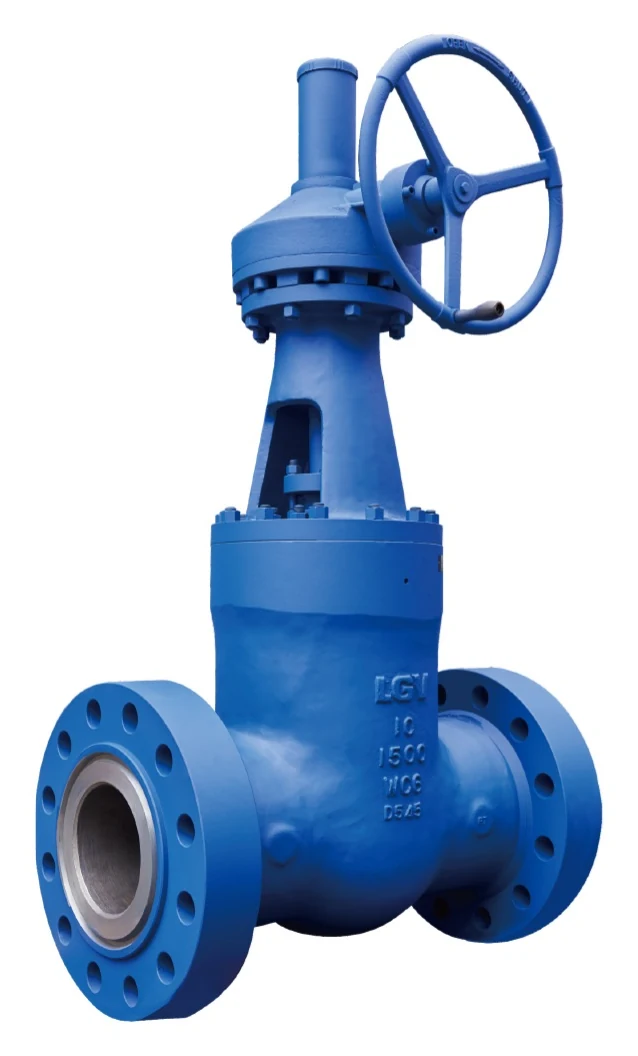
Le Robinet-vanne ASME à auto-étanchéité haute température et haute pression is a gate-valve entry in the Power Station Valve catalog (PDF page 62, printed page 113). Use it to discuss l'isolement tout ou rien for demanding pressure and temperature duties—not to specify a flow-control valve. The catalog name does not establish an orderable pressure class, temperature limit, material grade, or compliance with a particular ASME edition.
- Valve function: on/off isolation; throttling requires another design review
- Catalog construction: pressure self-sealing bonnet
- High pressure / high temperature: descriptive, not numeric ratings
- ASME: catalog naming; applicable standard and edition must be specified
Identification du produit
Pressure-seal bonnet vs. gate shutoff
A pressure-seal bonnet concerns the joint corps-chapeau. Line pressure loads its gasket and can reinforce that joint. This does ne establish tightness across the closed gate: seat design, differential pressure, leakage acceptance and test conditions are separate purchasing decisions. The catalog photo and title cannot confirm the internal wedge, seat or gasket construction.
Joint corps–chapeau
The catalog describes a self-sealing construction. A pressure-seal design relies on pressure-assisted gasket loading at the bonnet joint; the exact seal ring, retainer and maintenance procedure require an offered sectional drawing.
Gate-to-seat shutoff
A gate valve is normally specified for fully open or fully closed duty. For a shutoff requirement, state the allowable leakage, test pressure and direction(s) of pressure application. A pressure-seal bonnet alone does not answer any of these.
Provenance du catalogue et des images
Source: Power Station Valve catalog, physical PDF page 62 (printed page 113). The far-left blue flanged valve matches AST-R1-0134 / media 1396. It is an identity image, not a dimensional drawing or a certified bill of materials.
Éléments du catalogue
Ce que le catalogue documente réellement
The table records what can be supported by the catalog name and page. In particular, “high pressure,” “high temperature” and “ASME” are descriptors, not numeric pressure–temperature ratings or proof that an offered valve conforms to any specific standard edition.
| Champ | Éléments du catalogue | Purchasing boundary |
|---|---|---|
| Catalog name | Robinet-vanne ASME à auto-étanchéité haute température et haute pression | Identifies this product entry; not a full specification |
| Type de robinet | Robinet-vanne | Specify on/off duty and seat leakage separately |
| Descripteur de chapeau | Self-sealing / pressure-seal type | Joint construction is not the seat shutoff rating |
| Pression et température | “High pressure” and “high temperature” in the name | No Class, pressure–temperature chart or temperature limit stated for this entry |
| Descriptif de la norme | ASME in the catalog name | Exact design, rating, dimensional and testing standards/editions need confirmation |
| Série source | Robinetterie de centrale électrique | Series context is not a project-specific service approval |
| Image du catalogue | Physical PDF page 62, printed page 113; media 1396 | Appearance only; no verified material, dimensions or configuration |
Pour l'approvisionnement : request an offered datasheet and approved outline/sectional drawing before fixing pressure class, temperature, material, dimensions or shutoff criteria in the purchase order.
Périmètre des preuves
How to verify the rating and ASME scope
ASME B16.34 addresses valve pressure–temperature ratings, materials, dimensions, examination, testing and marking; the ASME publication listed in 2026 is the 2025 edition. That is a reference for writing a specification, not evidence that this catalog entry complies. The buyer and supplier must identify the applicable edition, valve material group, pressure class and temperature, then check the offered rating chart and any governing project code.
Established by the catalog
- Product identity: ASME Self-Sealing High Temperature and High Pressure Gate Valve
- Product family: Gate valve, under the Power Station Valve catalog section
- Construction wording: self-sealing pressure bonnet; internal detail not documented
- Image provenance: far-left valve on printed page 113, matching media 1396
Confirm on the offered documents
- Applicable ASME or other design standard, edition, and any deviations
- NPS/DN, material grade/group, pressure class and rating at actual design temperature
- Maximum shutoff differential pressure, seating arrangement and leakage criterion
- Body–bonnet gasket and retainer construction, plus inspection/maintenance access
- Flange specification/facing or other end connection and approved overall dimensions
- Required operator, running and breakaway effort/torque, cycle frequency
- Medium, design/operating temperatures, pressure spikes and thermal transients
- Test method, inspection documents and material certificates requested
- Quantity, delivery terms, price and schedule on the written offer
Revue d'ingénierie
Specify isolation duty before pressure class
A useful inquiry separates three different checks: service envelope (pressure at temperature), shutoff duty (differential pressure and leakage criterion) and body–bonnet sealing (pressure-seal construction). Passing one does not establish the others.
Isolement ou modulation ?
For an on/off block-valve duty, request the gate-valve configuration. If the process requires sustained part-open throttling, evaluate an appropriate control-valve design instead: gate discs and seats can be damaged by unstable, high-velocity partial opening.
Rating at actual temperature
Provide maximum design pressure, design temperature, normal conditions and transients. Select against the proposed material-specific pressure–temperature ratings—not a bare Class number or the pressure shown on a photo. A high class at ambient temperature does not establish the same permissible pressure when hot.
Shutoff differential and seats
Specify the maximum differential pressure when closing and reopening, flow direction, leakage acceptance and test method. Ask the supplier to identify the wedge/seat arrangement and verify the required operating force. Bonnet self-sealing is not a zero-leak seat guarantee.
Ends and installation dimensions
The mapped catalog photo shows flanges, but the supplied end connection must still be stated on the datasheet. Verify flange standard, facing, mating class, face-to-face dimension and installation envelope on the order drawing; ASME B16.10 is a dimensional reference only when applicable to the agreed valve configuration.
Operation and documentation
Confirm manual, gear or powered operation against the largest required opening/closing differential, travel and operating frequency. Obtain the sectional/outline drawings, body/trim material list, pressure and leakage test requirements, and agreed inspection documents before release.
Limite d'application
Where high-temperature service changes the decision
Pressure-seal construction may be considered for demanding isolation service, but selection depends on the proposed valve’s actual rating and design documents. Three conditions commonly change the procurement decision:
Steam or other hot fluid
Identify the real fluid, impurities, operating temperature and start-up/shutdown conditions. Thermal cycling and material compatibility can govern gasket, seat and trim choices; a catalog title does not establish suitability for a particular steam system.
Opening under differential pressure
State the maximum expected pressure difference across the closed gate during the opening sequence. If operating effort is excessive, the supplier must assess an appropriate design or engineered equalization arrangement; do not assume an unlisted bypass is included.
Access and maintenance
Review available handwheel/actuator clearance, stem travel, pipe support, insulation access and bonnet disassembly space against the proposed drawing. The photo is not an installation envelope or maintenance instruction.
Gammes de produits associées
Comparez les alternatives documentées avant la demande de devis
These are separate catalog product identities, not interchangeable specifications. Choose the next record by its stated construction or operator, then verify the actual duty and drawings.
Robinet-vanne électrique en acier forgé pour centrale électrique
The catalog label specifies a forged-steel, electric power-plant gate valve. Its actuation and construction terms differ from this ASME-named item; check its own ratings and interfaces.
Robinet-vanne forgé auto-étanche à commande manuelle
The catalog label identifies manual operation and self-sealing forged construction. Do not infer matching dimensions, bonnet details or pressure ratings.
Robinet-vanne électrique haute pression auto-étanche en acier forgé pour centrale électrique
This is a separately named electric, high-pressure self-sealing power-plant valve. Electric actuation is explicit in that catalog name, not established as standard on this page.
Questions des acheteurs
Questions before ordering this pressure-seal gate valve
The following distinctions help prevent the wrong valve or unsupported rating from entering a purchase specification.
Does a pressure-seal bonnet guarantee tight shutoff?
No. The pressure-assisted bonnet gasket seals the body-to-bonnet joint. Shutoff across the gate seats depends on a separate seat design, specified differential pressure, leakage acceptance and test method.
Does the ASME catalog name prove compliance with ASME B16.34?
No. It is a catalog descriptor. Specify the applicable standard and edition, then request the offered valve’s compliance declaration, material-specific pressure–temperature ratings and any deviations.
Is the flanged valve photo a dimensional drawing?
No. Media 1396 matches the catalog image on printed page 113, but it does not establish the offered end connection, size, material or dimensions. Request an approved outline drawing and end-connection details.
What makes an RFQ technically actionable?
Give the fluid, NPS/DN, design pressure and temperature, shutoff differential pressure, connection, leakage requirement, operator, expected cycling, quantity and the documents/tests required for acceptance.
Demande technique
Request a configuration review for ASME Self-Sealing High Temperature and High Pressure Gate Valve
Reference this catalog product and the service conditions below. VALMORA can review a proposed configuration, return the applicable ratings and drawings, and clarify the requested inspection scope and commercial terms on the written offer.
- Fluid and duty: isolation function, normal/design pressure and temperature
- NPS/DN, material requirement, pressure class and end connection
- Maximum opening/closing differential, allowable seat leakage and test method
- Actuation, operation frequency, available power and installation constraints
- Quantity, agreed drawings, material records, tests and inspection/witness needs