
A46Y · предохранительный клапан с пилотным управлением
Предохранительно-сбросной клапан с пилотным управлением A46Y
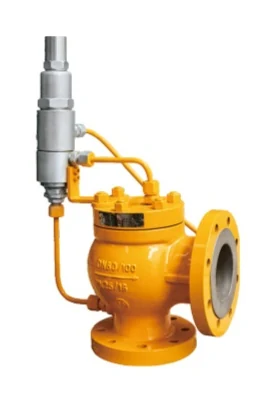
В исходном каталоге указан A46Y как предохранительно-сбросной клапан с пилотным управлением, и показан отдельный пилот, подключённый к главному клапану. Для задачи защиты от избыточного давления начинайте с требуемой пропускной способности и основы давления настройки—затем проверьте точную сборку главного клапана и пилота A46Y, ограничения по противодавлению и номинальную пропускную способность по предлагаемым техническим документам.
- Идентификация по каталогу: A46Y · предохранительно-сбросной клапан с пилотным управлением
- Две сборки с маркировкой A46Y, показанные на странице 106 PDF-каталога
- Класс давления, материалы, проходное сечение и сертифицированная пропускная способность: требуется паспорт для конкретной конфигурации
Определите правильную сборку
A46Y в исходном каталоге
В каталоге модель A46Y отнесена к серии предохранительных клапанов. Иллюстрации A46Y показаны отдельно от A46F и A42Y-420P; соседние модели не являются взаимозаменяемым подтверждением продукта.
Модель A46Y
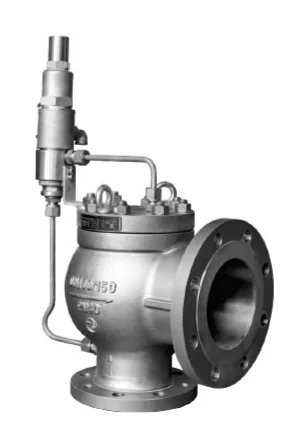
В каталоге два проиллюстрированных узла обозначены как “предохранительно-сбросной клапан с пилотным управлением A46Y”. Не установлено, отражают ли их видимые различия выбираемые материалы или варианты типоразмеров.
Главный клапан + пилот
Видны внешний пилот и соединительные линии. В проектной документации должны быть указаны фактический тип пилота, внутренние детали главного клапана, соединение датчика давления и линия сброса, поставляемые в составе одного узла.
Прослеживаемая ссылка на каталог
Проиллюстрированные модели находятся на странице 106 PDF-просмотрщика (печатная страница каталога 202). Изображения подтверждают только идентичность и внешний вид, но не характеристики защиты от избыточного давления.
Границы оригинального каталога и спецификации
Что фактически идентифицирует каталог A46Y
Используйте это как запись продукта-образца, а не как заполненный паспорт клапана. Разворот каталога даёт обозначение модели и иллюстрации; критичные для закупки параметры требуют конкретного предлагаемого узла.
| Поле | Запись A46Y | Чтение / следующий шаг |
|---|---|---|
| Обозначение модели | A46Y | Печатная этикетка модели |
| Конструкция клапана | Предохранительно-сбросной клапан с пилотным управлением | Печатная этикетка на английском/китайском языке |
| Раздел каталога | Серия предохранительных клапанов | Заголовок исходного каталога |
| Внешний вид изделия | Два изображения с маркировкой A46Y: пилотный клапан и главный клапан | Original PDF image placement |
| Set pressure, allowable operating envelope | Not specified on this spread | Request approved model/size data |
| Certified relieving capacity, effective area, coefficient | Not specified on this spread | Request sizing and applicable certification basis |
| Main/pilot model, trim, seals, materials, connections | Not specified on this spread | Request assembly schedule and order drawing |
Before placing an order: obtain the manufacturer’s configuration-specific datasheet, approved drawing, capacity evidence and applicable installation instructions. No numerical rating on another catalog page should be carried over to A46Y.
Pilot-operated principle
How the pilot and main valve work together
In a typical pilot-operated safety relief valve, system pressure is routed to a pilot that governs the closing pressure on the main valve. When the pilot reaches its actuation condition, it changes that control pressure so the main valve can relieve. The exact arrangement—piston or diaphragm, pop or modulating action, sensing point and pilot exhaust—depends on the design and is not established for the offered A46Y by this catalog image.
What the assembly must establish
- Main-valve and pilot identification, including matched configuration and internal arrangement
- Pilot sensing and dome/actuator pressure routing on the approved schematic
- Opening/reclosing behavior, pilot vent destination and any required accessories
What cannot be assumed from the picture
- A set-pressure span or permission to operate close to set pressure
- A certified discharge rate, coefficient, orifice or back-pressure capability
- Suitability for a particular fluid, temperature, seal material, code jurisdiction or service location
Application and sizing review
Five inputs that determine whether an A46Y can be specified
The valve size cannot be chosen from flange dimensions alone. The responsible protection engineer must establish the relief duty; a supplier can then propose a specific main-valve/pilot combination with verified sizing and documentation.
1. Governing relieving case
Identify the protected equipment, credible overpressure scenarios and required relieving mass or volumetric flow at stated conditions, including whether gas, vapor, liquid or two-phase flow is possible. Without this basis and a model-specific rated capacity, nominal size is not a capacity selection.
2. Set and reseating conditions
Give normal operating pressure, equipment design limits, required set pressure, allowable overpressure/accumulation basis and any reseating requirements. The offered pilot’s operating gap, blowdown behavior and set-pressure verification method must be checked against the governing code and approved data.
3. Inlet loss and pilot sensing
Provide inlet piping geometry, expected pressure drop during relief, pressure pickup location and any remote-sensing requirement. Excessive inlet loss can affect stability and delivered capacity. Do not assume remote sensing or immunity to inlet loss from the A46Y name.
4. Back pressure and pilot discharge
State constant/variable superimposed back pressure and built-up pressure at flow, plus the discharge header and pilot-vent routing. A pilot-operated design is not automatically suitable for any variable back pressure: the offered pilot, outlet limit and reverse-flow protection must be evaluated together.
5. Fluid, internals and interfaces
Specify fluid composition, vapor/liquid phase, contaminants or polymerization/freezing risks, operating and relieving temperatures, body/trim/seat/seal material requirements, corrosion conditions, inlet/outlet flange standards and pressure classes (PN/Class), face-to-face constraints and quantity. Request material grades rather than assuming a finish from the photograph. For the proposed installation, provide the intended valve orientation and flow direction, available space/clearances and maintenance access, inlet/outlet piping supports and expected discharge reaction loads, site/ambient constraints, and the pilot vent route. Confirm feasibility against the approved installation drawing and instructions for the specific A46Y main-valve/pilot configuration; do not infer a permitted orientation or allowable piping load from the catalog images.
Practical selection boundaries
When a pilot-operated option needs further engineering
Pilot operation can offer a different response from a direct spring-loaded valve, but the choice is driven by the relief case and installed system. These conditions should change the next procurement action:
Unresolved relief load
Do not size by DN/NPS. If the governing scenario or required relieving rate is unknown, obtain the pressure-relief calculation before choosing an orifice or requesting a final order code.
Plugging, fouling or freezing risk
A pilot and its pressure passages can be sensitive to deposits or phase changes. Specify the contaminants and minimum ambient/process conditions; ask for the exact pilot service limits and any approved protection or alternative valve design.
Common discharge header
If back pressure varies or reverse flow is possible, require a discharge-system analysis and a pilot schematic showing vent and backflow provisions. Do not infer a balanced pilot or backflow preventer from these illustrations.
Иллюстрация из оригинального каталога
Another A46Y-labeled assembly view
The silver-colored assembly below is also labeled A46Y on the original catalog spread. Its finish, body geometry and pilot hardware must not be used to infer an orderable material, size or pilot package. The yellow A46Y view appears above.
Neighboring catalog models
A46Y is not A46F or A42Y-420P
The same catalog spread places A46F и A42Y-420P under separate model labels. They may be considered in a wider selection review but must use their own drawings, ratings and evidence. Other existing catalog entries: A48SY-P и A48SY-V. Return to the safety and relief valve range.
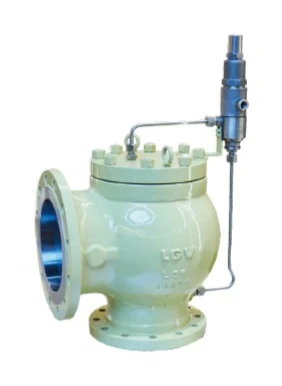
A46F · separate pilot-operated model
The green illustrated assembly is labeled A46F in the catalog, not A46Y. Its pilot and service limits require A46F-specific data.
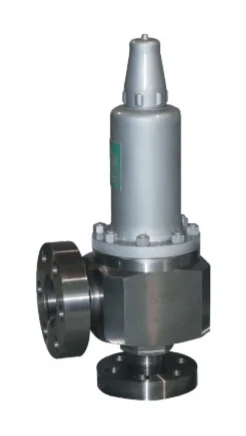
A42Y-420P · separate high-pressure model
The tall silver valve is printed under A42Y-420P. Its catalog name and image cannot establish A46Y ratings, capacity or construction.
A42Y · different product record
For a conventional or alternate valve route, compare the actual service and assembly data of the A42Y page rather than assuming a catalog family is interchangeable.
Technical RFQ · A46Y
Request an A46Y assembly and relieving-capacity review
Reference A46Y and attach the pressure-relief design basis. Request a written quotation showing the proposed main valve and pilot model, allowable service conditions, dimensions and verified relieving capacity—not just a catalog photograph or DN size. If the relief design is not yet complete, ask for a preliminary technical review rather than treating the valve as selected.
- Protected equipment, governing relief scenarios, required relieving rates and units
- Service fluid/phase, composition, contaminants, temperatures and ambient exposure
- Normal/design/set pressures, allowable overpressure basis, relieving pressure and reseat requirement
- Inlet piping loss, pilot sensing point, discharge header back-pressure profile and pilot vent destination
- Proposed DN/NPS, inlet/outlet PN/Class, connection standards and body/trim/seat/seal materials
- Main-valve/pilot drawings, rated capacity and coefficients, applicable code, set-pressure/seat-tightness tests, inspection/witness records and quantity; request material certificates and traceability (where specified), valve nameplate/marking corresponding to the quoted configuration, and written confirmation of document availability and inspection/third-party witness scope