
Промышленное и коммунальное регулирование давления
Промышленные редукционные клапаны
Снижение более высокого давления на входе до контролируемого давления на выходе в системах водоснабжения и промышленных инженерных сетях. Начните с диапазона давления на входе, требуемого давления на выходе и расхода от минимального до пикового; именно эти параметры определяют, сможет ли клапан регулировать в фактическом рабочем диапазоне.
Справочная позиция каталога: здесь показан редукционный клапан из нержавеющей стали 200X. Его типоразмер, класс давления, настройки пилота и пригодность для конкретной среды требуют документации уровня конфигурации.
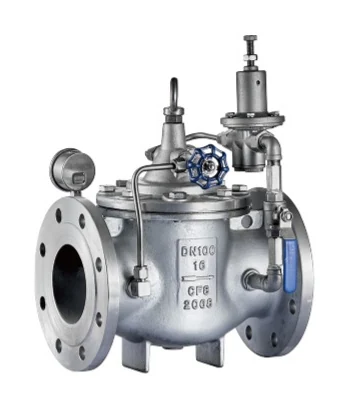
Справочная позиция каталога: редукционный клапан 200X
В каталоге поставщика изображённый клапан указан как Редукционный клапан 200X из нержавеющей стали. Подтвердите заявленную конфигурацию по актуальным документам модели.
Редукционный клапан из нержавеющей стали 200X
На иллюстрации в каталоге показан фланцевый основной клапан с внешними трубками управления и компонентами пилота. Запросите конкретный чертёж модели, предельные значения давления и температуры, минимальный регулируемый расход, диапазон настройки давления пилота, присоединение, материалы, контактирующие со средой, и применимую документацию по испытаниям, прежде чем считать его соответствующим проекту.
Для коммерческого предложения по конкретной модели, укажите диапазоны давления на входе и выходе, режимы расхода и требования проекта. После этого предлагаемую конфигурацию можно сверить с актуальной технической документацией.
Выбор схемы регулирования
Подбор редукционной схемы под рабочий режим
Редукционный клапан регулирует давление после клапана при наличии достаточного давления на входе и рабочего диапазона расхода. Сначала определите целевое давление, затем оцените клапан и, при необходимости, всю станцию.
Редуцирование давления с пилотным управлением
Гидравлический пилот измеряет давление после клапана и регулирует основной клапан для поддержания заданного значения при изменяющихся подаче и расходе. Для городской зоны или промышленного водяного коллектора проверьте наименьшее располагаемое давление на входе при пиковом расходе и минимальный стабильный расход клапана перед выбором типоразмера. Ссылка на каталог 200X не заменяет данные по пилоту и пропускной способности.
Работа при малом расходе или широком диапазоне регулирования
Если ночная потребность значительно ниже дневного пикового расхода, один большой основной клапан может не обеспечивать устойчивое регулирование на нижнем пределе. Сравните минимальный контролируемый расход по данным производителя с фактической минимальной потребностью; если он недостаточен, рассмотрите надлежащим образом регулируемую меньшую параллельную ветвь или другое документированное решение, а не простое увеличение номинального размера клапана.
Высокий перепад давления или критическая непрерывность
Большой перепад давления жидкости может вызывать кавитацию и эрозию. Оцените предлагаемые ступени снижения давления и дроссельные элементы с учётом рекомендаций производителя по кавитации; также определите изоляцию, мониторинг, регулируемый байпас и требуемую независимую защиту от превышения давления. Это решения по проектированию станции, а не функции, автоматически входящие в состав изображённого клапана 200X.
Условия расчёта
Проверьте весь рабочий диапазон перед подбором размера
Располагаемый перепад давления на регуляторе не является фиксированным. Если при пиковом расходе минимальное давление на входе оставляет слишком малый запас над заданным значением на выходе, клапан не может создать недостающее давление. В противоположном случае высокое давление на входе и низкое заданное значение на выходе могут потребовать кавитационно-стойкого или ступенчатого исполнения.
| Область решения | Требуемая рабочая информация | Последствие для выбора |
|---|---|---|
| Давление на входе | Минимальное, нормальное и максимальное P1 at the valve (bar or psi) | At minimum P1 and maximum flow, confirm enough differential remains for the selected valve to meet the outlet target. |
| Downstream duty | Required P2 setpoint, acceptable band and maximum allowable pressure | Distinguishes normal regulation from overpressure protection; include no-flow/closed-demand expectations. |
| Flow envelope | Minimum continuous, normal and peak Q (m³/h or gpm); transient cases | Both peak capacity and low-flow controllability must be checked; pipe size alone is not a valve sizing calculation. |
| Liquid pressure drop | High-P1 / low-P2 case, liquid temperature and relevant vapor pressure | Requires manufacturer-specific cavitation assessment; a large pressure ratio is a warning, not a universal cavitation threshold. |
| Water and controls | Water quality, solids, sensing point, pilot filtration and control response | Affects pilot passages, stability, maintenance and instrumentation requirements. |
| Project configuration | Pipe/flange standards, installation orientation, isolation, bypass, records and inspection scope | Ensures the quotation covers the actual valve and station boundaries rather than an assumed complete assembly. |
Application decisions
Where the pressure-reducing duty changes
The same outlet-pressure target can lead to different hardware or station layouts once minimum flow, pressure variation and fluid properties are known.
Municipal distribution pressure zone
Use the highest inlet pressure with low nighttime demand to examine cavitation and low-flow behavior; use the lowest inlet pressure with peak demand to verify headroom and capacity. Include elevation differences, surge conditions and the required outlet-pressure band.
Industrial water header
State whether downstream pressure serves cooling, washing or another utility process, and what happens when the demand changes quickly or the valve is isolated. Determine which gauges, pilot filtration, maintenance access and continuity measures the facility requires; do not assume they are supplied as a standard station. See industry applications for broader service context.
Steam, gas or other process media
Do not apply the pictured water-control catalog valve to another fluid solely because the pressure setpoint appears suitable. Fluid phase, temperature, materials, regulator behavior and applicable documentation need a different product review. For actuated process throttling, see industrial control valves.
Avoid mis-sizing
Four checks that can change the valve choice
An outlet-pressure setpoint is only one part of the specification. The following failures can make an apparently suitable nominal size a poor selection.
- Too little inlet-to-outlet pressure margin at peak flow: confirm the selected valve’s loss and controllability.
- Oversized main valve at minimum demand: check minimum stable flow and low-flow branch options.
- High liquid pressure drop: request configuration-specific cavitation and noise review.
- Assumed failure protection: assess downstream overpressure safeguards independently of normal pressure regulation.
Procurement and engineering review
What a useful pressure-reducing valve proposal should show
A quote should make the chosen control function and its limitations traceable to the submitted operating cases. A model name or generic catalog picture cannot confirm hydraulic performance.
Valve sizing and pressure margin
Request the proposed valve size, rated operating envelope and expected pressure loss at peak flow, along with evidence that the minimum flow is controllable. If minimum inlet pressure cannot support the required outlet pressure, address the system rather than promising a better setpoint controller.
Pilot, trim and station boundary
Identify the main valve, pressure-reducing pilot, sensing arrangement, strainers and specified accessories. Clarify whether isolation, bypass, instrumentation, staged reduction or a standby branch is included, excluded or separately engineered.
Drawings and acceptance basis
Specify the required general arrangement, flange or end dimensions, wetted-material schedule, pressure-temperature data, inspection or test documents and applicable project standards. Do not infer certificates, water-contact approvals or pressure ratings from a catalog illustration. Company-level manufacturing information is not a substitute for this product’s records.
Selection questions
Pressure reducing valve questions before an RFQ
These answers describe the selection logic; a confirmed model datasheet is still required for any specified pressure or flow range.
What if the inlet pressure falls near the outlet setpoint?
A pressure reducing valve dissipates available pressure; it cannot raise outlet pressure above the available supply. If minimum inlet pressure leaves insufficient differential for the required flow, the downstream target may not be maintained. Check the worst-case supply and system losses first.
Why is nighttime or minimum flow important?
At a very low demand, an oversized valve may operate near the end of its controllable range, causing hunting or unstable downstream pressure. Compare the actual minimum demand with the proposed valve’s published control range; a properly regulated small parallel branch may be appropriate.
Is a pressure reducing valve also a pressure relief valve?
No. A reducing valve regulates downstream pressure in normal service; a relief valve addresses overpressure by opening a discharge path. Evaluate independent downstream protection against valve failure, trapped pressure or other overpressure scenarios as required by the system risk assessment.
Связанные маршруты изделий
Choose the correct valve category
Use the broader hydraulic-control category when the function is not simply downstream pressure reduction, or the process-control category when regulating a process variable with an actuator and control signal.
Hydraulic control valves
Broader pilot-operated water control functions, such as flow, pressure or level duties.
Industrial control valves
Process modulation, actuator selection and control-loop responsibilities.
All industrial valve categories
Compare valve families when the primary duty is isolation, backflow prevention or another function.
Технические материалы
Review general engineering topics; request current product submittals for project-specific specifications.
Project inquiry
Send your pressure-reducing duty for review
Provide the available operating cases, not just a nominal valve size and setpoint. For 200X or an alternative proposal, request confirmation of the valve and pilot configuration, minimum-flow stability, cavitation suitability and supplied station components. Unknown values can be marked for follow-up.
- Minimum, normal and maximum upstream pressure (with units)
- Required downstream setpoint, allowable range and no-flow expectation
- Minimum, normal and peak flow (with units)
- Fluid, temperature and water quality or solids
- Pipe size, end connections, installation and station layout
- Control sensing, isolation, bypass and continuity requirements
- Governing project specification and operating limitations
- Requested drawings, tests, material records and certificates